
Experts decry new language in tax-cut bill, say only billionaires could challenge U.S. government
Senate Republicans have shelved, at least for now, a provision of President Donald Trump’s tax-cut bill that would prevent enforcement of some past court orders against Trump. It has been replaced by a provision that could make it virtually impossible for average Americans to seek injunctions against the government for violating their rights.
The new language would require anyone seeking a court order requiring, or prohibiting, actions by the federal government to post a bond that would fully cover the government’s potential damages and other costs of complying with the order. Opponents say the costs could amount to at least millions of dollars.
Injunctions are judicial orders prohibiting the government, an organization or an individual from taking actions that a judge has found are likely illegal. The bill, approved by the House on a 215-214 vote last month, which would cut taxes for the rich and health care for the poor, would also have allowed a judge to find a violator of an injunction in contempt of court, and impose fines or imprisonment, only if the judge had required the other party to post a bond of any amount.
Judges commonly issue injunctions without ordering a bond. Because the House bill would have applied, retroactively, to past as well as future injunctions, it could have allowed Trump to ignore existing court orders like those prohibiting him from sending immigrants to prisons in El Salvador without facing penalties.
That provision was quietly removed from the bill by Senate Judiciary Committee Republicans last week. In its place is a mandate that would apply to all future injunctions against the federal government and require a bond that would pay for the government’s “costs and damages” in complying with the injunction.
If the injunction was upheld on appeal, the individual or group that sought it could recover the costs of the bond. If not, the funds would be transferred to the government.
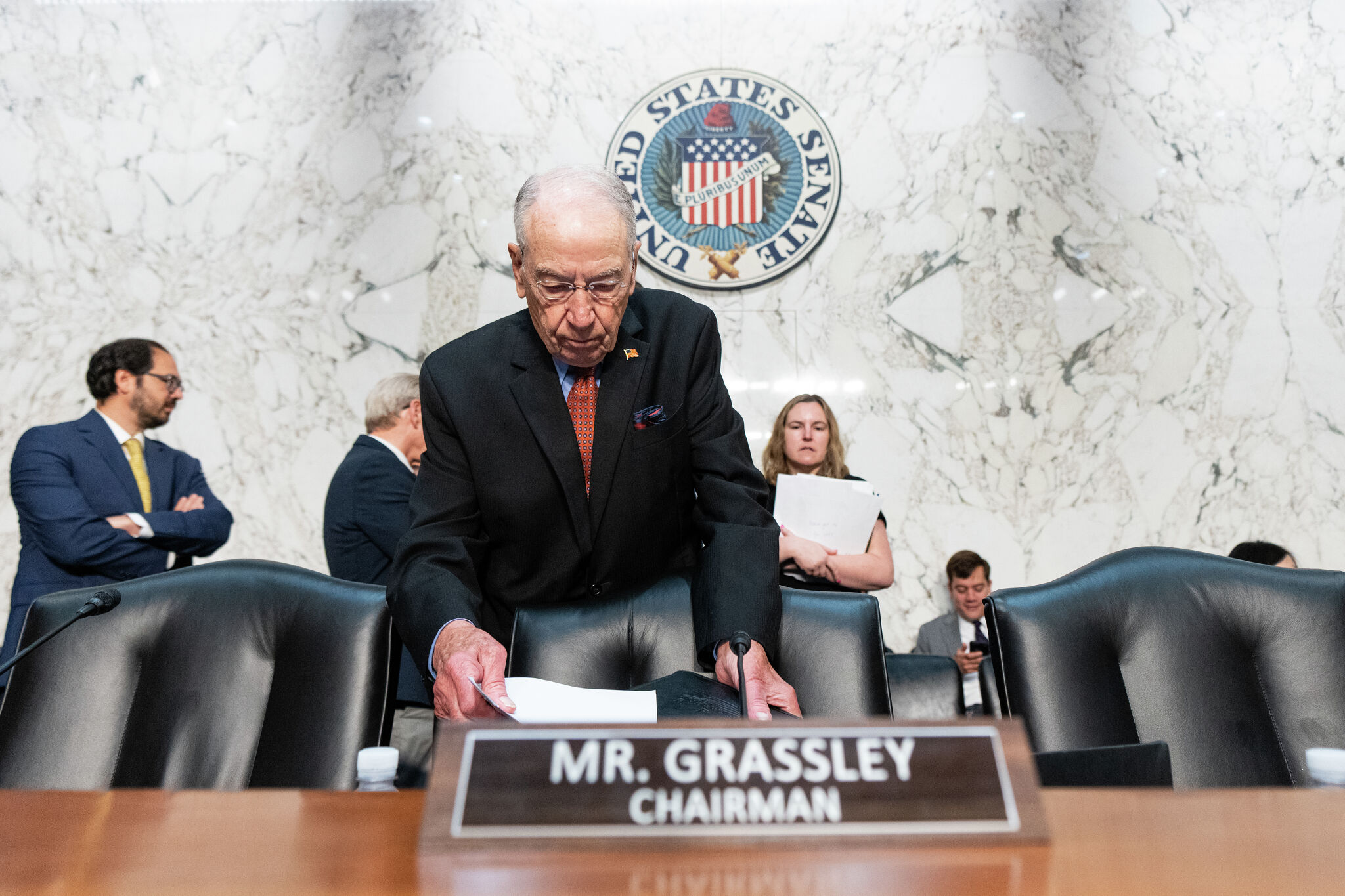
“Finally, the Senate Judiciary Committee is advancing solutions in the One Big Beautiful Bill to restore the constitutional role of the federal judiciary,” Sen. Chuck Grassley, R-Iowa, the committee chairman, said in a statement, using Trump’s label for his tax-cut bill.
Grassley said the new provision would “enforce the existing, lawful requirement that courts impose a bond upfront when attempting to hit the government with a preliminary injunction or temporary restraining order that results in costs and damages ultimately sustained by American taxpayers.”
A different perspective came from Alicia Bannon, judiciary program director at New York University’s Brennan Center for Justice.
If this language becomes law, Bannon said, “it will be financially impossible for ordinary Americans to go to court to protect their rights,” like trying to make sure they receive Social Security payments or are protected against unlawful deportation. Bonds for those orders could cost many millions of dollars, she said.
Or much more, said attorneys at the National Women’s Law Center, if Trump’s deep budget cuts to agencies such as the Department of Veterans Affairs were challenged by a group of military veterans.
“If this measure stays in the bill, only a billionaire would be able to get prompt relief from the courts when this administration breaks the law,” said Emily Martin, chief program officer at the Washington, D.C.-based law center.
And Erwin Chemerinsky, the law school dean at UC Berkeley, said the new provision would also prohibit judges from considering the ability of an individual or group to pay the bond. That would prevent many whose rights have been violated from seeking help from the courts “at a time when the President is violating the Constitution as never before seen in American history,” he said.
Trump has denied violating constitutional rights in his deportation orders, shutdowns of federal agencies and attempts to deny U.S. citizenship to U.S.-born children of undocumented immigrants, disputes that are before the federal courts. But a more immediate legal battle could decide the fate of the injunction bond requirement in the tax bill.
Because it is a budget-related measure, the legislation can win Senate approval by a majority vote in the Senate, where Republicans hold 53 of the 100 seats, rather than requiring 60 votes to overcome a Democratic filibuster. The newly added bond requirement, however, would not directly affect the federal budget, although it could lower the government’s costs by discouraging lawsuits and limiting injunctions.
Democrats could ask the Senate’s parliamentarian, Elizabeth MacDonough, to advise Senate leaders that the bond limits are not budget-related and should be removed from the bill. The Senate normally follows the parliamentarian’s conclusions unless 60 senators disagree, but opponents of the bond requirements say they can’t take anything for granted.
“Senate Republicans have overruled the parliamentarian before,” said attorney Alison Gill of the National Women’s Law Center. “It is possible that they may do so to include this dangerous provision.”

Post a Comment for "Experts decry new language in tax-cut bill, say only billionaires could challenge U.S. government"
Post a Comment