
A Mississippi City's Tax Break Spurred Post-Katrina Growth—Will Homes Survive the Next Storm?
A Community Rebuilding After Disaster
Rocking on his front porch overlooking the Mississippi Sound, former Gulfport Mayor Billy Hewes questions how anyone wouldn’t want to live there. “People are always going to gravitate to the water,” he said. “And we have a beautiful waterfront.” However, after 2005’s Hurricane Katrina, which devastated the region, it was far from certain that people would return.
The storm left behind a ‘postapocalyptic’ wasteland, with many areas reduced to concrete slabs. Recovery was slow, and for years, neighborhoods between the beach and a railroad track were in disarray. Allen Baker, who lived through Hurricane Camille in 1969, thought he knew what to expect after Katrina. But the 2005 storm was far worse, destroying his historic beachfront home. “Coming back, there was no home," Baker said. "It looked like one of your postapocalyptic movies.”
Incentives for Rebuilding
Gulfport began offering property tax breaks to encourage rebuilding near the water. The goal was to help kick-start the economy by building back better and quicker. Local governments face a tough decision when it comes to encouraging development in flood-prone or wildfire-exposed areas. Despite risks like rising sea levels, communities need residents and taxpayers.
After Katrina, Gulfport required residents to build at higher elevations and enforced stronger building codes. However, most residents near the water are in at least a moderate-risk flood zone. Nationally, more homes are being built in flood zones than removed.
Miyuki Hino, a professor at the University of North Carolina at Chapel Hill, noted that local governments often focus on increasing property tax revenue rather than considering the long-term risks. “They were thinking we have this land that's underutilized and we can increase our property tax revenue,” she said.
Building Back Stronger
For some, the tax breaks were a sign to start rebuilding. Allen Baker waited until 2016 to move into a new home, after Gulfport waived city property taxes for seven years for those who invested in building south of the railroad tracks. The savings weren’t huge—typically $500 to $1,000 a year—but they were enough to give residents a green light to rebuild.
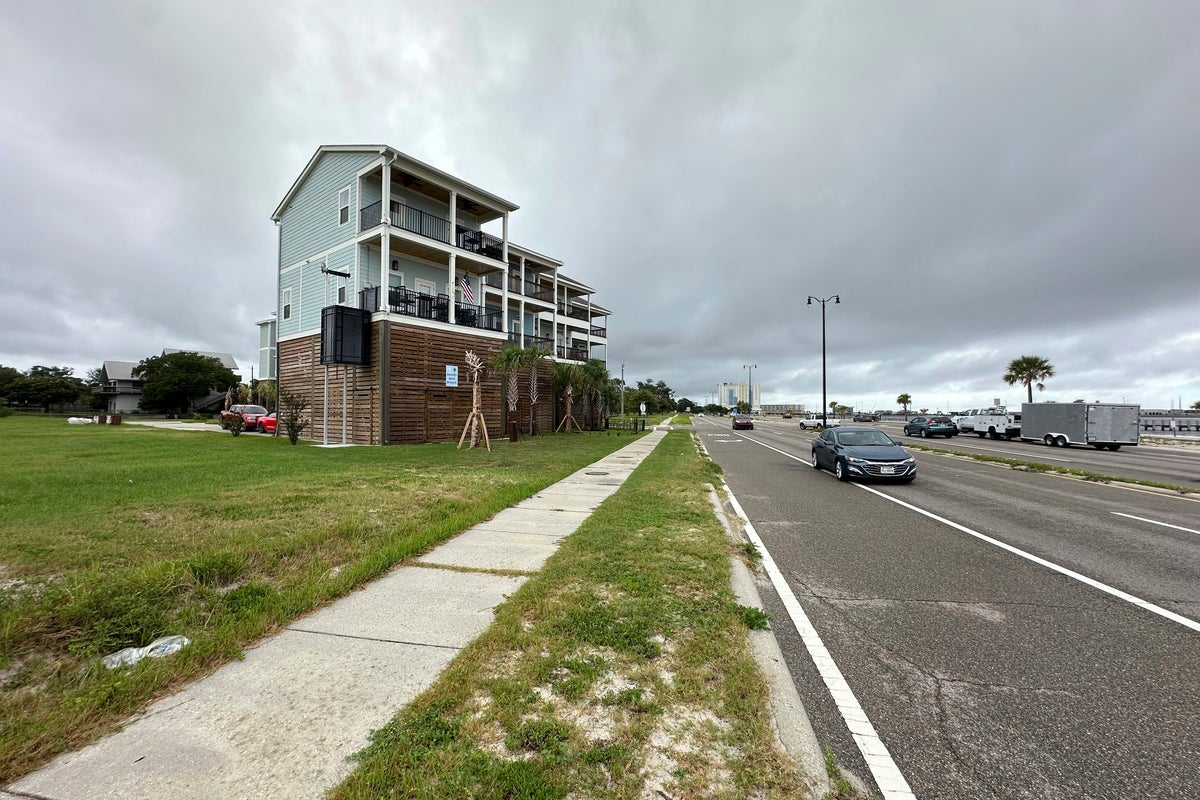
Hewes also benefited from the tax break, building a new home on a beachfront site owned by his family since 1904. He and his wife used their tax savings to build a stronger home. “We put a lot more money into actually hardening this home to a much higher standard,” he said.
Baker’s current house exceeds Gulfport’s building code, with steel rods inside walls that tie into a 3-foot-thick concrete foundation. This qualified the home for an insurance industry standard called “fortified,” which provides savings on expensive wind insurance. However, only 1,500 homes in Mississippi have fortified status, compared to 9,000 in Louisiana and 50,000 in Alabama.
Progress and Concerns
While some progress has been made, concerns remain about whether the community is adequately prepared for the next big storm. Katherine Egland, a Gulfport resident and chair of the NAACP's national Environmental and Climate Justice Committee, fears the community may not be ready. “I’m not saying we didn’t make some progress,” she said. “What I’m saying is we didn’t make nearly the amount of progress that we should have made.”
Egland also criticizes the prioritization of business recovery over environmental justice. She argues that some development farther inland has worsened rainwater flooding in historically Black neighborhoods. Areas targeted by the tax break are whiter and more affluent than the city overall.
The Challenge of Rising Risks
Miyuki Hino pointed out that while elevating a building reduces risk, rising sea levels could require multiple elevations over decades. “Over the course of your 30-year mortgage, you have a 40% chance of flooding,” she said. It’s not unusual for houses to be built in flood zones in Gulfport. From 2001 to 2019, more than 840,000 homes were built in flood plains nationwide, according to a 2024 University of Miami study.
There was a plan to get more people out of Mississippi flood zones, but Congress never appropriated the funds. Federal officials considered buying out 2,000 properties at highest risk of being damaged by hurricane storm tides. However, the U.S. Army Corps of Engineers projected that a $408 million buyout would lower potential yearly storm damage by $22 million to $33 million.
The Future of Rebuilding
Even without the tax break, construction is continuing in beachfront areas. But it may not be clear how successful recovery has been until those new buildings are tested by the next major hurricane. “Some people have built out of concrete,” Baker said. “Some people have built out of better materials. Some people have not. And those people are going to be in for a shock.”

Post a Comment for "A Mississippi City's Tax Break Spurred Post-Katrina Growth—Will Homes Survive the Next Storm?"
Post a Comment