
China's J-20 Stealth Fighter Makes Mysterious 'Ghost Flight'
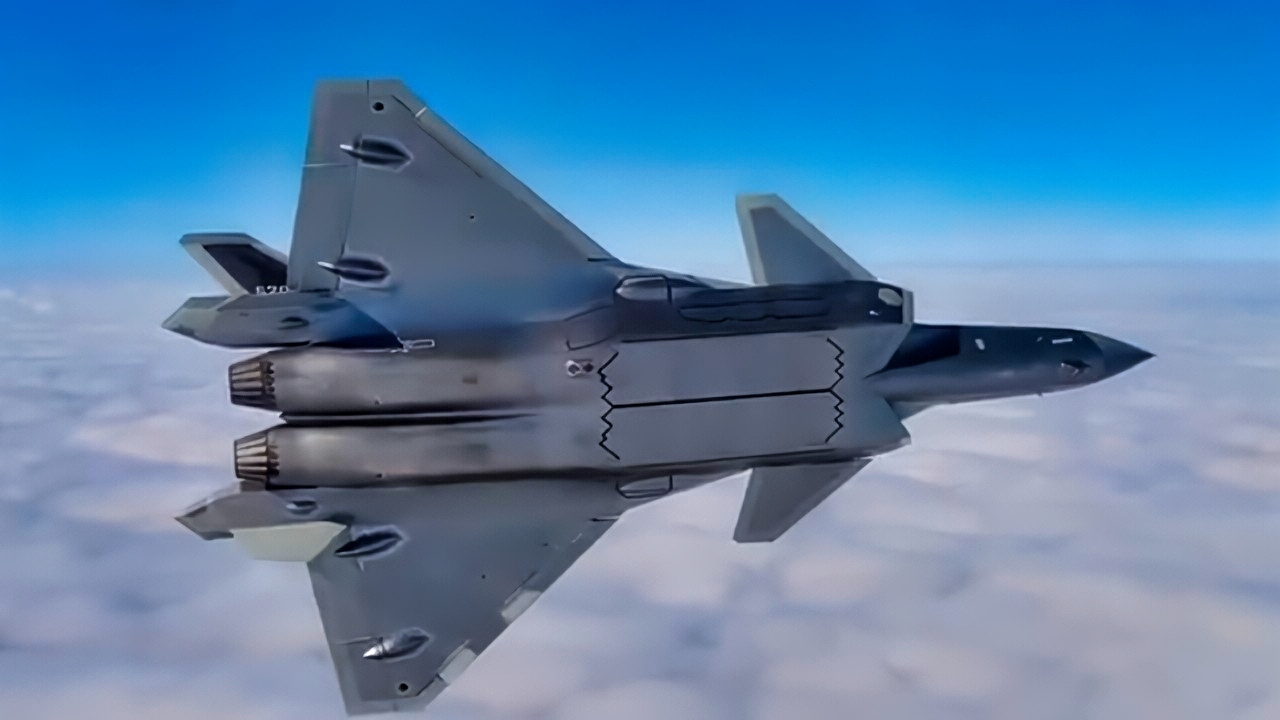
The J-20 Stealth Fighter's Unreported Flight Through the Tsushima Strait
Chinese state media recently claimed that a Chengdu J-20 stealth fighter, known as the "Mighty Dragon," successfully flew undetected through the heavily monitored Tsushima Strait near Japan on July 27. This strategic waterway is under constant surveillance by U.S., Japanese, and South Korean radar networks, making the reported flight a significant event in the realm of military technology and intelligence.
If the claim is accurate, it highlights the J-20’s advanced stealth capabilities and raises questions about the effectiveness of Western surveillance systems. While technical analyses suggest that the F-35 should have an advantage in detection, this alleged flight challenges those assumptions and indicates that China may be closing the stealth technology gap more quickly than previously thought.
A Strategic Military Move
The J-20's flight occurred during an episode of a series that aired on China Central Television (CCTV). The footage showed the aircraft flying through the Tsushima Strait, a narrow waterway with significant strategic value for all nations in the region. It separates South Korea from Japan and connects the Sea of Japan with the East China Sea, making it one of the most heavily monitored passages in the area.
The flight was reported by the 1st Aviation Brigade of the People's Liberation Army Air Force (PLAAF), which is among the first units to receive the J-20. Despite the lack of explicit mention of the J-20 in the broadcast, the extensive use of footage and detailed descriptions made it clear which aircraft was being discussed.
The J-20: China’s Most Advanced Stealth Fighter
The J-20 first took flight in January 2011 and has been showcased at various public air shows in China, including the Air Show China in Zhuhai. Unlike the Shenyang J-35, another stealth aircraft operated by the PLAAF, the J-20 is more readily identifiable due to its unique design features, such as a triangular shape, large engines, and moveable canard foreplanes.
The J-20 is equipped with radar-absorbing materials and electronic countermeasures (ECM) to reduce its radar cross section (RCS). According to calculations by radar specialists in Taiwan, the J-20 has an RCS of approximately 5 square meters when viewed from the side, 0.05 square meters from the front, and 20 square meters from the rear. These figures are significantly higher than the F-35’s RCS, which is rated at about 0.0015 square meters.
Implications for Future Military Technology
Despite the J-20’s larger size and higher RCS, the F-35 still maintains a significant advantage in stealth capabilities. However, Chinese industry is likely to continue narrowing this gap in the coming years. Advances in onboard ECM and other electronic systems could further enhance the J-20’s performance, potentially altering the balance of power in future conflicts.
About the Author
Reuben F. Johnson has over three decades of experience analyzing foreign weapons systems, defense technologies, and international arms export policies. As the Director of Research at the Casimir Pulaski Foundation, he has contributed extensively to defense reporting. Johnson has also worked in the American defense industry and served as a consultant for the U.S. Department of Defense and various international governments. His work has earned him recognition, including two awards for defense reporting in 2022 and 2023. He holds a bachelor's degree from DePauw University and a master's degree from Miami University in Ohio, specializing in Soviet and Russian studies.
Related Articles
- We Almost Touched the F-117 Stealth Fighter
- We Almost Touched the YF-23 Black Widow II Stealth Fighter
- We Almost Touched the D-21 Mach 3 Drone

Post a Comment for "China's J-20 Stealth Fighter Makes Mysterious 'Ghost Flight'"
Post a Comment