
Ethnic Cham Fishers in Cambodia Fight for Survival
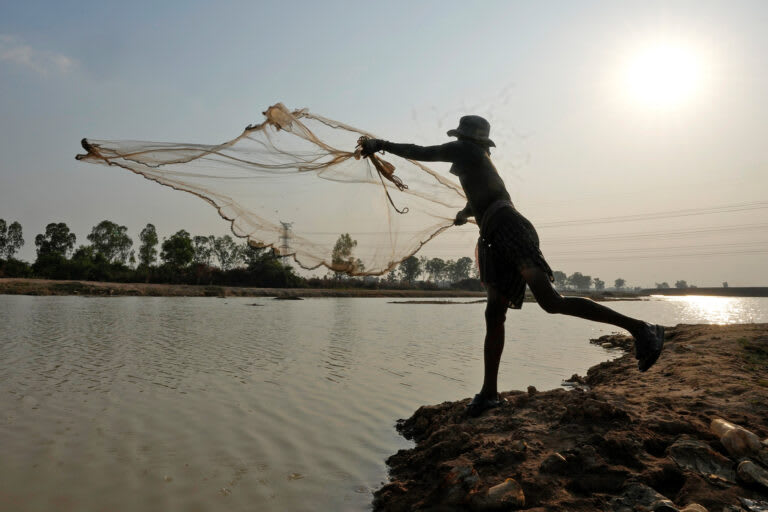
The Struggle of the Cham Fishers in Cambodia
Mao Man, a 65-year-old ethnic Cham fisher living in Phnom Penh, has spent much of his life moving from one place to another. He is uncertain how many times he has had to relocate, but he believes he will be evicted again before the Water Festival in November. Today, Mao and his neighbors live on small wooden boats moored behind a luxury hotel. For the Chams, relocation has been a recurring part of their lives for generations. However, the current pressures are framed under the guise of environmental protection.
“When I move, I float like a water hyacinth down the river,” Mao said during an interview with The News Pulse on July 6.
The Chams are one of Cambodia’s largest ethnic minorities, though they are not considered Indigenous people. They are descendants of the former kingdom of Champa, which once occupied parts of southern Vietnam. After the last Cham state was annexed by the Đại Việt monarchy in 1835, many Chams fled to Cambodia, settling along the Mekong River. Over time, they adopted a unique form of Islam and became primarily engaged in fishing. Today, about two-thirds of all Chams reside in Cambodia.
Mao has experienced decades of upheaval. During the Cambodian civil war, he had to flee his village in Kampong Cham, where the highest concentration of Chams resides. He eventually joined the military, which promised him land in exchange for his service. However, he never received it. Instead, he was allowed to build a floating house with other Chams on the river. A few years later, he and about 15 other families were ordered to dismantle their homes.
“They said they had to prepare the city,” he explained. “If we did not dismantle it, they would set it adrift into the open ocean.”
Since then, Mao has continued to drift, eventually docking his boat in Phnom Penh’s Chroy Changvar district alongside 100 other Cham families. However, beginning in 2019, authorities began evicting this community as well.
“Honestly, they don’t want us here,” Mao said. “They come and say, ‘Let’s make this place quiet. Dock somewhere else.’”
At first, the community resisted. But guards came and destroyed their belongings with knives, and beat members of the community, forcing them to float out onto the river in stormy weather. These evictions often coincide with major events, such as international summits or holidays, when authorities aim to present a cleaner image of the city. In 2019, Al Jazeera reported that Chams had been ordered to leave to “lift up the reputation and beauty of Phnom Penh city.”
A similar situation is unfolding in Kampong Chhnang, some 100 kilometers up the river. Ma Safi, a 31-year-old fisher, described increasing pressure from authorities. He used to live in a floating house as part of a multi-ethnic floating village that included Cham, Viet, and Khmer fishers. The community even earned a modest income from tourists fascinated by their way of life. In 2014, the villagers were ordered to dismantle their homes due to concerns about plastic waste polluting the river. Since then, the community has been dispersed, and tensions between the different ethnic groups have increased.
Ma said that Cham fishers are being unfairly targeted by local fishery police compared to other groups. He recounted how soldiers confiscated his fishing nets for being too large, reducing his daily earnings from $50 to as little as $17. Meanwhile, larger fishing operations backed by big companies use more destructive methods without interference. Ma pointed to an affluent Vietnamese fishing community across the river, where illegal samras fishing is practiced. This method involves using underwater shelters to attract fish, which are then harvested multiple times a year. Ma claimed that these practices are tolerated because the Vietnamese can bribe officials and journalists to ignore them, while his community faces prosecution for its more sustainable methods.
A group of soldiers patrols the river, enforcing fishing laws. One officer, second lieutenant Dara, stated that they have successfully reduced illegal fishing. “It is important to protect the fish stocks,” he said. However, Ma easily showed reporters a samras within minutes, contradicting the claim that such activities no longer occur.
Like many other Cham fishers, Ma faces the constant threat of eviction. He was once ordered to move his boat near Kampong Chhnang City but managed to appeal and gain temporary permission under a new governor. “They didn’t give us any other reasons except saying this area is to be developed,” he recalled.
Many Cham fishers have been forced to leave the river entirely, now struggling in makeshift shelters or overcrowded houses on land. Ming Ah Sah, a 53-year-old Cham woman with eight grandchildren, took matters into her own hands by creating a video appeal to Prime Minister Hun Manet. She emphasized that her family has used traditional fishing methods for years and only seeks to survive. However, she lost her fishing nets and boat engine after being accused of illegal activity, leaving her with a meager income repairing nets for other Chams.
Heng Kong, a government fisheries expert, acknowledged the challenges faced by river-dependent communities. He noted that global trends show a decline in both the number of fishers and fish availability. While traditional methods like samras may have once been sustainable, their increased scale has made them harmful to the environment. Heng also admitted there may be inconsistencies in enforcement and that new laws are being developed to address these issues.
However, many Chams argue that the new regulations disproportionately affect them. So Farina, a Cham historian, pointed out that while the laws may seem fair on paper, they impact Chams more severely. Unlike other groups, most Cham fishers rely almost exclusively on the river for their livelihoods and lack the skills or social connections needed to transition to land-based work.
Despite these challenges, So Farina believes the Chams are resilient. “When they move, they build a community,” she said. “One thing they never forget is how to build a community wherever they are.” She hopes that documenting their struggles will raise awareness and lead to better understanding and support from those in power.

Post a Comment for "Ethnic Cham Fishers in Cambodia Fight for Survival"
Post a Comment