
Federal Judge Forces Trump Admin to Restore Hundreds of UCLA Research Grants
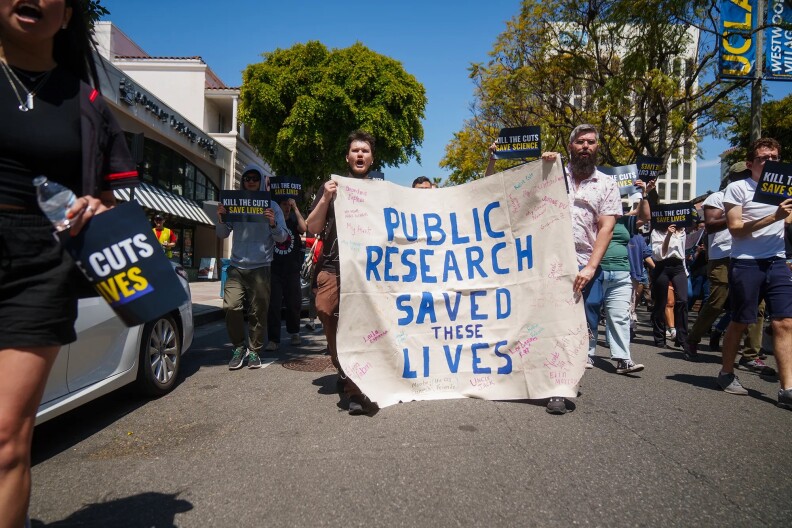
Federal Judge Orders Restoration of Suspended Research Grants at UCLA
A federal judge has issued a ruling that requires the Trump administration to restore a portion of the 800 federal science research grants it suspended at UCLA last month. This decision marks a significant setback for efforts to compel the university into a $1 billion settlement, highlighting ongoing legal and political tensions over funding, diversity, equity, and inclusion (DEI) policies.
The ruling came from California district court judge Rita F. Lin, who stated that the suspensions violated her June preliminary injunction. That order required the National Science Foundation (NSF) to restore 114 grants it had terminated at the University of California and blocked the agency from canceling other grants within the UC system. Lin’s latest decision was in response to a court filing submitted by lawyers representing UC researchers after 300 NSF grants and 500 National Institutes of Health (NIH) grants at UCLA were suspended.
The suspensions froze approximately $584 million in funding. However, it is still unclear whether all 300 NSF grants will be restored under Lin’s latest order. She has instructed the Trump administration and the researchers’ lawyers to provide an update on the restorations by August 19.
Lin’s order does not cover the NIH grants, as they were not included in her initial June decision. The importance of these grants cannot be overstated, as they are vital for scientific breakthroughs, medicine development, graduate student training, and maintaining the U.S.’s position as a global leader in scientific discovery.
Legal Disputes Over Grant Suspensions
Lawyers for the federal government argued that the suspensions did not violate Lin’s June order, which only prohibited terminations but did not address suspensions. However, the UC researchers’ legal team countered that there is no meaningful difference between suspensions and terminations, as both prevent researchers from accessing funding.
They also claimed that the suspensions failed to meet federal procedural requirements, which mandate that agencies provide a grant-specific explanation for why each award should no longer receive funding. In her ruling, Lin emphasized that the indefinite suspensions “differ from a termination in name only.” She noted that the letters informing UCLA about the grant suspensions lacked the necessary explanations required by the preliminary injunction.
Some federal judges have previously criticized the Trump administration for not clearly defining what it considers DEI violations while simultaneously cutting funding based on those allegations.
Background on the Grant Suspensions
The Trump administration suspended UCLA’s grants over allegations that the campus was not doing enough to combat antisemitism. The NSF sent a letter to UCLA in August, accusing the institution of admitting students based on race, despite California’s long-standing ban on affirmative action since 1996. The letter also claimed that the university relied on admissions essays to determine an applicant’s race. However, the Supreme Court’s 2023 decision allowed campuses to include race and identity discussions in admissions essays.
Similar accusations were made against Harvard University when its grants were terminated. The 800 grant suspensions followed a Department of Justice report that accused UCLA of failing to adequately address antisemitism, particularly during last year’s pro-Palestine protests.
Political and Legal Reactions
In response to the $1 billion settlement proposal, California Governor Gavin Newsom called the demand “extortion” and vowed to sue the Trump administration. The state’s attorney general has already filed 37 lawsuits against the administration, including several related to education funding. White House Press Secretary Karoline Leavitt responded with a defiant “bring it on.”
UC President James B. Milliken warned that the settlement would devastate the public university system and harm students and Californians. UCLA has continued to promote the benefits of its health and science research, emphasizing its contributions to society.
Jewish Advocacy Groups Respond
Several Jewish advocacy groups have criticized the $1 billion settlement, arguing that it does not make Jewish students safer. The Jewish Public Affairs Committee of California pointed to existing efforts by UC and UCLA to address antisemitism and promote safer campuses. They highlighted that meaningful progress is already underway in California.
Despite the controversy, the debate over DEI policies, antisemitism, and the role of federal funding continues to shape the legal and political landscape across the country.

Post a Comment for "Federal Judge Forces Trump Admin to Restore Hundreds of UCLA Research Grants"
Post a Comment