
Florida Mom Challenges Town in State Supreme Court Over $165K Unconstitutional Fines
A Single Mother’s Fight Against Unfair Fines
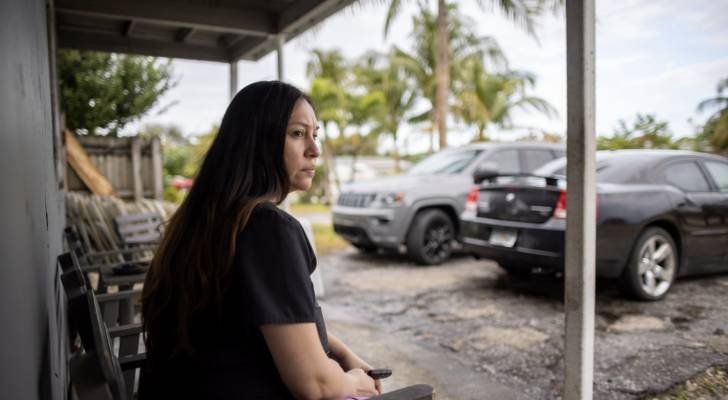
Sandy Martinez, a single mother from Lantana, Florida, is challenging her local government in the Florida Supreme Court over $165,000 in fines that she claims are “outrageous” and “unconstitutional.” The dispute centers around what she describes as excessive penalties for minor infractions, including parking on her own property.
Martinez’s attorney, Mike Greenberg, who works for the Institute for Justice, a nonprofit public interest law firm, has called the fines “taxation by citation,” where municipalities use minor violations to generate revenue through large penalties. Greenberg emphasized that the fines are not just unfair but also represent a misuse of government power.
The Origin of the Problem
The issue began in May 2019 when Martinez was cited for having two tires parked on her lawn. With four family members and four vehicles, this situation was inevitable, according to Martinez. The fine for this violation was $250 per day, which quickly escalated into a staggering amount.
Martinez attempted to resolve the issue by meeting with a code enforcement officer, but these efforts were unsuccessful, leading to mounting fines that eventually reached $100,000 in parking violations.
Additional Penalties
The city did not stop there. Martinez was also fined for cracks in her driveway, which she could not afford to fix immediately. This resulted in daily fines of $75 for 215 days, totaling $16,125. She argued that this amount far exceeded the cost of replacing the driveway entirely.
After a major storm damaged her fence, Martinez waited for insurance coverage to repair it. During this time, the city imposed a fine of $125 per day for 379 days, adding up to $47,375 in penalties.
Legal Action and Appeal
In 2021, Martinez filed a lawsuit against the city, but lower courts ruled in favor of Lantana. Martinez expressed her frustration, stating that it is surreal that the town still refuses to acknowledge the abuse and unfairness of its actions.
Now, Martinez is appealing to the Florida Supreme Court, citing the state’s Excessive Fines Clause, which mirrors protections found in the U.S. Constitution. The court will determine whether the punishment truly fits the "crime" or if it represents an abuse of power disguised as municipal regulation.
Protecting Your Wallet from Property Fines
While Martinez’s case may seem extreme, it underscores how minor violations can quickly escalate into significant financial stress. Here are some practical steps homeowners can take to avoid similar situations:
-
Get written notice and document everything: If you receive a code violation notice, ask for it in writing. Keep records of all correspondence, photos of your property before and after corrective actions, and any receipts or repair quotes. Paper trails are crucial if you have to defend yourself legally or contest fines.
-
Know your local ordinances: Municipal codes can vary significantly. Review your city’s or HOA’s code enforcement policies to avoid unexpected fines. Most city or county websites post their code enforcement rules and fine schedules.
-
Act right away: Respond immediately to any violation notice. Contact the code enforcement office and ask for a walkthrough or extension while you fix the issue. Proactive communication can sometimes prevent daily fines from piling up.
-
Set up a home emergency fund: Even minor home repairs can carry steep price tags. A home emergency fund (separate from your general savings) can help prevent you from dealing with fines. Experts recommend setting aside 1–3% of your home’s value for unexpected repairs.
-
Ask for a fine reduction or hardship adjustment: Many municipalities offer hardship waivers or payment plans. You can often negotiate fines, especially if you can show financial hardship or prove the issue was out of your control (e.g., a delayed insurance payout). Ask in writing and reference any delays due to insurance or contractor availability.
-
Know your rights: Florida, like many states, protects homeowners from “excessive fines” under its state constitution. If fines feel disproportionate, especially compared to the violation, consult a legal aid group or nonprofit like the Institute for Justice.
While most homeowners won’t face six-figure fines like Sandy Martinez, the financial consequences of even “minor” code violations can be devastating if ignored. Staying informed, communicating early, and having a financial safety net can help you avoid falling into a costly trap.

Post a Comment for "Florida Mom Challenges Town in State Supreme Court Over $165K Unconstitutional Fines"
Post a Comment