
Green Beret Veteran: War Crimes in Gaza and U.S. Contractors' Role
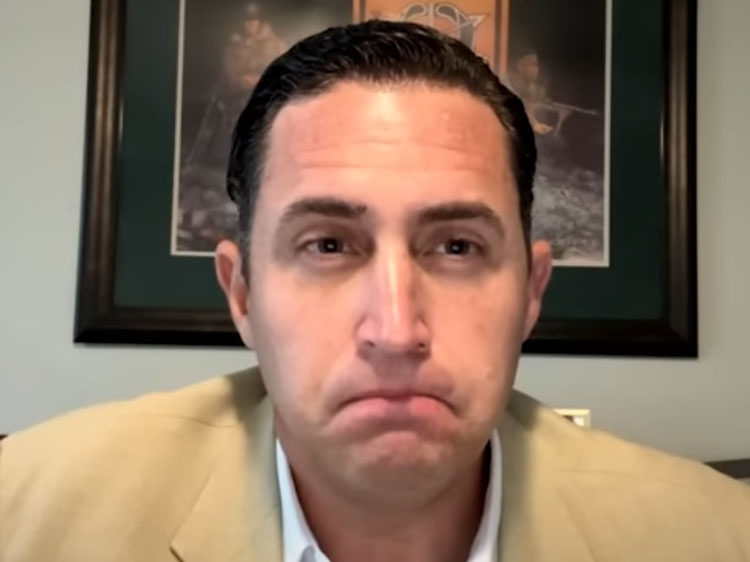
A Retired Green Beret's Account of the Gaza Aid Crisis
Retired Green Beret Lt. Col. Tony Aguilar, a West Point graduate who worked as a contractor distributing aid for the Gaza Humanitarian Foundation in May and June of this year, shared a harrowing account of the challenges faced by the Palestinian population under Israeli military operations. His insights reveal a deeply troubling situation that raises serious concerns about humanitarian aid delivery and potential violations of international law.
Aguilar emphasized that his understanding of the Geneva Convention and international humanitarian law stems from years of military service, where knowledge of these protocols was essential for leading troops in combat. He noted that while he may not have every detail memorized, he is familiar with key principles that define what constitutes acceptable conduct during armed conflict.
One of the most alarming aspects of the aid distribution process in Gaza, according to Aguilar, is the location of the Secure Distribution Sites (SDS). He pointed out that there are only four such sites currently operating in Gaza, compared to 400 before the blockade and restrictions on UN aid. These four sites are concentrated in the far southwest corner of the enclave, near the Egyptian border, which is far from the areas where the majority of the population resides.
The northern part of Gaza, including cities like Gaza City and Jabalia, is home to some of the most vulnerable populations, facing severe shortages of food, water, and medical supplies. Yet, no aid sites are located in these regions, leaving thousands without access to life-saving resources.
Aguilar also highlighted the strategic placement of the aid sites. Three of the four SDSs are located within 150 to 200 meters of each other and are situated in an area where the Israeli Defense Forces (IDF) are conducting an offensive operation known as Operation Gideon’s Chariots. This operation is not defensive but rather an active combat mission, raising serious questions about the safety and legality of placing aid distribution centers in such locations.
In addition to the operational concerns, Aguilar described a tragic incident involving a young boy named Amir. The child, who had walked 12 kilometers to reach one of the aid sites, was killed by IDF gunfire as he left the site. Aguilar recounted how the boy showed immense respect by kissing the hands of aid workers, a gesture that deeply moved him. Despite the emotional connection, the boy was later shot and killed by Israeli forces.
The lack of communication and clear procedures at the aid sites further exacerbated the danger. Aguilar noted that there were no signs or loudspeakers to guide the crowds, and the absence of water made it even more difficult for people to survive. He criticized the use of machine guns and tank rounds to control the crowd, arguing that such tactics inevitably lead to civilian casualties.
He also expressed concern about the role of UG Solutions, the company that contracted with the Gaza Humanitarian Foundation. According to Aguilar, the contractors justified their actions by claiming that the IDF was doing the same, implying a dangerous normalization of violence.
Aguilar concluded that the entire operation was poorly planned and lacked the necessary considerations for legal, political, cultural, and military factors. He argued that placing aid in the middle of a combat zone was not just reckless but potentially a war crime.
His testimony highlights a complex and deeply troubling situation in Gaza, where humanitarian efforts are being undermined by the very conditions they aim to alleviate. The lack of transparency, accountability, and respect for human dignity has left many questioning the ethics of the current aid distribution model.

Post a Comment for "Green Beret Veteran: War Crimes in Gaza and U.S. Contractors' Role"
Post a Comment