
How a Tennessee Town Stopped a Bitcoin Mine and Won
The Struggle for Mountain City's Future
In late September of last year, Mountain City was hit by catastrophic floodwaters caused by Hurricane Helene. The town suffered widespread damage, with buildings destroyed and infrastructure severely impacted. Many residents were left homeless, and the community faced a daunting recovery process.
The town’s largest employer, a yarn factory, was also heavily damaged and announced plans to close earlier this year. This decision cost over 100 jobs and millions of dollars in local investment. Mayor Jerry Jordan described the impact as a major blow to the city and county, noting that many people lost their jobs and the economy suffered significantly.
Now, Mountain City, a tight-knit community of about 2,500 people, is desperately seeking a new industrial partner to revitalize its economy. Local leaders have been actively pursuing CleanSpark, a bitcoin mining company, through closed-door meetings and planning proposals without proper public notice.
CleanSpark, like other tech companies, is drawn to rural communities such as Mountain City due to factors like cheap land, open spaces, and abundant electricity. However, these developments can bring both investment and challenges, including noise pollution and potential decreases in property values.
Residents of Mountain City only learned about the plan to build a 30 megawatt bitcoin mine on 50 acres of land in the middle of a neighborhood in April. Upon discovering the proposal, they were furious. Mayor Jordan reported that locals began contacting him through phone calls, texts, and emails. However, he stated that he only responds to messages from people he personally knows.
Despite widespread opposition, including a petition with over 1,700 signatures and hours of public comment, the town government largely ignored the concerns of the residents. In an interview, Jordan questioned whether his role was to respond to the people or make what he believed was the best decision for Mountain City.
While CleanSpark promised to keep power rates low and add $170,000 in annual tax revenue, many residents remained unconvinced. Concerns about noise pollution and potential impacts on property values were significant. Additionally, conflicts of interest within the local government emerged but went unaddressed.
After facing threats of legal action, city leaders began to reconsider their stance. Jordan admitted they made a mistake, though he questioned the consequences of such errors. For CleanSpark, rural areas remain a key focus, as the company has expanded rapidly by establishing mines in rural communities across the U.S., including nearly half in rural Tennessee.
The company claims it wants to help communities, but not everyone has been satisfied with the outcomes. In Wyoming, a new bitcoin mine operated by CleanSpark has caused issues with excessive noise, leading to complaints from nearby residents. The mine uses oil immersion technology to cool its processors, but the resulting noise has been described as relentless and disruptive.
Procedural issues also arose in Mountain City when the local utility manager met with CleanSpark representatives without providing proper notice. As a result, the proposal was not included on the agenda for the planning commission meeting, and no public comments were received. Despite this, the project received preliminary approval.
Residents were shocked when they learned the proposal had already been approved. Social media played a key role in raising awareness, and people began to question the implications of a bitcoin mine in their community. Some residents expressed concerns about health issues and the potential long-term impact on their quality of life.
City leaders attempted to address concerns, emphasizing that CleanSpark promised to use new technology that would minimize noise. However, many residents felt ignored, with some reporting that their emails and letters went unanswered. Mayor Jordan explained that he does not open emails from unknown sources, citing security concerns.
Conflicts of interest also surfaced, with several board members and commissioners failing to disclose potential conflicts related to their roles. These issues raised questions about the integrity of the decision-making process.
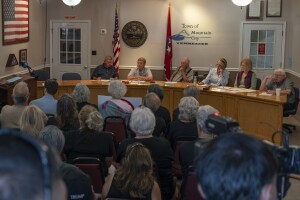
As the situation escalated, the Board of Mayor and Aldermen ultimately abstained from voting on the proposal, leading to cheers from the crowd. Jordan attributed the change in stance to the threat of lawsuits, which were initiated by concerned residents seeking legal recourse.
Looking ahead, the future of Mountain City remains uncertain. While CleanSpark may not be coming to Mountain City, the company is still looking for other locations in East Tennessee. The town continues to face challenges, including potential increases in energy rates and ongoing repair costs from Hurricane Helene.
Mayor Jordan remains committed to helping the town grow, despite the difficulties. He emphasized his love for Mountain City and his desire to support its development. The story highlights the complex dynamics between economic growth, community concerns, and the role of local leadership in shaping the future of small towns.

Post a Comment for "How a Tennessee Town Stopped a Bitcoin Mine and Won"
Post a Comment