
Plant-Based Meat Faces Unfair Criticism — Can It Recover?
A New Era for Plant-Based Meat
Beyond Meat is undergoing a significant transformation. Last month, the company introduced a new product called Beyond Ground, which differs from its previous offerings like burgers, sausages, and chicken nuggets. Unlike those products, Beyond Ground doesn’t aim to replicate the taste of meat. Instead, it has a neutral flavor that serves as a blank canvas for customers to season as they wish.
The product contains only four ingredients: fava beans, potato protein, water, and psyllium husk. It offers a macronutrient profile similar to chicken, with high protein and low fat. Ethan Brown, founder and CEO of Beyond Meat, explained that this move is an effort to step outside the traditional boundaries of mimicking specific types of meat. “It’s about providing something that can confidently stand on its own as a center-of-the-plate protein,” he said.
This shift reflects a broader cultural movement where wellness has evolved beyond basic nutrition and exercise to include more holistic, and sometimes controversial, ideas around “natural” living. This includes trends like the rise of raw milk, the Make America Healthy Again movement, regenerative farming, and homesteading influencers. To align with this, Beyond has started featuring bean farmers in its advertisements, emphasizing authenticity and simplicity.
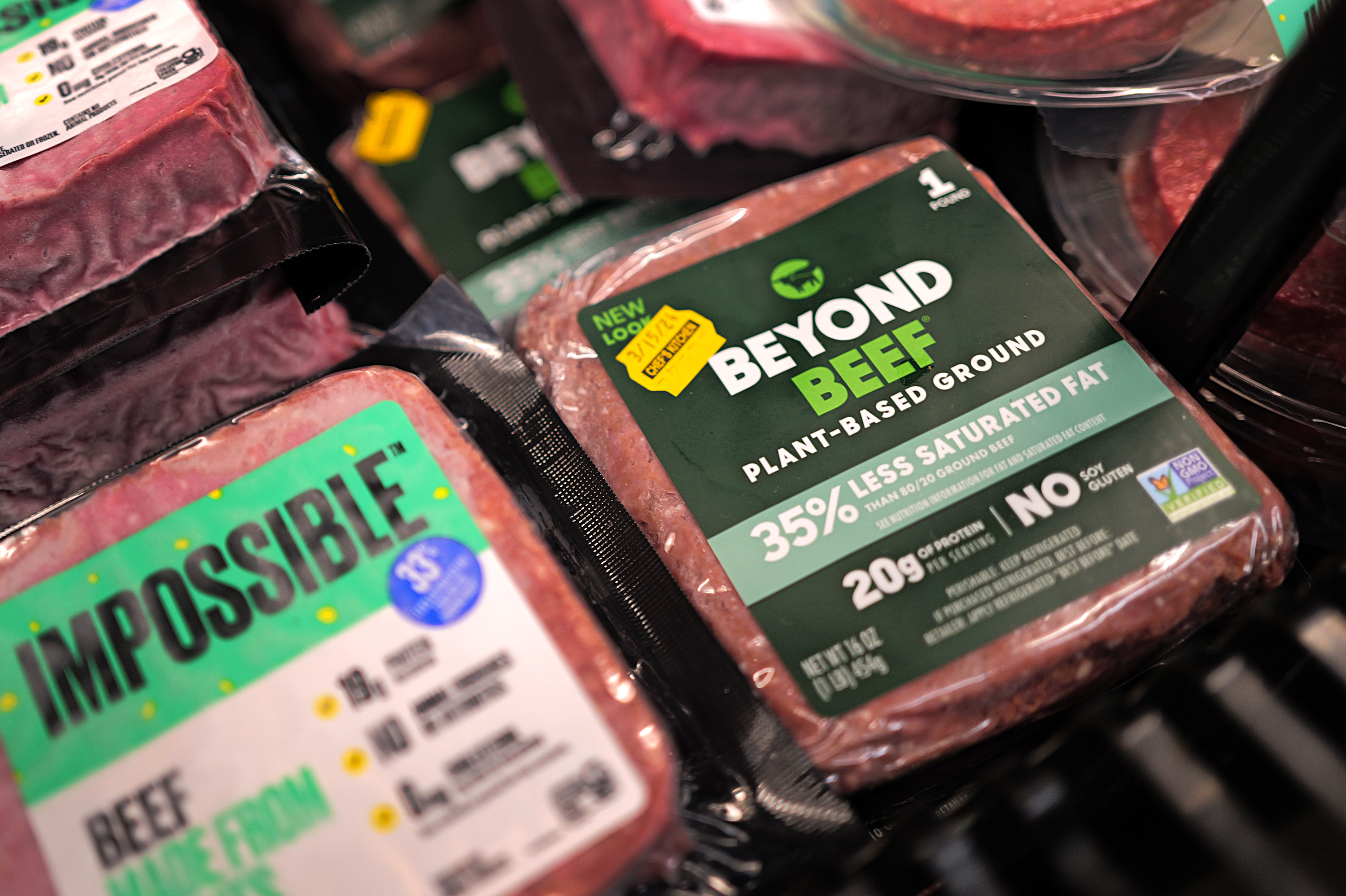
In addition to the new product, Beyond is also rebranding itself by removing “meat” from its name, becoming simply “Beyond.” This change follows other recent updates, such as the launch of the Sun Sausage, a product closer to a traditional veggie dog than a high-tech imitation, and the reformulation of its burger to have less sodium and saturated fat with a simpler ingredient list.
These changes are a direct response to the criticisms the plant-based meat industry has faced over the past five years. Critics often claim these products are overly processed and unhealthy, although many argue these claims are inaccurate. Moving forward, the industry's success will depend on creating products with strong macronutrient content and clean, simple ingredients.
The Diverging Paths of Two Competitors
While Beyond Meat is focusing on simplification and authenticity, Impossible Foods has taken a different approach. Over the past few years, Impossible Foods has updated its packaging to a bold red design, launched an “indulgent” burger with higher calories, fat, sodium, and protein, and recruited the world’s top competitive hot dog eater as a spokesperson. The company is also considering a “blended” burger made with half beef and half plant-based ingredients. It has also remained committed to its key ingredient, soy leghemoglobin, which gives its burgers a meaty flavor through genetically engineered yeast.
This contrast highlights two distinct strategies within the plant-based meat industry. Both companies are trying to retain current customers and attract new ones in a market that has seen stagnant growth. However, the stakes go beyond sales figures. Plant-based products have the potential to reduce Americans' high levels of meat consumption, which contributes to animal suffering and environmental issues. How these companies navigate their strategies could shape the future of food and the planet.
The Confusing Landscape of Plant-Based Meat
From the mid-2010s to around 2020, plant-based brands like Beyond Meat and Impossible Foods revitalized the meat-free sector with products that tasted more like meat than traditional veggie burgers. Sales surged, and these products were seen as sustainable, humane, and healthy alternatives. However, the backlash began soon after.
Critics from various backgrounds—meat industry interests, progressive foodies, social media influencers, and researchers—attacked plant-based meat as fake, ultra-processed, and unhealthy. Despite this, sales have dropped to pre-pandemic levels, though some European countries continue to see growth.
Plant-based meat is often unfairly categorized as ultra-processed, even though it tends to have similar protein levels to conventional meat, less saturated fat, and fewer calories. It also contains zero cholesterol and some fiber, which meat lacks. Nutrition scientists like Roberta Alessandrini have emphasized that plant-based meats can be a valid way to shift toward more plant-forward diets, which are beneficial for both people and the planet.
However, consumers hold plant-based meat to a different standard. While Beyond Meat is addressing criticism by reformulating its products, the question remains whether these efforts will resonate with the public.
The Consumer Perspective
A recent survey from Purdue University found that most Americans are concerned about processed foods but also believe they can be part of a healthy diet. They value affordability, taste, shelf life, and convenience. For many, taste is the primary factor when choosing plant-based meat. According to Impossible Foods, taste is the number one purchase driver for consumers looking for meat-like alternatives.
Despite this, plant-based meat sales have stalled at around 1% of overall US meat sales. Companies like Impossible Foods and Beyond Meat face a dilemma: they are damned if they imitate meat too closely, risking health critiques, and damned if they don’t, risking being seen as “for vegetarians only.”
Chris Dubois of Circana noted that while Beyond Meat has done well in listening to customer feedback, the long-term path to success remains uncertain. Government subsidies for the animal meat industry have created a significant price gap, making plant-based options less competitive. However, rising beef and chicken prices may help close this gap.
Ultimately, plant-based meat must overcome more than just price, taste, and convenience. It needs to change perceptions and clarify its identity as a moderately processed food with better nutrition and a lighter environmental footprint. While challenges remain, there is hope that these efforts can make a meaningful impact.

Post a Comment for "Plant-Based Meat Faces Unfair Criticism — Can It Recover?"
Post a Comment