
Saab's Gripen Wins in Thailand-Cambodia Conflict
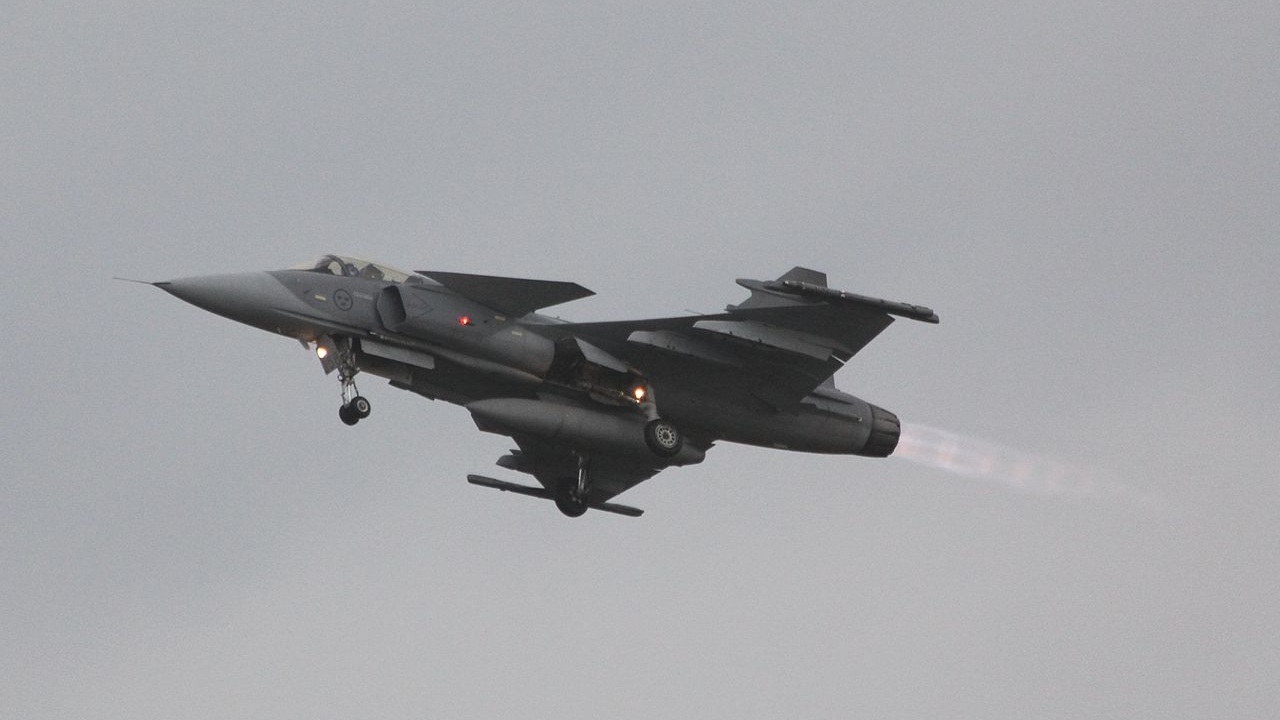
The Role of the JAS 39 Gripen in the Thailand-Cambodia Conflict
The recent conflict between Thailand and Cambodia has drawn significant attention to the performance of military assets on both sides. One system that stood out was the Saab JAS 39 Gripen, a multirole combat jet developed in Sweden. This aircraft played a crucial role in demonstrating Thailand’s air capabilities during the border clashes.
The dispute over the Preah Vihear temple area dates back to historical claims, with previous skirmishes occurring between 2008 and 2011. The 2025 escalation began with Cambodian rocket and artillery barrages into Thai territory, prompting retaliatory strikes from the Royal Thai Army and Air Force (RTAF). Thailand's military, equipped with more modernized systems compared to Cambodia's forces, leveraged its air superiority to target command posts, artillery positions, and troop concentrations.
A New Era for the Gripen
Thailand operates a mixed fleet of aircraft, including American F-16 Fighting Falcons and the Gripens. The latter, consisting of 11 single-seat Gripen-C and dual-seat Gripen-D models, played a key role in the conflict. This marked the Gripen's first kinetic combat mission globally, nearly three decades after its introduction. It shifted the aircraft's reputation from a peacetime asset used in reconnaissance to a proven combat platform.
While Thailand does not operate the Dassault Rafale, the Gripen's performance in Southeast Asia contrasted sharply with the underwhelming performance of the Rafales by India’s Air Force during the brief India-Pakistan war earlier this year. In that conflict, the costlier Western systems underperformed compared to Chinese-made weapons used by Pakistan.
Precision and Effectiveness
During the conflict, Thailand's F-16s conducted initial airstrikes on July 24, followed by two Gripen jets operating alongside two more F-16s on July 26. These missions involved precision-guided munitions, such as the 500-pound GBU-12 Paveway II laser-guided bombs, allowing for accurate strikes from standoff distances. The Gripens were equipped with French ATLAS-II laser/optical targeting pods and potentially Korean KGGB GPS-guided bombs, enhancing their precision capabilities.
Sweden’s Erieye airborne early warning and control (AWACS) systems, also operated by Thailand’s Air Force, played a pivotal role in threat reduction and mission coordination. These systems provided real-time situational awareness, helping avoid potential engagements with Cambodian SAMs like the Chinese KS-1C medium-range surface-to-air missiles.
Why the Gripen Was Effective
The Gripen’s design contributed to its effectiveness in the conflict. Its smaller radar cross-section (RCS) made it harder for Cambodian radar to detect. Additionally, the Gripen’s operating costs are significantly lower than other Western-produced planes, making it an attractive option for nations with limited military budgets. The aircraft can also operate from shorter runways, ideal for rapid deployment in Thailand’s mountainous and jungle-like terrain.
Although the conflict was short, the Gripen’s ground-attack capabilities were shown to be reliable. Following the ceasefire, Thailand’s cabinet approved the purchase of four additional Gripen E/F models for around $600 million. This is part of a larger plan to acquire 12 jets and upgrade the fleet with Meteor long-range missiles and additional Saab 340 AWACS aircraft.
The Broader Implications
Thailand’s decision to modernize its air force and phase out aging F-16s by 2035 highlights the growing interest in the Gripen. The successful performance of the aircraft in combat has bolstered interest among potential foreign buyers on the global arms market. A similar trend occurred for Chinese-made systems following their relatively successful performance in the Indo-Pakistani War earlier this year.
Ongoing Tensions and Future Outlook
Despite the ceasefire, tensions remain in the region. ASEAN observers are monitoring the border, and the Gripen’s debut underscores the evolving role of air power in modern border disputes. This could influence acquisition preferences and deterrence strategies throughout Southeast Asia.
In conclusion, the Thailand-Cambodia conflict has highlighted the effectiveness of the JAS 39 Gripen. As developing militaries around the world take note of its performance, the aircraft is likely to attract increased interest, particularly in regions such as Latin America, where these planes are already present in large numbers. The true victor of the conflict appears to be Sweden’s Saab corporation, with its JAS 39 Gripen set to make a significant impact on the global arms market.

Post a Comment for "Saab's Gripen Wins in Thailand-Cambodia Conflict"
Post a Comment