
Science labs navigating the Trump era
A Scientist's Struggle Amid Federal Funding Cuts
Anastasia Khvorova, a leading researcher at the University of Massachusetts Chan Medical School, is navigating a challenging landscape in her quest to solve some of the most complex diseases. Her lab focuses on RNA biology, aiming to develop cures for conditions such as Huntington’s disease and age-related muscle loss. However, recent changes in federal funding policies have created significant uncertainty and concern among scientists like Khvorova.
Khvorova recently encountered colleagues whose salaries are supported by federal grants that the Trump administration has proposed to drastically reduce. Many of these researchers are immigrants who once believed America was the best place to pursue scientific endeavors. Now, they are questioning whether their contributions are valued or if they will be forced to leave the country.
“What is happening right now is absolutely suicidal,” Khvorova said in Russian-accented English. “I will stop making drugs. I will reduce my lab from 30 people to five. I will stop training scientists.” The abrupt cuts to research funding threaten the stability of an 80-year-old partnership between the government and universities that has made the United States a global leader in science.
The Trump administration claims its changes are targeted corrections, stating that grants are being terminated due to topics such as increasing diversity in science. Some universities have had funding frozen because they haven’t protected Jewish students. Officials argue that basic research should not be burdened by excessive bureaucracy.
However, a report from the American Association for the Advancement of Science revealed that President Donald Trump’s budget request for 2026 would cut the National Institutes of Health (NIH) by 40 percent, potentially reducing the nation’s basic research portfolio by a third. Another report from the Congressional Budget Office found that a 10 percent cut to the NIH budget could result in two fewer drugs invented per year, with long-term effects over 30 years.
Despite pushback in courts, Congress, and state levels, the impacts of these changes are being felt across research institutions. The Chan Medical School, for example, faced a $37 million shortfall due to delays at the NIH.
Khvorova, who trained in Moscow during the Soviet Union’s decline, has experienced difficult conditions before. However, she admits that the current policy shifts are unprecedented and pose a threat to the unique American research system.
Disruptions in funding can have long-term consequences, as breakthroughs in the lab may lead to world-changing innovations. Khvorova’s work builds on federally funded research into roundworms, which revealed how short strands of RNA control gene activity.
Worcester, home to two Nobel laureates and the RNA Therapeutics Institute, has become a hub for biotech innovation. Alnylam Pharmaceuticals, founded on discoveries from labs at Chan Medical School, has developed six approved drugs and boasts a market capitalization of over $50 billion.
Basic research is often compared to the starter in sourdough bread — essential for creating something new. John Maraganore, former leader of Alnylam, emphasized this point, highlighting the importance of foundational science.
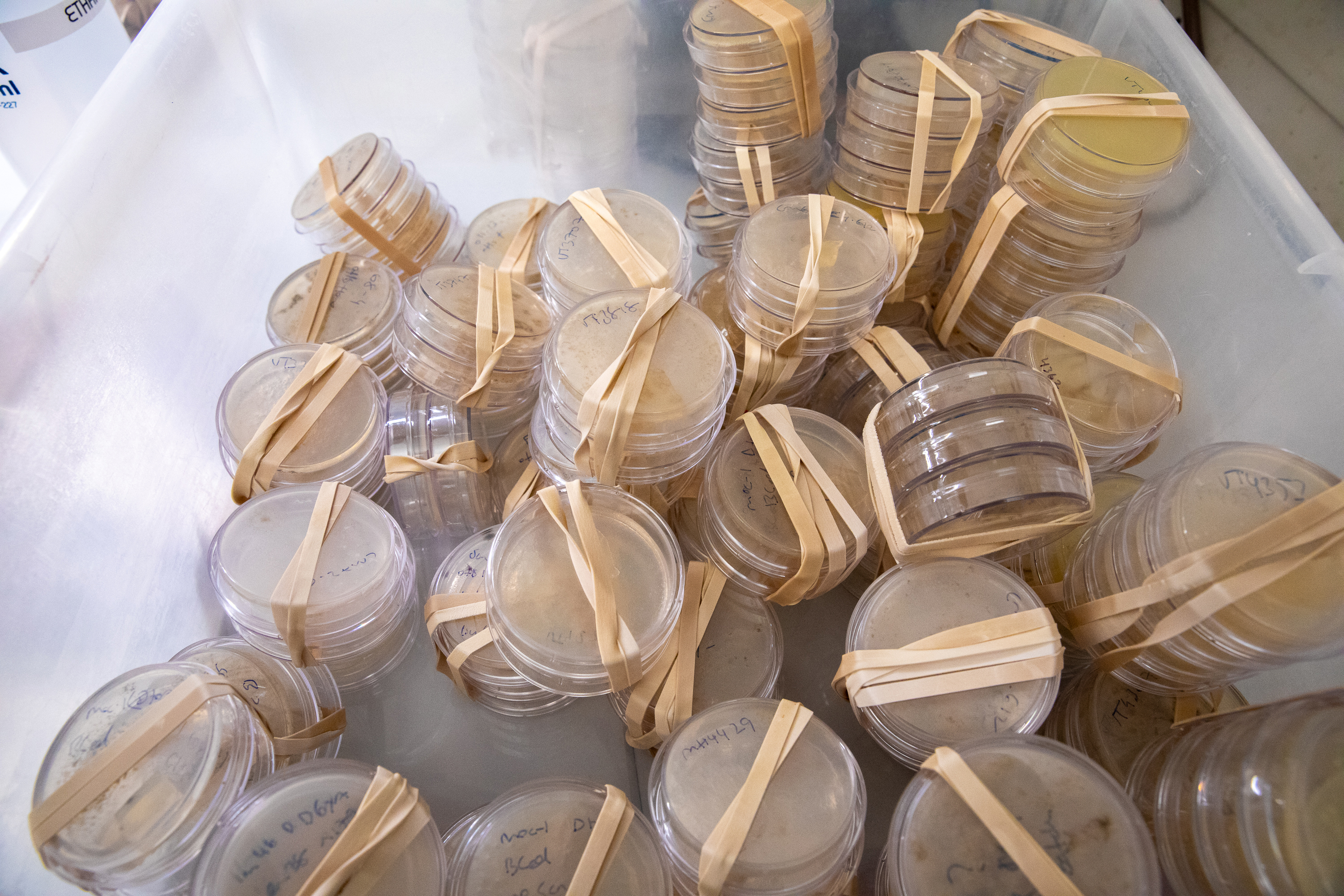
In the labs at Chan Medical School, scientists use advanced instruments to synthesize RNA strands aimed at treating various diseases. In the "wormhole," Nobel Prize-winning biologist Victor Ambros studies roundworms, while slogans like “We want scientific data, not alternative facts!” and “Science Not Silence!” reflect the growing frustration among researchers.
Over 200 employees have been laid off or furloughed, and a hiring freeze has affected many. Graduate school offers were rescinded, though some spots were saved for next year’s class. Ambros expressed concerns about the uncertainty in the research environment, where reliability and predictability once defined the system.
Jesse Lehman, a graduate student, shared his fears about the viability of his career, given the unpredictable nature of federal funding. The 20-year path to success in science is filled with challenges, but the reliability of funding has historically fueled progress.
In 2006, Craig Mello and Andrew Fire discovered RNA interference, a groundbreaking mechanism that allows genes to be silenced. This discovery led to the development of new drug classes, despite initial setbacks in the biotech industry.
Phillip Zamore, co-founder of Alnylam, emphasized that sickness knows no political boundaries and that everyone deserves better treatments. However, he warned that without stable funding, scientists cannot achieve their goals.
Several biotech companies have emerged from Chan, including Comanche Biopharma and Atalanta Therapeutics, both focusing on critical health issues. Khvorova, a co-founder of these companies, exemplifies the American Dream, having come to the U.S. with little money and becoming a leading scientist.
Despite her achievements, Khvorova remains concerned about the future of her lab and the next generation of scientists. As she walked to her lab, she pointed to empty champagne bottles — a reminder of the graduate students who were turned away. The uncertainty surrounding funding threatens to undermine years of hard work and potential breakthroughs.

Post a Comment for "Science labs navigating the Trump era"
Post a Comment