
Thailand-Cambodia Border War: Roots in Colonial History
Historical Roots of the Thailand-Cambodia Border Disputes
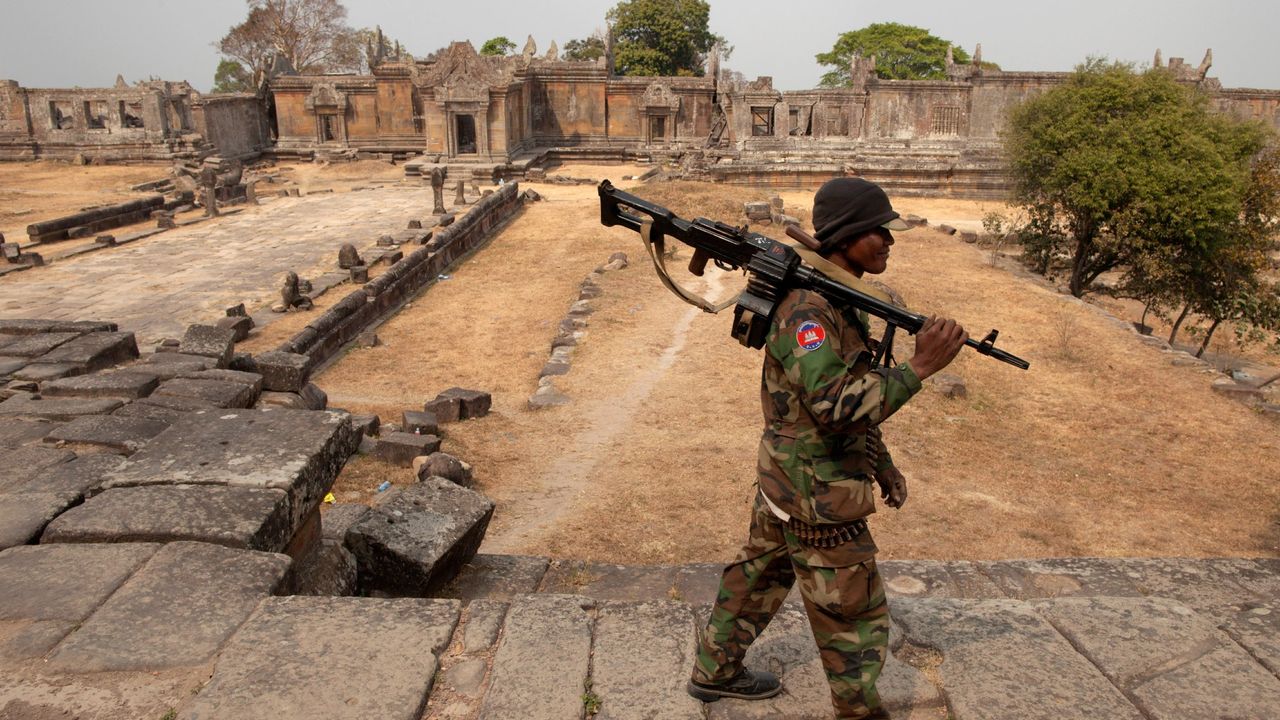
The border clashes between Thailand and Cambodia in July 2025 have deep historical roots, stretching back over a century to the colonial era. These tensions are centered on a disputed region known as the "Emerald Triangle," which includes the Preah Vihear temple complex—a UNESCO World Heritage Site dating back to the 11th century. The area has long been a flashpoint for conflict, with at least 12 Thai nationals and an unknown number of Cambodians losing their lives during recent fighting.
The origins of the dispute can be traced to the early 20th century when Thailand was still known as Siam. At that time, the kingdom maintained a degree of independence despite British and French influence in Southeast Asia. Treaties between Siam and European powers helped define borders in the region, including agreements with France in 1904 and 1907, and with Britain in 1909. These treaties shaped the boundaries of what would become Indo-China and established a framework for modern statehood.
Colonial Influence and Regional Tensions
France played a significant role in defining the borders of the region, particularly in the late 19th and early 20th centuries. The British also had a strong presence, especially along the Malayan and Burmese frontiers. These colonial interventions set the stage for future disputes, as the borders were often drawn without regard for local populations or historical claims.
Thailand's modernization efforts began in earnest after it renamed itself in 1939. The country benefited from foreign investment and a centralized government, while its capital, Bangkok, flourished due to its strategic location at the mouth of a river delta and access to the Gulf of Thailand. However, the interior of the country remained largely untouched by modernization, with dense forests and mountains creating natural barriers that influenced the development of the nation.
During World War II, Thailand's non-aligned stance was tested when it fought against Vichy French forces in 1940. This event marked a turning point in the country's history, as it demonstrated the vulnerability of even a seemingly independent state.
Political Instability and Cold War Dynamics
Thailand's political landscape has been marked by frequent military coups since the 1930s, with civilian leadership often serving as a facade for military rule. This pattern continued into the Cold War, as Bangkok's pseudo-military junta sought to align itself with the United States to counter the spread of communism in Southeast Asia.
Thailand was briefly a member of the Southeast Asia Treaty Organization (SEATO) and played a key role in shaping the Association of Southeast Asian Nations (ASEAN). However, the fall of South Vietnam in 1975 and the rise of communist regimes in Laos and Cambodia created new challenges for Thailand. A refugee crisis engulfed the eastern provinces, and the Khmer Rouge regime in Cambodia became a major threat to regional stability.
The Cambodian-Vietnamese War and Its Aftermath
In 1979, Vietnam launched a surprise invasion of Cambodia, leading to another refugee crisis and bringing Vietnamese forces closer to Thailand's border. Bangkok responded with diplomacy, seeking to stabilize the region through negotiations and alliances. The re-emergence of a viable Cambodian state in the late 1990s brought some hope, but Thailand continued to face challenges such as drug trafficking and post-war refugee issues.
Despite these difficulties, both countries have maintained diplomatic relations, with leaders like Hun Sen playing a key role in shaping the relationship. However, the question of the border remains unresolved, particularly in areas like the "Emerald Triangle," where heritage sites often become focal points for tension.
The 2025 Border Clash and Its Resolution
The 2025 border clash between Thailand and Cambodia highlighted the ongoing nature of the dispute. While the Royal Thai Armed Forces have contested the "Emerald Triangle" region multiple times, they have avoided full-scale war due to domestic political considerations. The conflict escalated into cross-border artillery duels, prompting thousands of civilians to flee their homes.
A summit organized by Malaysia helped resolve the situation, with Prime Minister Anwar Ibrahim offering vague promises to ease tensions. Although the worst was averted, the underlying issues remain, with both countries continuing to seek resolution through different approaches—Cambodia favoring international court rulings, while Thailand prefers bilateral agreements.
The historical context of the dispute underscores the complexity of border issues in Southeast Asia, where colonial legacies, political instability, and regional dynamics continue to shape the present.

Post a Comment for "Thailand-Cambodia Border War: Roots in Colonial History"
Post a Comment