
Trump Proposes National Crime Crackdown: What He Can Do Beyond DC
The Deployment of the DC National Guard and Federal Control Over the Police Department
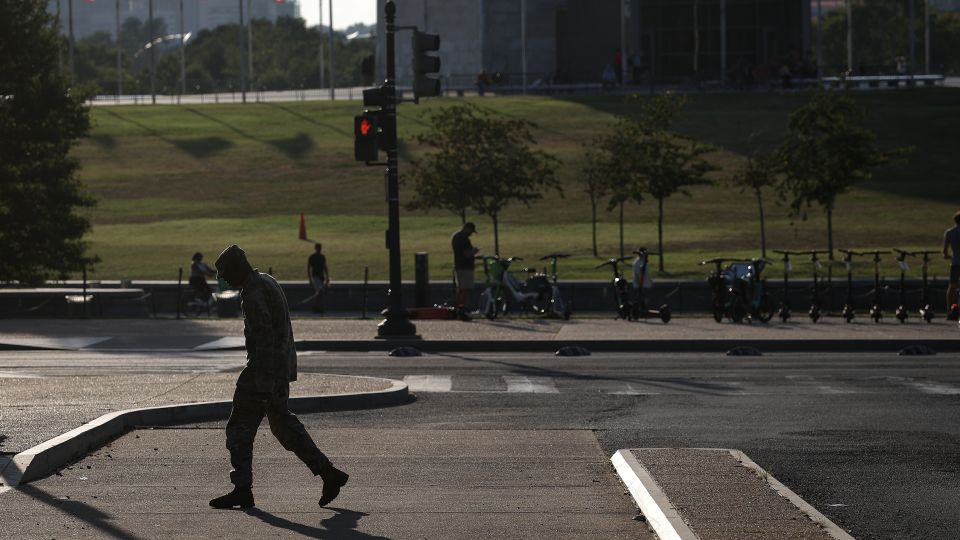
The DC National Guard began appearing in the nation’s capital on Tuesday, following President Donald Trump’s announcement the previous day that he would deploy guard troops and place the city's police department under direct federal control. This move was justified by Trump as a response to a public safety emergency after an assault on a former government worker.
The DC National Guard reports directly to the President of the United States. Because Washington, D.C., is not a state but a district, the president and the federal government have more flexibility in directing troops and federal authorities. Trump’s decision to take over the DC police department draws from the Home Rule Act of 1973, which balances local self-governance with federal oversight in the capital. While the president can assume control of the police department for up to 30 days with congressional notice, any extension beyond that would require a law passed by Congress.
Trump’s announcement came after a 19-year-old former Department of Government Efficiency worker was assaulted during an attempted carjacking on August 3. Despite Trump’s repeated claims of a surge in violent crime in Washington, overall crime numbers this year are lower than last year. On Monday, Trump declared, “Washington, D.C. will be LIBERATED today!” on his Truth Social platform.
This declaration also coincided with the first day of a trial involving administration lawyers, who were in court to address the legality of Trump’s deployment of the National Guard in California in June amid protests over immigration raids in Los Angeles.
Understanding Trump’s Authority in Washington, D.C.
Under the Home Rule Act of 1973, Washington, D.C., operates with limited self-governance while still being subject to congressional oversight. The act grants emergency powers to the federal government, allowing the president to take control of the city’s police for up to 48 hours if he determines “special conditions of an emergency nature exist.” This marks the first time in the act’s history that a president has assumed control of the city’s police force.
Extending the takeover beyond 30 days requires formal notification to congressional committees handling DC affairs. Any longer-term control would need congressional approval, which is unlikely given the current political gridlock.
Trump’s Potential Actions in Other Cities
Trump mentioned considering similar actions in cities like Chicago, New York, and Los Angeles due to their crime rates. However, the federalization of DC’s Metropolitan Police Department relies on the unique provisions of the Home Rule Act, which applies only to the nation’s capital. These powers are not easily replicable in other states or cities.
While Trump expressed a desire for all cities to be safe, he emphasized starting with the capital as a model for the rest of the country. Notably, cities such as New York, Los Angeles, and Chicago have seen sustained declines in crime in 2025. Similarly, historically high-crime cities like Philadelphia, St. Louis, Baltimore, and Detroit have experienced substantial reductions in violent crime in recent years.
Legal Scrutiny and Concerns
Trump’s ability to deploy the National Guard outside of DC remains under legal scrutiny, particularly after he deployed them alongside hundreds of US Marines in Los Angeles. Questions persist about the limits of using federal law enforcement to protect federal buildings and employees.
Reactions from District Leaders
Washington Mayor Muriel Bowser and leaders of the Washington Metropolitan Police Department were unaware of Trump’s intentions before his announcement. Bowser called the move “unsettling and unprecedented,” suggesting it was influenced by her experience during Trump’s first term when crime spiked. In contrast, DC Police Union chairman Greggory Pemberton supported the move, stating that “something needs to be done.”
Federal Agencies Working With Police
Trump activated 800 soldiers from the DC National Guard, with up to 200 assigned to support law enforcement. Their duties include administrative and logistical roles, as well as providing a physical presence in support of law enforcement. Beyond the police department, Trump has broad jurisdiction over the city’s affairs, with numerous federal law enforcement agencies, including the FBI, headquartered in the city and reporting directly to the administration.
Federal agencies such as the Border Patrol and Immigration and Customs Enforcement have also been observed near key locations in the city. Over the weekend, Trump moved up to 130 FBI agents to patrol with DC police in several neighborhoods.
Declining Crime Rates in Washington, D.C.
Despite Trump’s claims that crime is “out of control,” data shows that violent crime in Washington, D.C., has been declining since its 2023 spike. There were 274 reported homicides in 2023, the highest number since 1997, but this dropped by 32% in 2024 to 187 and further by 12% in 2025, with 99 reported as of Sunday.
Carjackings followed a similar trend. After surging to 959 in 2023, the number of reported carjackings dropped to around 500 in 2024 and further to 188 in 2025, with July marking the lowest monthly total since May 2020.

Post a Comment for "Trump Proposes National Crime Crackdown: What He Can Do Beyond DC"
Post a Comment