
Trusting God in Lebanon's Post-War Uncertainty
A Symbol of Resilience and Hope
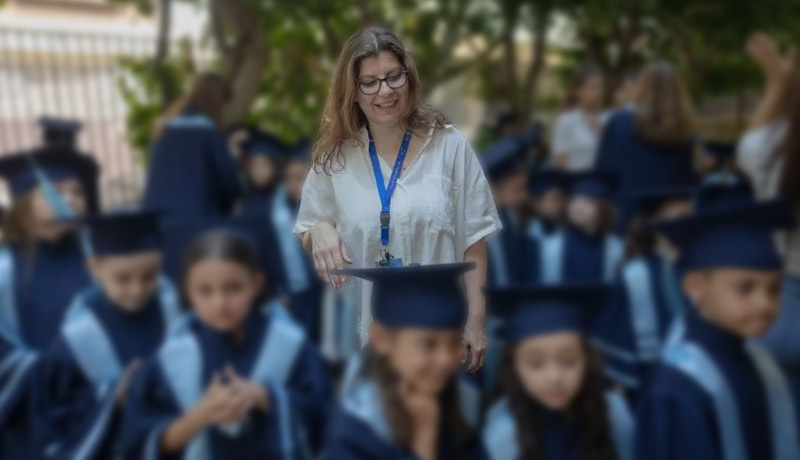
In June, more than a hundred preschoolers stood proudly on the graduation stage at Beirut Baptist School. This moment was not just a celebration of their academic achievements but also a testament to their strength in the face of adversity. The ceremony took place against the backdrop of ongoing conflict, with the sounds of airstrikes and sonic booms echoing through the city. For these young students, their graduation marked the end of one of the most challenging years of their lives.
The event was attended by parents and teachers, including Nafisa, a remedial teacher who reflected on the incredible resilience of her students. “They were all amazing,” she said. The children were honored as “real-life heroes” for continuing to play, learn, and do their best despite the war surrounding them.
However, beneath the music and joy of the ceremony was an undercurrent of anxiety. Throughout the event, phones buzzed constantly with news alerts about the ongoing conflict between Israel and Iran. Many were worried that the war could spread into Lebanon, which is still recovering from the recent conflict between Israel and Hezbollah.
Nafisa, like many others, was prepared for the worst. She had her daughters pack their bags and be ready to leave at a moment’s notice. After the ceremony, she rushed home, missing the annual group photo with her colleagues. This wasn’t the first time she had felt the impact of war. Earlier in the year, she was among 100 teachers displaced from their homes due to the fighting.
Despite being forced to live with relatives, Nafisa remained committed to her students. While most classes moved online during the height of the conflict, Beirut Baptist School recognized that this approach wasn’t suitable for students with learning difficulties. As a result, Nafisa continued to work on campus, teaching, dancing, and playing with her students even as the sounds of drones and airstrikes filled the air.
“Teaching helped me get rid of the stress I was under and the psychological pressure I was feeling,” Nafisa explained. “I would come to school and disconnect from the outside world.”
Throughout the war, Beirut Baptist School provided support to teachers like Nafisa. In May, after a ceasefire agreement ended the conflict between Israel and Hezbollah, she and her family returned home. “It is my second family,” she said. “It’s a blessing to be at a school like this—an organization that loves and cares for its staff to such an extent, treating them as family.”
Even though the full-scale war has ended, the dangers and challenges remain. Israeli surveillance drones continue to fly above Beirut, and daily airstrikes hit targets across the country. Such violence affects everyone, and for people like Nafisa, there is always the risk of having to flee suddenly.
To stay prepared, Nafisa keeps a bag by the door with essential documents and necessities. “It’s in standby mode,” she said. “We could leave the house at any moment, and we never know if we’ll come back.”
This was the case earlier this summer when Nafisa and her family had to flee again as airstrikes hit Beirut. It was Nafisa’s birthday, and the experience left her shaken. “There were eight airstrikes forming a circle around us, and we were right in the middle,” she recalled.
These attacks have raised concerns about the possibility of another full-scale war between Israel and Hezbollah. Despite the uncertainty, Nafisa remains optimistic and hopeful. “I tell my children that we’re all together, and whatever happens, happens to all of us,” she said. “I want to remain optimistic and hopeful, putting my trust in God.”
On the day of the preschool graduation, Nafisa returned home to find her daughters packed and ready to leave. She paused for a moment, sensing a sense of peace. In the end, she and her husband decided not to leave their home this time. “I felt God telling me that we were safe and that nothing would happen,” she said. “But even if it did, we were ready to flee.”

Post a Comment for "Trusting God in Lebanon's Post-War Uncertainty"
Post a Comment