
U.S., China, Panama Canal — The Struggle of the Middle Ground
The Crumbling Monument and the Geopolitical Tensions in Panama
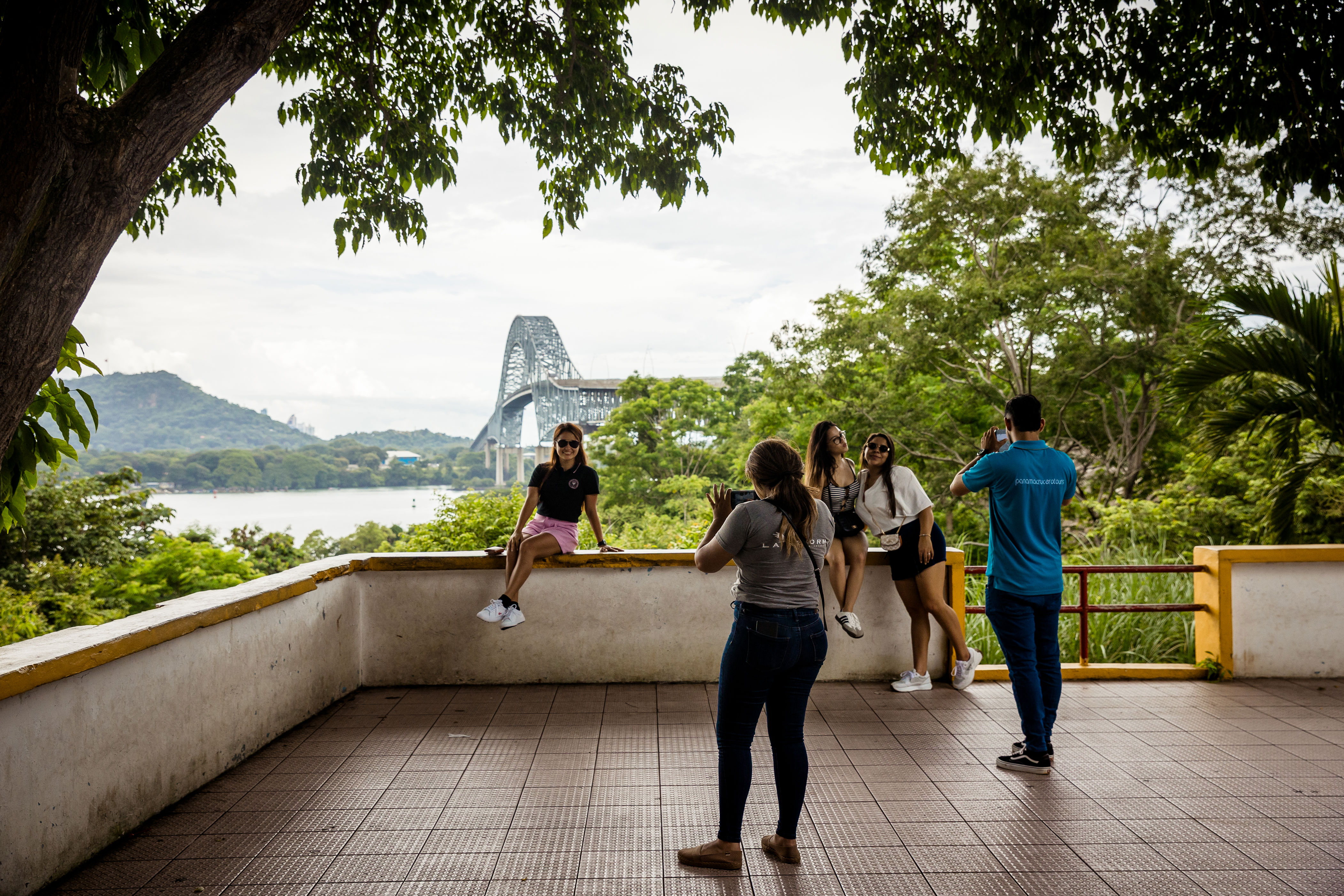
In Arraiján, Panama, a small town near the Panama Canal, a once-proud monument is now in disrepair. The red arch, adorned with stone lions and painted dragons, was built in 2004 to honor the Chinese community in Panama. This site, known as the Mirador de las Américas, offers a breathtaking view of the Bridge of the Americas and the canal below. However, over time, parts of the arch and a nearby obelisk have crumbled, leading some locals to suggest that the entire structure should be demolished.
Carlos Ng, vice president of the Chinese Association of Panama, expressed his concern about the state of the monument. “It’s painful to see it in such bad shape,” he said. “People think it’s abandoned.” For many in the Chinese Panamanian community, this symbol represents not just their heritage but also the growing influence of the United States over Panama’s strategic assets, particularly the Panama Canal.
The Panama Canal is a critical waterway for global trade, with 40 percent of U.S. container traffic passing through it. This has made it a focal point in the growing rivalry between the United States and China. President Donald Trump has repeatedly claimed that China controls the canal, even suggesting that the U.S. might take it back by force. These statements have stirred memories of the 1989 U.S. invasion of Panama, creating a sense of unease among Panamanians.
In response to these tensions, Panamanian leaders have taken several steps to distance themselves from China. They allowed the U.S. to remove Huawei telecommunications towers and pulled out of the Belt and Road Initiative, a major Chinese infrastructure program. Additionally, they audited the Hong Kong-based company that operates ports at each end of the canal and moved to scrap its contracts for those facilities.
For many Chinese Panamanians, the refusal of the mayor of Arraiján to allow Chinese leaders to renovate the overlook is seen as a reflection of Panama's broader geopolitical shift. Juan Tam, a former canal employee whose parents arrived from China in the 1910s, remarked, “What’s happening with the overlook is what’s happening in Panama at a global level.”
Panamanian President José Raúl Mulino, when asked about the overlook, stated that its future is a local issue. He emphasized the strong relationship between Panama and the U.S., calling them “number-one strategic and multifaceted partners.” However, this stance has raised concerns among Chinese Panamanians, who feel that their community's history is being ignored in favor of political alliances.
A Rich History of Chinese Immigration
The presence of the Chinese community in Panama dates back to the 1850s when immigrants arrived as laborers for the French effort to build a railroad and later a canal. When the U.S. took over the canal project, these workers opened stores along the route to sell goods to others involved in the construction. Over time, more families were brought over from China, leading to the growth of one of the largest Chinese communities in Central America.
This community established a Chinatown in Panama City, where today, between 5 to 10 percent of all Panamanians are believed to have some Chinese ancestry. The cultural blend is evident in neighborhoods like El Dorado, where Panamanian flags share space with red paper lanterns, and food vendors serve dishes like chow mein with plantains.
The Mirador de las Américas was constructed to celebrate the 150th anniversary of the Chinese community in Panama. A group of Chinese Panamanians raised funds to build the overlook, which is located in Arraiján, across from Panama City at the canal’s Pacific end.
Growing Ties and Subsequent Shifts
In 2017, Panama cut diplomatic ties with Taiwan and became the first country in Latin America to join the Belt and Road Initiative, a program led by Chinese leader Xi Jinping to expand Beijing's influence through infrastructure development. This move brought increased trade between the two countries, with China becoming Panama’s top export market.
However, under pressure from the U.S., Panama has since taken steps to reduce its reliance on China. President Mulino accused Trump of lying about reclaiming the canal, while the U.S. increased its pressure through various means, including threatening measures to protect its rights unless Panama reduced Chinese influence.
Despite these efforts, the U.S. has not been able to convince Panama to lower fees for U.S. ships transiting the canal, a point of contention that remains unresolved.
The Monument in the Middle of the Conflict
Eloy Chong, the mayor of a bedroom community outside Panama City, has expressed frustration with Panama’s pivot away from China. He believes that both the U.S. and China are essential for the economic development of cities like his. However, the shift from China has already had economic consequences, with some Chinese companies abandoning plans due to the changing political landscape.
Arraiján Mayor Stefany Peñalba posted images on Instagram showing the park without the arch or obelisk, claiming she was rescuing public spaces for culture, tourism, and business. The Chinese Association of Panama, which originally donated the obelisk, raised concerns about the lack of communication and support from the municipality.
While some believe the monument is merely a cultural symbol, others see it as part of a larger geopolitical struggle. Xu Xueyuan, China’s ambassador, called for the monument to remain as a tribute to the Chinese contributions to Panama. Meanwhile, the U.S. ambassador, Kevin Marino Cabrera, focused on the broader implications of Chinese influence, stating that the actions taken by Panama indicate the effectiveness of U.S. pressure.
Patsy Lee, a delegate to the National Assembly and a Chinese Panamanian, believes that Panama should maintain strong ties with both the U.S. and China. She suggests that fixing up the monument could be an easy starting point for fostering better relations.

Post a Comment for "U.S., China, Panama Canal — The Struggle of the Middle Ground"
Post a Comment