
Airlines return to Israel as fares surge during High Holidays
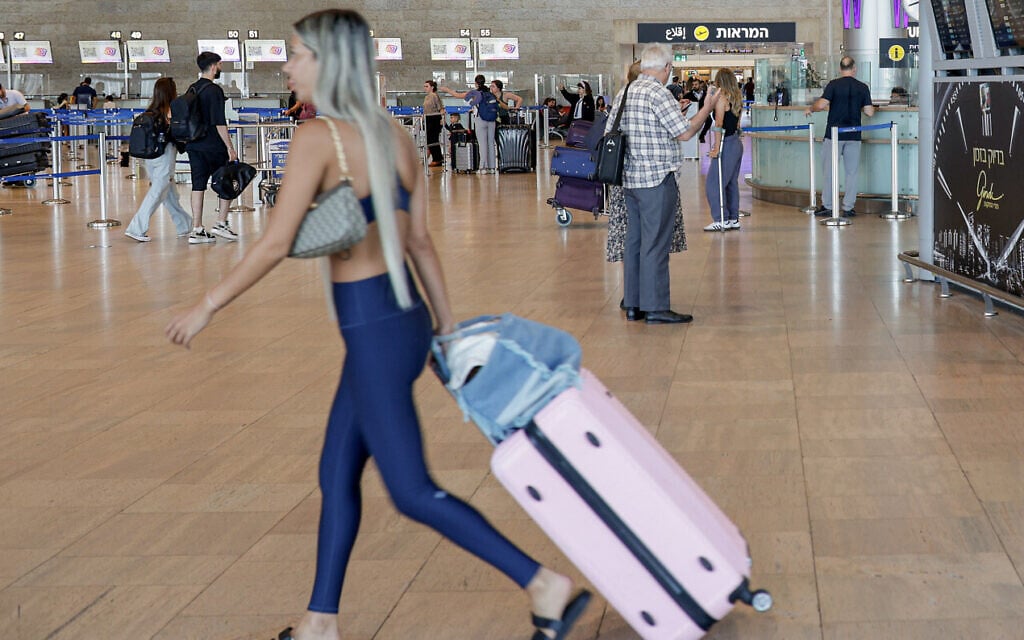
Airlines Return to Israeli Skies, But Prices Soar Amid Peak High Holiday Demand
As the Jewish High Holidays approach, Israel’s air travel sector is experiencing a surge in demand despite ongoing conflicts and limited airline options. Delta and Air Baltic have resumed flights to and from Tel Aviv this month, but prices are rising sharply as bookings increase. Many foreign carriers continue to delay their return to the region due to the ongoing Gaza war.
The conflict, which could soon enter its third year, has significantly impacted Israeli air travel. Most foreign airlines have paused their services, and even domestic carriers often remain grounded due to security concerns. Despite these challenges, travel agencies report a boom in ticket sales, with many travelers rushing to book flights before the holidays, even at high prices.
Shirley Cohen Orkaby, vice president at Eshet Tours Group, explained that demand is particularly high ahead of the Jewish holidays. “Flight prices will continue to increase as we get closer,” she said. “Although some foreign airlines have resumed flights to Israel, they are not operating the full schedules they offered before the outbreak of war on October 7, 2023, while other carriers have not restarted service to Tel Aviv at all. That limited availability is pushing up airfares.”
Passenger traffic through Tel Aviv’s Ben Gurion Airport has gradually returned to pre-war levels over the past month, during the peak summer season, despite a 119 percent price hike in fares over the past two years. This recovery follows Ben Gurion’s return to full operations at the end of June after Israel closed its airspace for 12 days during its conflict with Iran.
Following Israeli strikes on Iranian nuclear and military sites on June 13, and Tehran’s barrages of indiscriminate ballistic missile fire, most major European and US airlines halted flights to Israel or extended suspensions of already frozen routes—some through July or August, and others into September, October, or even 2026. These cancellations left thousands of Israelis stranded abroad or at home, scrambling to book new flights at inflated prices, make alternative arrangements, or cancel their vacation plans altogether.
Since Hamas’s October 7, 2023, invasion of Israel, which saw some 1,200 people killed and 251 abducted to the Gaza Strip, foreign airlines have repeatedly suspended and resumed service to Tel Aviv. This inconsistency has left Israel’s air connection to the world largely dependent on local carriers El Al, Israir, and Arkia.
“Many Israelis still prefer booking with Israeli carriers because they don’t want to risk being stranded abroad or having their holidays ruined again if the situation deteriorates,” Cohen Orkaby said.
European airlines that have recently resumed partial service to Tel Aviv include the Lufthansa Group (Lufthansa, SWISS, Austrian Airlines, Brussels Airlines, and Eurowings), Air France, LOT Polish Airlines, Hainan Airlines, Etihad Airways, Azerbaijan Airlines, Ethiopian Airlines, Uzbekistan Airways, Georgian Airways, Bulgaria Air, flydubai, Cyprus Airways, Air Seychelles, and Hungarian low-cost carrier Wizz Air. Italy’s ITA Airways and Dutch carrier KLM are expected to resume service at the end of September.
However, other airlines such as Irish low-cost carrier Ryanair, Air Canada, Air India, and British Airways have suspended their Tel Aviv routes until the end of October and have yet to confirm return dates. British low-cost giant easyJet has stated it will not resume flights to Israel before spring 2026.
Revital Ben Natan, CEO of Ofakim Travel and Tours, noted that there is strong demand among Israelis to travel during the upcoming Jewish holidays. “Many may not have traveled recently because fares were so high, but since prices are unlikely to drop, travelers are prepared to compromise by booking flights with a stopover instead of a direct route to make trips more affordable.”
Most of the High Holidays—Rosh Hashanah and Yom Kippur later this month, followed immediately by Sukkot and Shemini Atzeret/Simhat Torah—fall mid-week, creating multiple non-working days and a significant vacation period for Israelis. This timing allows for longer breaks without using many vacation days from work.
“There is also noticeable demand for bookings to distant destinations in the Far East, such as Thailand and Japan, as well as the United States, led by New York, which is always popular,” Ben Natan said.
Four airlines now operate the Tel Aviv–New York route: El Al and Arkia, along with US carriers United Airlines and Delta. Israir has announced plans to join the route in April 2026. Despite the return of US carriers, fares to New York remain high, with round-trips for late September through mid-October selling for between $2,015 and nearly $3,000 on United and Delta.
Cohen Orkaby and Ben Natan agree that prices will continue to climb until the end of the holiday season in mid-October. “We are likely to see fares stabilize somewhat after the holidays as demand subsides,” Ben Natan said. “But for prices to return to prewar levels, we’ll need more competition, a full return of foreign airlines, and increased flight frequencies.”

Post a Comment for "Airlines return to Israel as fares surge during High Holidays"
Post a Comment