
Appeals Court Lets 'Alligator Alcatraz' Stay Open — For Now
Temporary Block on Closure of Immigration Detention Facility
A federal appeals court has temporarily blocked a judge’s order requiring Florida and the federal government to shut down and dismantle a controversial immigration detention facility located in the Everglades, often referred to as “Alligator Alcatraz.” The decision by the Eleventh US Circuit Court of Appeals came after both the State of Florida and the US Department of Homeland Security requested a stay on a district court’s preliminary injunction. This injunction would have forced the site to stop operations within 60 days.
The three-judge panel granted the motion, stating that the case should be put on hold while an appeal is processed. A preliminary injunction is a temporary legal action that remains in effect until a final ruling is made. The court's decision was divided, with the majority agreeing to the stay, while one judge dissented.
Conditions at the Facility Spark Outcry
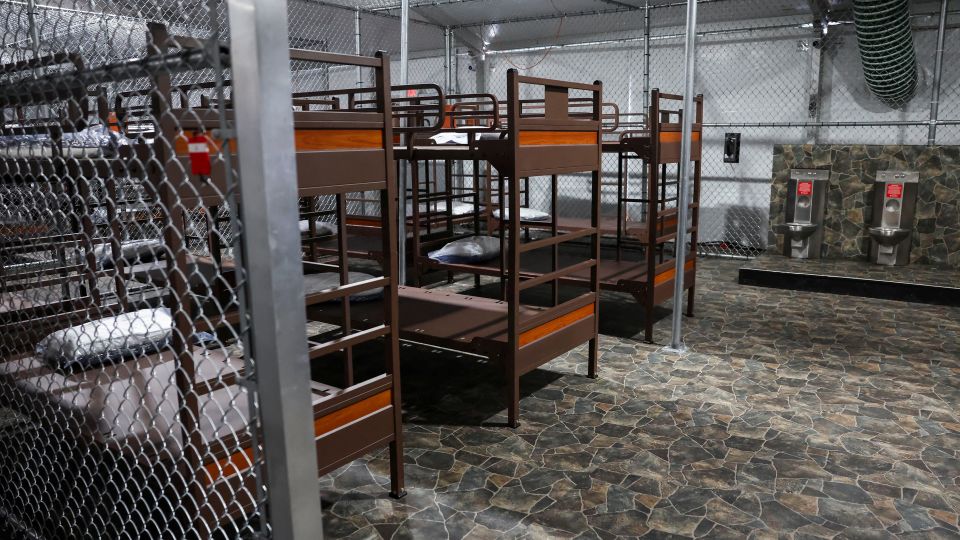
The makeshift detention facility had drawn significant criticism for its treatment of migrants, who were subjected to sweltering heat, bug infestations, and minimal meals. These conditions led to calls from members of Congress and state representatives to close the facility immediately. Despite these concerns, Florida Governor Ron DeSantis continues to expand immigrant detention centers in the state, including two new facilities named “Deportation Depot” and “Panhandle Pokey.”
Florida Attorney General James Uthmeier hailed the court’s decision as a victory against what he called an “activist judge,” suggesting it aligned with President Trump’s agenda. However, the ruling also dealt a blow to environmental groups and the Miccosukee Tribe of Indians of Florida, who had argued that the facility violated the National Environmental Policy Act (NEPA).
Legal Arguments and Environmental Concerns
The court ruled that the facility is operated by the state, not the federal government, and therefore does not fall under NEPA’s requirements. NEPA, signed by President Richard Nixon, is a foundational environmental law that mandates environmental reviews for major federal actions. The majority opinion stated that since the facility is built, led, and funded by the state, it is not subject to federal oversight.
However, the dissenting judge argued that the facility was effectively a federal project, citing statements from the Department of Homeland Security and public assurances from officials that the federal government would fund the operation. He believed that the plaintiffs faced irreparable harm and that the facility should remain closed.
Continued Legal Battle
Eve Samples of Friends of the Everglades and Elise Bennett of the Center for Biological Diversity expressed disappointment with the ruling but vowed to continue their fight. They believe the case is far from over and are hopeful that the preliminary injunction will be upheld during the appeal process.
The next step involves a newly selected panel of appellate judges deciding whether to reinstate the injunction or dismiss it. Meanwhile, Governor DeSantis celebrated the court’s decision, calling the facility “open for business.” The Department of Homeland Security also praised the stay, claiming it was a win for the American people and the rule of law.
Ongoing Controversy and Future Plans
The controversy surrounding the Everglades detention facility has highlighted concerns about the impact on the environment and local communities. The Miccosukee Tribe raised issues about habitat loss and harm to endangered species. The facility, which was quickly converted from a runway into a temporary tent city, has been plagued by reports of unsanitary conditions and limited access to legal resources.
Despite the ongoing legal battle, DeSantis has indicated that the state is considering additional areas for future facilities. He mentioned that there is a demand for more than just “Alligator Alcatraz,” with plans to establish larger detention centers like “Deportation Depot,” which could hold up to 1,500 detainees.
As the legal proceedings continue, the debate over the facility’s operation and its environmental impact remains unresolved, with both sides preparing for further challenges in the courts.

Post a Comment for "Appeals Court Lets 'Alligator Alcatraz' Stay Open — For Now"
Post a Comment