
Asia-Pacific Economic Summit: A Global Political Barometer
APEC Summit in Gyeongju: A Crucial Stage for Global Diplomacy
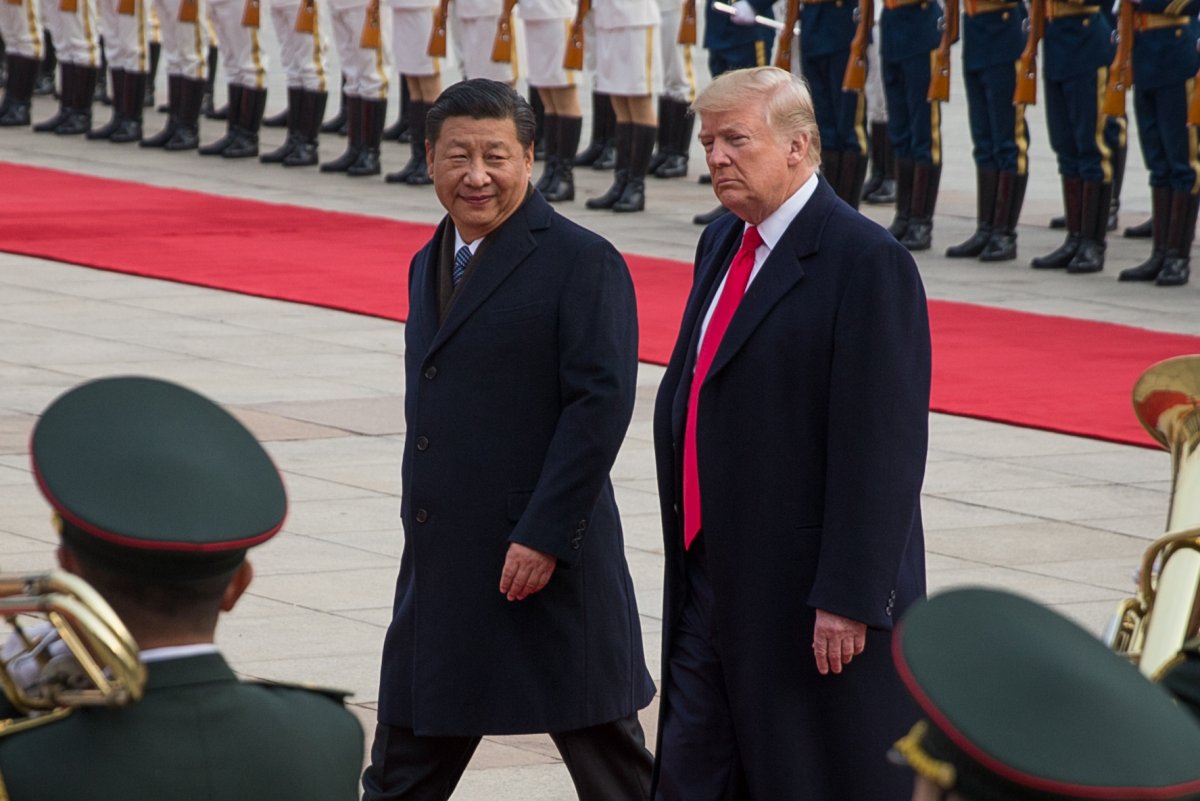
The United Nations General Assembly has come to a close, and the world is now turning its attention to Gyeongju, where the Asia-Pacific Economic Cooperation (APEC) summit will take place. This event promises to be an even more significant platform than the previous one in New York. The summit, scheduled from October 31 to November 1, holds historical significance as it marks the first joint visit by American and Chinese leaders to South Korea in 13 years. It will also be the first U.S.-China summit on Korean soil and the first meeting between Donald Trump and Xi Jinping since 2019.
In an era where the international order is being reshaped along the lines of a new Cold War, the meeting of these two global powers has drawn the world's attention to Korea. Speculation is growing that a dramatic reprise of the 2019 "Panmunjom surprise" — when U.S. and North Korean leaders stood together at the border — could occur. If this happens, the APEC summit in Gyeongju will not just be a diplomatic gathering; it will serve as a high-stakes barometer of global politics.
For South Korea, the focus is not solely on the grandeur of the event but on whether it can assert its strategic will amid the complex dynamics of great-power politics. Beyond the U.S.-China summit, Seoul has a packed schedule, including a Korea-China summit, a second Korea-U.S. summit, and a first meeting with Japan’s new prime minister. Each of these requires careful preparation, moving beyond symbolic gestures like announcing a "clean-up week" to concrete strategies with real impact.
The U.S.-China Summit: A Limited Priority
While the world will undoubtedly focus on the U.S.-China summit, its value for South Korea is more limited. The most desirable outcome from Seoul's perspective — progress on North Korea's denuclearization — seems unlikely. President Xi Jinping's recent actions, such as standing shoulder-to-shoulder with Kim Jong Un at China's Victory Day celebrations, suggest little willingness to make concessions. Any hope that Beijing will soften its stance during talks with Washington is more wishful than realistic.
On the other hand, the Korea-China summit is of greater importance for Seoul. If Xi's visit is elevated to the status of a state visit — the first since 2014 — it would symbolize the restoration of relations that had cooled under the Yoon Suk Yeol administration. However, for President Lee Jae Myung, this presents a delicate challenge. Since taking office, he has reinforced the U.S.-Japan-Korea trilateral framework and declared that the era of "security with America, economy with China" is over. Meanwhile, Beijing has shown solidarity with North Korea and Russia, defying Western influence.
Korea-China and Korea-U.S.: Complex Agendas
If the Korea-China talks move toward substance, the backlog of unresolved disputes will be formidable. The fact that the two neighbors have not held a leaders' summit in over a decade speaks volumes. If they do meet, the dialogue must be frank, dignified, and based on reciprocity. South Korea is not a subordinate but a sovereign state, and the summit should demonstrate mature diplomacy where concessions and gains are balanced with confidence.
The second Korea-U.S. summit also looms large. Ongoing tariff negotiations remain unsettled, creating uncertainty. Delays have already caused distortions, with some Korean tariffs exceeding Japan's, placing Korean firms at a disadvantage. Seoul must use this summit to clarify its position, ensuring that Koreans feel treated as true allies, not afterthoughts.
Another pressing issue is the allocation of returns from Korea's proposed $350 billion in U.S. investments. President Lee has pledged to uphold prior commitments, but mounting domestic calls for renegotiation are narrowing his political space. Without clear progress, he may find himself forced to reopen the deal.
Visa issues also remain a concern. The fallout from the Georgia labor dispute exposed flaws in the system for Korean professionals. While Washington has suggested a special visa program, nothing has materialized. Rising visa fees have left Korean firms struggling, and at the summit, Lee will face pressure to secure tangible relief.
Japan and the Uncertain North
A summit with Japan is also expected next month. With Tokyo undergoing a leadership transition, the key question is whether the two-track framework built by Lee and former Prime Minister Shigeru Ishiba can be sustained under the incoming leader. APEC will provide early clues about this.
However, the biggest concern remains the possibility of another U.S.-North Korea summit. Kim Jong Un, in a recent address to the Supreme People's Assembly, expressed willingness to talk with Washington on the condition of being recognized as a nuclear power. Trump, who has long claimed to maintain a "good relationship" with Kim, did not mention North Korea at all in his recent U.N. speech — a stark departure from his first term. Experts interpret this silence as a deliberate move not to provoke Pyongyang, leaving the door open for potential talks.
If such a meeting occurs, Seoul cannot afford to be passive. The goal must be clear: dialogue aimed at achieving peace and eventual reunification, anchored on the premise of denuclearization. Korea should push Washington to reject any settlement that entrenches Pyongyang's "two-state" campaign to enshrine permanent division.
Kim may attempt to leverage his ties with Moscow and Beijing, bolstered by sending troops to Russia's war in Ukraine and attending China's Victory Day parade, to coax Trump into legitimizing North Korea's nuclear status. Washington must resist this and instead stand by the vision for peaceful unification reaffirmed at the November 2024 trilateral summit with Korea and Japan.
Building the "Bridge"
If Lee succeeds in navigating these converging summits — balancing China, solidifying commitments from Washington, stabilizing relations with Tokyo, and shaping any potential U.S.-North Korea encounter — then his much-mentioned "bridge" doctrine may finally take shape.
A bridge is not built on spectacle but on solid foundations. This APEC summit will test whether Korea can lay those foundations not only for itself but for peace and order in Northeast Asia.

Post a Comment for "Asia-Pacific Economic Summit: A Global Political Barometer"
Post a Comment