
David Baltimore, Nobel Laureate and Caltech's Former President, Dies at 87
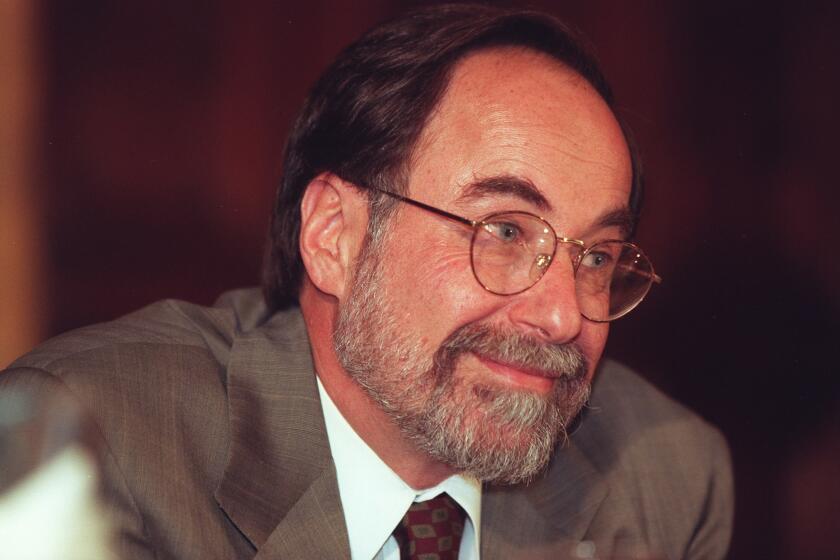
A Legacy of Scientific Leadership and Ethical Stewardship
David Baltimore, a towering figure in the world of science, left an indelible mark on the fields of virology, genetics, and bioethics. His career spanned decades, marked by groundbreaking discoveries, leadership roles in prestigious institutions, and a commitment to ethical scientific practices. From his early days as a curious high school student to his final years as a respected academic, Baltimore's journey was one of relentless pursuit of knowledge and a deep sense of responsibility.
Early Life and Education
Born on March 7, 1938, in New York City, David Baltimore grew up in a family that valued moral integrity and social justice. His father, Richard Baltimore, was a garment industry merchant with roots in Lithuania, and his mother, Gertrude Lipschitz-Baltimore, instilled in him a strong sense of ethics. This foundation would later influence his public stances on critical issues such as the AIDS epidemic and nuclear proliferation.
Baltimore’s passion for science began at a young age. During a summer program at the Jackson Laboratory in Bar Harbor, Maine, he made a discovery that set him on the path to a scientific career. “It was the process of research,” he reflected later. “I discovered that I could investigate the unknown as a high school student.”
After graduating from Swarthmore College, he earned his doctorate from the Rockefeller Institute (now known as Rockefeller University). He then spent three years at the Salk Institute in La Jolla, where he met his future wife, Alice Shih Huang. Their collaboration on animal viruses laid the groundwork for his future work in molecular biology.
Pioneering Discoveries and Scientific Contributions
Baltimore’s most notable contribution came during his time at MIT, where he discovered reverse transcriptase, an enzyme that enables RNA to be copied into DNA. This discovery revolutionized the understanding of how viruses replicate and played a crucial role in the study of retroviruses, including HIV.
His work on reverse transcription challenged the prevailing belief that genetic information flowed only from DNA to RNA. By demonstrating that this process could occur in both directions, Baltimore opened new avenues for research in immunology, cancer, and virology. The implications of his findings were far-reaching, influencing everything from gene therapy to the development of antiretroviral treatments.
In 1975, Baltimore was awarded the Nobel Prize in Physiology or Medicine, sharing the honor with Howard Temin. At just 37, he became a celebrated figure in the scientific community, though he remained humble about the recognition.
Leadership and Advocacy
Baltimore’s influence extended beyond the laboratory. He was a leader in shaping scientific policy and addressing ethical concerns. In the 1970s, he organized the Asilomar Conference, which established guidelines for the safe use of gene-splicing techniques. Later, he championed federal AIDS research and chaired a national commission that highlighted the inadequacies of the government’s response to the HIV/AIDS crisis.
He also played a key role in the biotechnology industry, helping to establish the Whitehead Institute for Biomedical Research and serving as president of the Rockefeller University. His leadership and vision helped transform these institutions into centers of excellence.
Controversy and Resilience
Despite his many achievements, Baltimore faced significant challenges. In the 1980s, he became embroiled in a scandal involving allegations of scientific misconduct. Though he was eventually exonerated, the ordeal tested his resilience. It also reinforced his commitment to ethical research and transparency.
Following this period, Baltimore took on new challenges, including coordinating the federal effort to develop an AIDS vaccine and leading the California Institute of Technology. His tenure as Caltech’s president saw the university rise in prominence, thanks in part to major donations, including a $600 million gift from Gordon Moore.
Later Years and Ongoing Influence
Even after retiring as Caltech’s president, Baltimore remained active in science and business. He continued to advocate for responsible genetic engineering, particularly as CRISPR technology emerged as a powerful tool for genome editing. He participated in discussions about the ethical implications of altering human DNA, emphasizing the need for caution and oversight.
Throughout his career, Baltimore published over 700 peer-reviewed articles and received numerous accolades, including the National Medal of Science and the Warren Alpert Foundation Prize. He was also a member of several influential scientific advisory boards, including Amgen, the Broad Institute, and the Ragon Institute.
Personal Life and Legacy
Baltimore is survived by his wife, Alice, and daughter, T.K. His life was defined by a dedication to science, a commitment to ethical principles, and a passion for mentoring the next generation of scientists. As he once said, “When you are a scientist, and you are trying to prove or disprove a notion, you work at the bench doing the dullest, most routine things over and over again.”
David Baltimore’s legacy will endure through the countless lives he touched, the discoveries he made, and the ethical standards he helped shape. His contributions to science and society will continue to inspire future generations of researchers and leaders.

Post a Comment for "David Baltimore, Nobel Laureate and Caltech's Former President, Dies at 87"
Post a Comment