
How the Hyundai Factory Raid Unfolds
The Largest Immigration Enforcement Operation in U.S. History
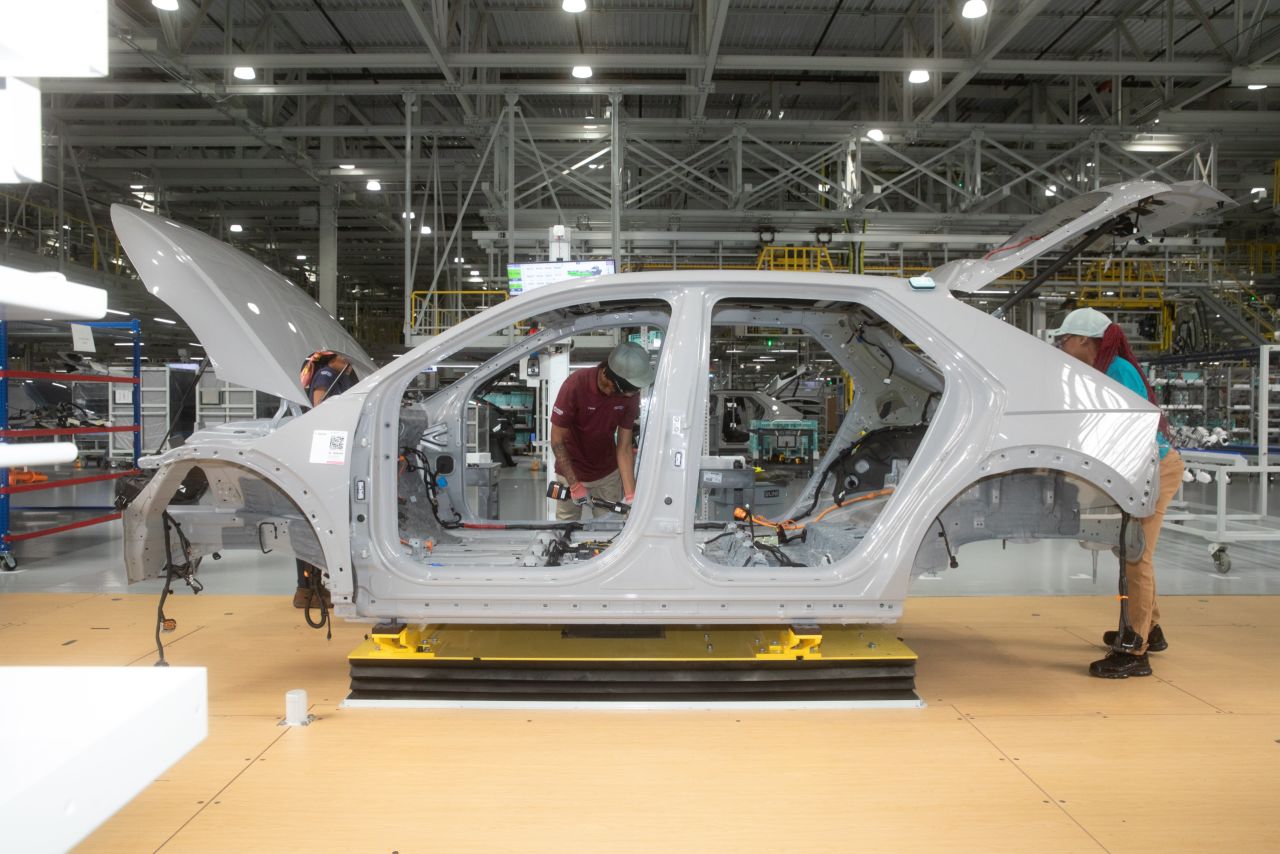
ELLABELL, Ga.—Hundreds of federal agents arrived just outside a massive Hyundai Motor complex located about a half-hour from Savannah. This site, known as the “Metaplant,” is a $7.6 billion facility that is still under construction, with some buildings not yet completed. Inside, workers are assembling electric vehicles (EVs) as part of an ambitious plan to expand EV and hybrid-vehicle production.
On Thursday, around 10:45 a.m., immigration officers entered the property and began separating a large group of workers based on their nationality and visa status. These individuals were processed and then loaded onto buses. Some attempted to flee, with a few running into a sewage pond. The government’s goal was to gather evidence for an investigation into alleged illegal employment practices at a planned EV battery plant on the nearly 3,000-acre site.
This operation marked the largest single-site enforcement action in the history of Homeland Security Investigations, according to an official. In total, approximately 475 people were detained. Many of them worked for subcontractors of Hyundai and its joint venture partner, LG Energy Solution. On Saturday, LG Energy confirmed that 47 of its employees—mostly South Koreans, with one Indonesian—along with roughly 250 employees from partner companies, were among those detained.
Kia Burke, a logistics manager at another part of the Hyundai site, said she wasn’t surprised by the raid given the high number of immigrant workers. However, the scale of the operation caught her off guard.
“I was amazed,” she said, adding that she was grateful it didn’t involve her team. “I just thought, ‘It wasn’t us—this time.’”
The immigration raid and ongoing criminal investigation represent a major setback for Hyundai, which has been working to gain favor with the Trump administration through a series of manufacturing investments in the U.S. The company emphasized its commitment to compliance with all laws and regulations, including employment verification requirements and immigration laws.
“We expect the same commitment from all our partners, suppliers, contractors, and subcontractors,” Hyundai stated. The company has since launched an internal investigation to ensure that all suppliers and their subcontractors at the site are following the law.
LG Energy also responded by suspending most business trips to the U.S. and directing employees on assignment there to return home or stay put in their accommodations.
Hyundai executives have long highlighted the job-creating potential of the Georgia site, which is part of the company’s $21 billion investment announced in March. The Metaplant includes production facilities for Ioniq 5 and Ioniq 9 sport-utility vehicles, and it will eventually produce EV batteries as well as other cars from Kia and Genesis.
The project has been a point of pride for the state of Georgia and President Trump, who praised the investment during a March press conference. He claimed that tariffs had worked, citing the deal as proof.
In the Oval Office on Friday, Trump defended the raid, stating, “I would say they are illegal aliens and ICE was just doing its job.”
Once the Georgia complex is complete, Hyundai plans to employ 8,500 workers and produce half a million vehicles annually. In late March, the company officially opened the plant with a ceremony featuring Republican Gov. Brian Kemp, who called the project a “once-in-a-generation opportunity.”
Despite the challenges, Hyundai has continued to report strong performance in the U.S. market. In August, the company reported record monthly sales and plans to keep growing, regardless of unexpected challenges like the pandemic, microchip shortages, or new tariffs.
“Really the best way to beat the tariffs is to continue to invest in the United States,” said Randy Parker, CEO of Hyundai Motor America.
By the time the raids occurred, the government had already secured a search warrant for the Hyundai-LG battery plant site, according to a court filing this week. The arrests caught both South Korean officials and Hyundai by surprise, as Seoul was not given prior notice by the Trump administration.
South Korean President Lee Jae Myung ordered his government to make an all-out effort to protect the rights of Korean citizens and businesses investing in the U.S., according to the country’s foreign minister.
Those arrested were allegedly undocumented immigrants who entered the U.S. through a visa waiver program that prohibited them from working or had overstayed their visas. Steven Schrank, a special agent in charge of Homeland Security Investigations in Atlanta, emphasized that those who exploit the workforce and violate federal laws will be held accountable.
LG Energy Solution, which co-owns the plant with Hyundai, said it is closely monitoring the situation and will cooperate with authorities. Hyundai is also working to understand the government’s probe.
The battery plant is intended to supply power cells for EVs produced at the Metaplant. It is located away from the main production lines, where some workers said they didn’t witness the raid taking place across the vast site.
In one area with desks and cubicles, workers stood still as law enforcement officers monitored the space, according to a video posted on social media. An officer wearing a neck gaiter and sunglasses said, “We have a warrant for this entire construction site, OK? We’re Homeland Security. We need construction to cease immediately.”
Several people fled the area and jumped into a sewage pond, with agents following them in a boat. The site is partially outdoors, making the hot day uncomfortable for workers being questioned, as temperatures approached 90 degrees.
Investigators are continuing to determine which company employed the individuals, but Schrank noted that a network of subcontractors worked at the site. South Korean nationals were largely given training visas, such as the B-1 visa, and many were working as instructors, according to a South Korean government official.
On Friday afternoon, cars trickled in and out of the facility, surrounded by freshly laid roads and temporary structures. Construction had come to a halt.
News of the raid spread quickly through Savannah-area businesses serving the region’s growing South Korean population. Minh Nguyen, who manages a Korean barbecue restaurant, initially thought the story was fake. As customers arrived, he realized it was real and braced for the impact on the evening rush.
“This is really going to affect us,” he said, noting that the restaurant often sees groups of more than 30 customers from Hyundai. “Tonight, we’ll find out how bad this is going to be.”

Post a Comment for "How the Hyundai Factory Raid Unfolds"
Post a Comment