
Newsom Balances Crime Policies Against Trump's Influence
California’s Governor Navigates Crime Debate Amid Political Tensions
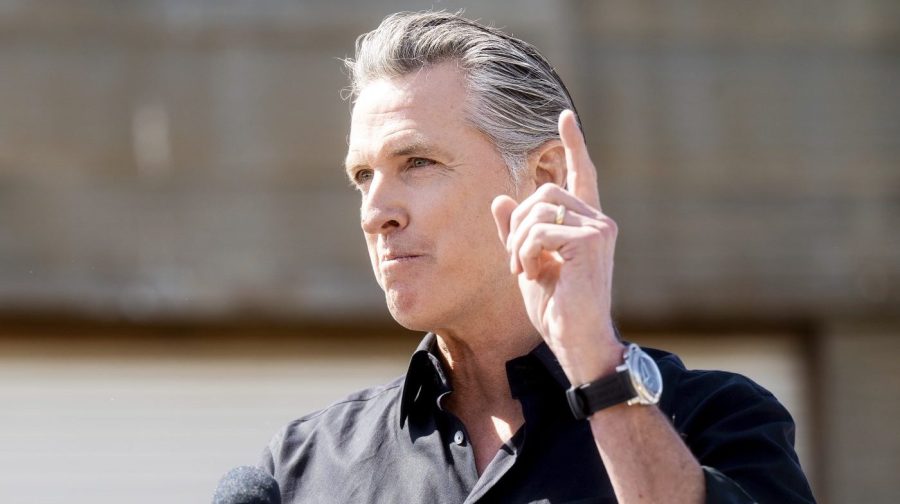
California Governor Gavin Newsom (D) is taking a multifaceted approach to address crime, even as he criticizes President Trump’s law-and-order policies. This strategy highlights the growing importance of the issue for Democrats as they prepare for the 2028 presidential election. Newsom has become a prominent figure in his party, positioning himself as a potential contender for the presidency while also implementing policies that tackle crime and related challenges.
One of Newsom’s key actions involves sending crime-fighting forces into major cities and dismantling homeless encampments. These measures reflect an effort to balance the need for strong crime prevention with addressing underlying social issues. The governor’s approach underscores a broader challenge for Democrats: how to confront criticism from Republicans who accuse them of being too lenient on crime.
Balancing Criticism and Action
Newsom has been vocal in his opposition to Trump’s use of the National Guard in Los Angeles during protests against Immigration and Customs Enforcement raids. However, he has also taken steps to address crime within California. This dual approach allows him to stand against Trump’s tactics while still demonstrating a commitment to public safety.
Democratic strategist Maggie Muir emphasized the importance of acknowledging crime while rejecting Trump’s methods. “We have to do both,” she said. “We have to stand up to Trump and acknowledge that we still have to fight crime but also acknowledge and be very clear that Trump’s efforts are not there to be helpful.”
Polling data consistently shows that the public views crime as a significant issue, with many voters prioritizing it over other concerns. Republicans have capitalized on this by accusing Democrats of being soft on crime, particularly after incidents like the stabbing of a woman on public transportation in Charlotte, North Carolina.
A New Strategy for Democrats
The GOP has increasingly used crime as a political weapon, especially under Trump’s leadership. He has deployed the National Guard in Los Angeles and Washington, D.C., and has threatened to do the same in other Democratic-led cities. This has put Democrats on the defensive, forcing them to choose between accepting Trump’s approach or risking accusations of being too lenient.
Newsom, however, is attempting a different path. By opposing Trump’s tactics while also addressing crime directly, he is trying to avoid the pitfalls of the traditional Democratic response. His recent actions include forming a statewide task force to tackle homeless encampments and providing services and shelter to those affected. Additionally, he has deployed California Highway Patrol crime suppression teams to work with local law enforcement across the state.
Statewide Efforts and Policy Initiatives
Newsom’s plan emphasizes collaboration between state and local authorities to reduce crime. In a statement announcing the initiative, he highlighted the importance of partnerships in achieving results. “With these new deployments, we’re doubling down on these partnerships to build on progress and keep driving crime down,” he said.
Other Democratic leaders have also taken similar approaches. Maryland Governor Wes Moore, for example, has engaged in a back-and-forth with Trump over the deployment of the National Guard in Baltimore. Moore has also invested in programs to support crime victims and coordinated public safety efforts in the city.
Diverse Approaches Within the Party
Despite these efforts, there is no single unified Democratic approach to the crime issue. Some leaders, like D.C. Mayor Muriel Bowser, have been less resistant to federal involvement in the district. This variation reflects the complexity of the issue and the need for tailored solutions.
Democratic strategists suggest that while Newsom’s approach could serve as a model, its long-term effectiveness remains uncertain. California strategist Steven Maviglio pointed out that Newsom’s opposition to Proposition 36 last year raised questions about his stance on crime. The ballot measure, which increased penalties for certain offenses, was supported by a majority of voters.
Maviglio noted that while Newsom may not have a history of tough-on-crime policies, he is sensitive to public sentiment. “He reads polls better than almost any other politician in the country, and he sees that people are concerned about it,” he said.
Shifting Focus to Economic Issues
Strategists believe that Democrats should eventually shift their focus back to economic issues, where Trump faces greater vulnerability. Len Foxwell argued that the party must pivot away from the crime debate and return to areas where they can effectively counter Trump’s record.
“We have to pivot as soon as humanly possible, off of the crime debate and back on to our point of firmest footing and his greatest vulnerability, which is his absolutely atrocious handling of the economy,” he said.
As the political landscape continues to evolve, the challenge for Democrats will be to find a balance between addressing crime and maintaining their core values. Newsom’s approach offers one potential path forward, but the ultimate success of such strategies will depend on how well they resonate with voters and align with broader party goals.

Post a Comment for "Newsom Balances Crime Policies Against Trump's Influence"
Post a Comment