
Once Cut Out, Now a Quarter of the Army
A New Path to Service: The Future Soldier Preparatory Course
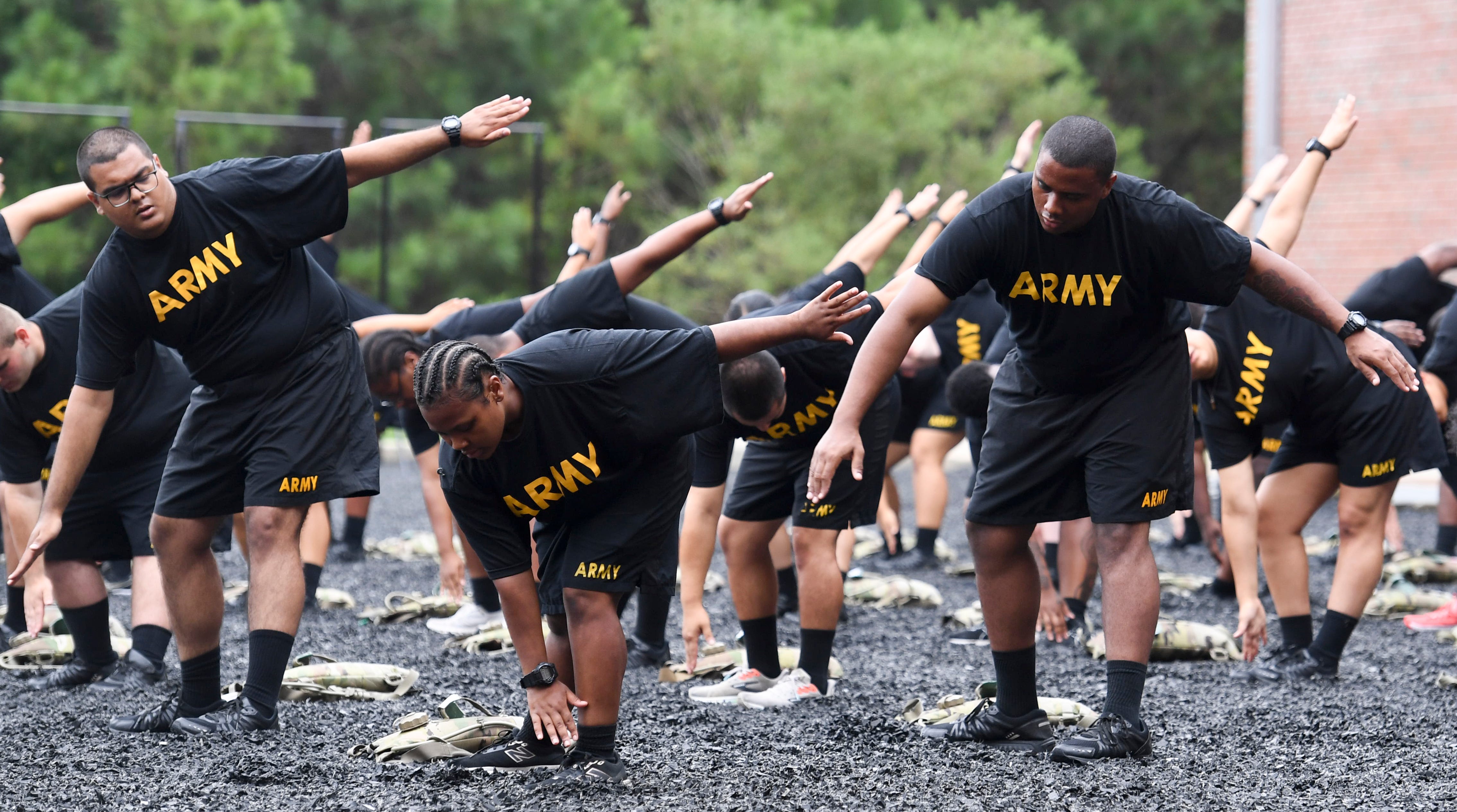
Every Tuesday before dawn, hundreds of hopefuls gather at a South Carolina Army base, where they line up with exposed midriffs to be weighed and measured. This base takes in more recruits than any other, and for many, the outcome of this process could determine their future in the Army. A drop in body fat might mean being sent to basic training within days, while those who don’t meet the requirements are given another week to work off the excess.
The atmosphere is tense as trainees file past a desk where a drill sergeant delivers their fate. Some celebrate, while others wipe away tears. For some, like Briana Flowers, a 21-year-old, a 2-inch decrease in her waistline meant she would soon be en route to basic training. She was excited about the prospect of enjoying French toast at the dining hall and sharing the news with her mother. “It’s exhilarating,” she said. “It’s all I’ve wanted.”
USA TODAY spent three days observing the process, gaining insight into the Army's effort to address its recruiting crisis through the Future Soldier Preparatory Course. This program aims to bring young people with academic and fitness challenges up to military standards. While it has helped the Army meet its recruitment goals, it has also sparked questions about the quality of soldiers it produces.
In 2022, the Army faced a significant shortfall in recruiting numbers, prompting the launch of the Future Soldier prep course. That year, the Army’s recruiting class fell short by 25% of its goal of 60,000 new soldiers. Three years later, the Army has met its recruitment goals, and the program has played a central role in reversing the slump.
More than 46,000 soldiers have joined the Army through the Future Soldier prep course, contributing between 20% and 24% of the Army’s newly minted soldiers since the course began in 2023. Trainees in the program sleep in large, open bays on bunk beds and eat meals monitored by drill sergeants, who ensure that no one is ordered to put food back. The goal is to avoid disordered eating behaviors.
The Army barely met its recruiting goal of 55,000 in the last fiscal year. This year, it announced in June—four months early—that it had met its annual goal of 61,000 signed contracts. Defense Secretary Pete Hegseth has criticized past efforts to lower military standards but has not targeted the Future Soldier prep course. He emphasized the need for soldiers to be fit, not fat, and sharp, not shabby.
Army Secretary Dan Driscoll stated that the course helps maintain standards rather than lowering them. Every soldier who graduates from the program meets the required standards without any compromise. The course accepts recruits whose body fat is up to 8% higher or whose scores on the Army's aptitude test are as much as seven points lower than the requirement. They then work intensively over 90 days to meet the standards, testing weekly until they succeed.
Getting recruits up to standard is costly. The Army will spend about $120 million this year and $99 million in 2026 on this initiative. However, the program has shown promising results, with graduates performing equally or better in their early Army careers compared to traditional recruits.
Not all recruitment is equal, and the "quality" of recruits can affect the military’s readiness. Beth Asch, a military recruitment expert at the RAND Corporation, noted that trainees needing academic help make up around 70% of the Future Soldier prep course. These trainees attend high school-like classes daily, focusing on math and word comprehension.
The Army has strict benchmarks for quality, requiring at least 90% of recruits to have a high school diploma. Recruits with the lowest aptitude scores fall into Category 4, which can make up no more than 4% of new troops. Each Category 4 recruit must attend the prep course, and about 90% of them become soldiers.
Despite the program’s success, concerns remain about its long-term impact. Research suggests that soldiers with higher aptitude scores perform better on hands-on tasks and have fewer disciplinary issues. However, course graduates have shown similar or better performance early in their careers, attributed to the head start provided by the program.
Attrition rates for preparatory course candidates are similar to those of traditional recruits, with over 90% of those who sign up eventually joining the Army. Soldiers on the academic improvement track have performed slightly better than those in the body fat reduction track.
For many trainees, the motivation to join the Army comes from struggles they left behind. The "Why Wall" at Fort Jackson features messages from trainees explaining their reasons for joining, including financial stability, family pride, and overcoming trauma. For some, the program represents a chance to escape poverty or rebuild their lives after difficult experiences.
While the Future Soldier Preparatory Course has helped the Army meet its recruitment goals, it continues to face scrutiny. Critics argue that it may compromise military standards, but supporters believe it provides a vital opportunity for those who might otherwise be excluded from service. As the program evolves, it remains a critical component of the Army’s strategy to build a diverse and capable force.

Post a Comment for "Once Cut Out, Now a Quarter of the Army"
Post a Comment