
Peace Depends on Abraham Accords as a Strategic Choice
The Legacy and Challenges of the Abraham Accords
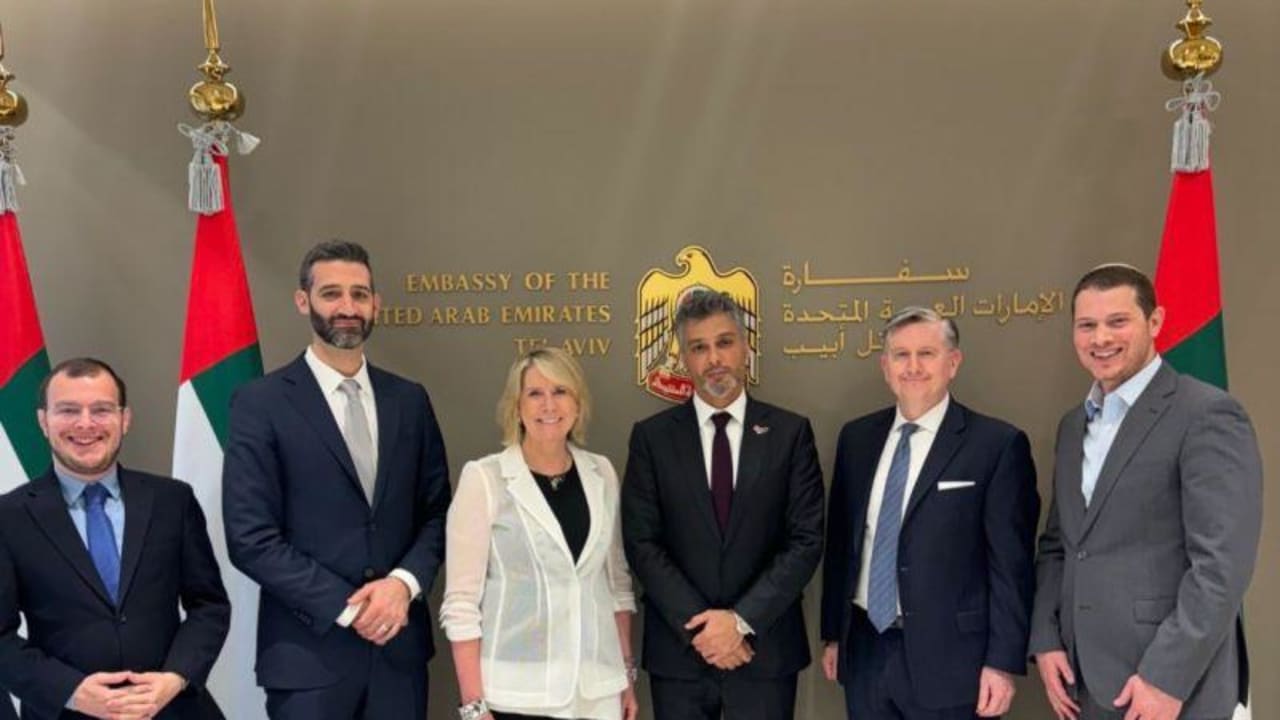
Five years ago, the White House lawn was filled with dignitaries from Bahrain, the United Arab Emirates, and Israel. This event marked a significant milestone in the first administration of former U.S. President Donald Trump, culminating in the signing of the Abraham Accords. Since then, the agreements have played a pivotal role in reshaping relationships between Israel and its neighbors. Asher Fredman, who has been deeply involved in the Abraham Accords since their inception, recently shared his insights on the successes, challenges, and future of these agreements.
Fredman, executive director of the Misgav Institute for National Security and visiting fellow at the Heritage Foundation, reflected on the five-year anniversary of the accords. He highlighted their landmark accomplishments, resilience through two years of conflict, and the opportunities and obstacles that lie ahead for Israel and the region.
The Abraham Accords, brokered by Trump in 2020, have led to an “outpouring of cooperation on every level — the diplomatic level, the people-to-people level, the economic level.” Fredman pointed to collaboration across diverse fields, including green hydrogen, precision agriculture, neonatal cardiology, space technology, satellite projects, and women’s rugby. “Literally almost every field imaginable,” he said.
Economic Impact and Regional Cooperation
The economic impact of the Abraham Accords has been substantial. Between 2021 and 2024, trade between Israel and its Abraham Accords partners, along with Egypt and Jordan, whose ties were strengthened in the process, rose by 127%. Nearly 50 intergovernmental agreements have been signed, including a free trade agreement with the United Arab Emirates. These are in addition to countless memorandums of understanding and joint ventures. Looking back, Fredman described “incredible accomplishments as a result of this warm peace.”
He also emphasized the importance of people-to-people connections. Among his examples was the Abrahamic Family House in Abu Dhabi, which includes a synagogue, mosque, and church built to identical dimensions. Fredman described it as “a very pure expression of this idea, this commitment to tolerance, to dialogue.” At the Misgav Institute, he has hosted delegations of young Moroccan entrepreneurs and activists who expressed support for Israel even after the war that began on October 7.
Despite the last two years of violence, Fredman said, “If we want a better future in the region, we have no choice but to rebuild. The ties that have been built in the Abraham Accords, hopefully, will serve all of us as we do the hard work of beginning to rebuild the ties following the war in Gaza.”
Navigating Regional Tensions
Fredman acknowledged that visits from Gulf delegations have significantly decreased since the war. In the UAE and Bahrain, especially after the murder of Rabbi Tzvi Kogan, Israelis are more cautious about displaying Jewish or Israeli symbols in public. Nevertheless, he said Israelis continue to travel to these countries and “these discussions and these friendships continue.” He recalled founding the Israeli-Emirati Forum, the first grassroots initiative to connect the two societies, which organized the first Zoom call and WhatsApp group between Israelis and Emiratis.
He praised the UAE for maintaining flight service to Israel throughout the war. “The planes kept flying Israelis to the UAE and back and forth,” he noted. At the same time, he acknowledged that Emirati patience has limits. Israel’s envoy was summoned after strikes in Doha, and Israel was barred from participating in an air show. “If you had asked on October 7 whether the Abraham Accords would hold through two years of war, tens of thousands of deaths, widespread destruction in Gaza, a lot of people would have said maybe not. Two years later, the answer is that they’ve proven resilience.”
Regional Perceptions and Future Prospects
Fredman explained that the strike in Doha illustrates the contrasting ways Israel and its Gulf partners perceive regional stability. From Israel’s viewpoint, eliminating Hamas leaders wherever they are is essential for peace. “As long as Hamas has the ability to rebuild, then there will never be regional stability,” he said. However, the Emiratis see any strike on a fellow Gulf Cooperation Council country as inherently destabilizing.
Fredman warned that Qatar is “deeply insulted and embarrassed that Israel dared to strike on its territory, although it hosts Hamas leaders openly.” He predicted that Qatar would use all of its diplomatic and financial tools to impose consequences on Israel. He said Turkey, which also hosts Hamas leaders, is similarly concerned that Israel may carry out similar operations on its territory.
Looking to the future, Fredman mentioned several countries that were exploring normalization with Israel prior to October 7. These include Indonesia, Mauritania, the Maldives, Comoros, Oman, and particularly Saudi Arabia. He acknowledged that public opinion is now more negative, in part due to networks such as Al Jazeera, but he believes the “basic interest and logic of cooperation with Israel still remains.”
A Path Forward
Fredman emphasized that progress could be restarted through multilateral projects such as the India–Middle East–Europe Corridor (IMEC), I2U2, and regional initiatives in artificial intelligence. He stressed that the United States must play a leading role. “Investments in revitalizing the momentum of the Abraham Accords directly serve critical American interests in the region,” he said.
Fredman contrasted the Trump and Biden administrations. He credited Trump for using incentives and leverage to bring countries into the accords. President Joe Biden, he said, has supported the agreements diplomatically but has been “far less interested in investing” in expanding them. Israel also has internal work to do, he said, such as upgrading its border crossings to be included in future regional trade corridors.
He urged Israel and its allies to make a strategic effort to strengthen current ties, pursue new agreements, and link the reconstruction of Gaza to wider regional cooperation. “There’s no point in a day after if it’s not a day after without Hamas,” Fredman warned.
In response to how Israel should address the growing hostility among regional youth, Fredman said the alternative to peace is more violence. “We don’t want another October 7 and another devastating war. The only way to get to that is by building these bridges of cooperation and dialogue.” While he acknowledged the difficulty of persuading young people of the necessity of Israel’s actions in Gaza, he insisted that removing Hamas is “an existential need for the country.”
Personal Reflections and Hope
Fredman closed with two personal anecdotes that, for him, symbolize the spirit of the Abraham Accords. On his first visit to the UAE, a local man invited him into his majlis. As the sun set in the desert, the two prayed side by side — Muslims toward Mecca and Fredman facing Jerusalem. “That was a beautiful moment, which I think really demonstrated the potential of the Abraham Accords,” he said.
He also recalled visiting the Abrahamic Family House with an Emirati friend. They stood together in the pavilion connecting the three houses of worship as the sun set over Abu Dhabi. “In that physical structure that connects the three religions, I think that was a very beautiful expression of where we all want to go.”

Post a Comment for "Peace Depends on Abraham Accords as a Strategic Choice"
Post a Comment