
The True von Trapp Family vs. 'The Sound of Music'
The Sound of Music Celebrates 60 Years on the Big Screen
As a tribute to its 60th anniversary, The Sound of Music is set to return to theaters from September 12 to September 17. This beloved classic, based on the true story of the von Trapp family, has captivated audiences for decades with its heartwarming tale of music, love, and resilience. However, the film differs significantly from the real-life events that inspired it.
Originally released in April 1965, The Sound of Music was an instant hit, earning widespread acclaim and five Academy Awards, including Best Picture. Adjusting for inflation, it remains one of the highest-grossing films in U.S. history. The movie’s success transformed the von Trapp family into a cultural icon, and their story continues to resonate with fans around the world.
Now, audiences have the chance to experience the film once again on the big screen, with a re-released 4K version available in over 1,000 U.S. cities. This revival highlights the enduring legacy of the musical and its impact on popular culture.
A Tale That Wasn’t All Hollywood Glamour
While the film portrays the von Trapp family as a wealthy and harmonious household, the reality was quite different. The family faced financial struggles during the early 1930s, which led them to take in boarders and reduce their household staff. Their love for music, however, remained strong, and they eventually turned their passion into a profession.
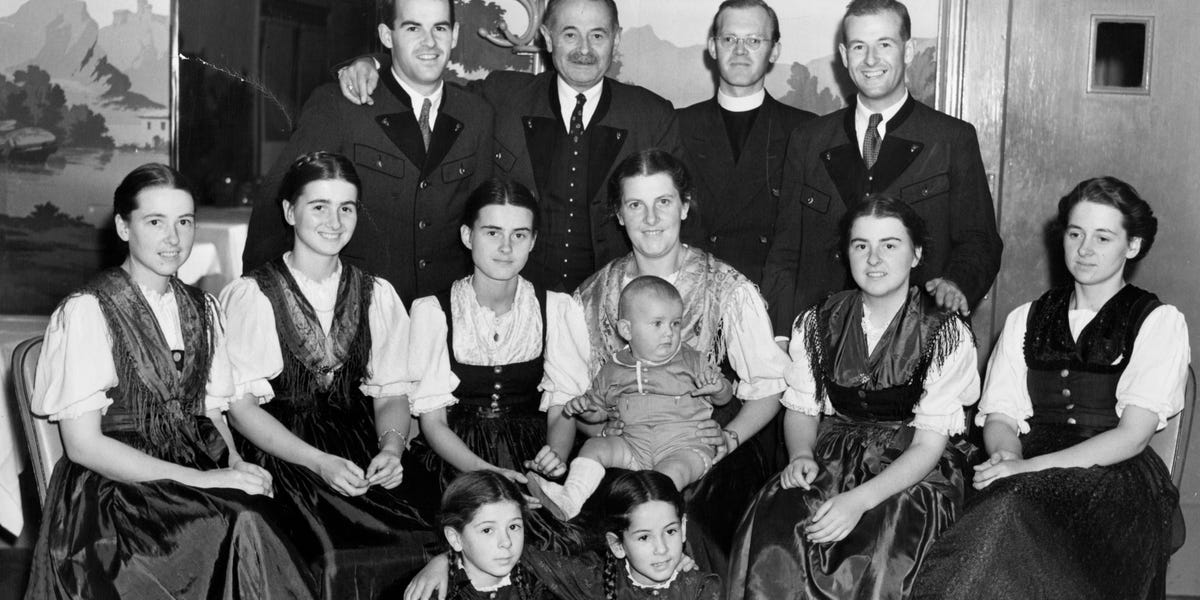
Before Maria Kutschera entered their lives, the von Trapp family was already known for their musical talents. In fact, the real Georg von Trapp was more of a warm and affectionate father than the stern naval officer depicted on screen. It was Maria who needed time to adjust to her new role as a governess and mother figure.
The Real Maria: A Far Cry from the Film’s Portrayal
Maria Augusta Kutschera, the real-life inspiration for Julie Andrews’ character, had a very different background. Born in 1905, she was orphaned at a young age and sent to live with an abusive uncle. She later converted to Catholicism and became a novice nun, but her time at the convent was anything but smooth. According to a 1980 article, she described herself as “horrid” and admitted to breaking china, running in the courtyard, and climbing on the convent roof.
Her journey to becoming a governess for the von Trapp family was also quite different from what was shown on screen. Maria was sent to tutor only one of Georg’s children, not seven, and the names and genders of the children were altered for the film. The real family had nine children, including two born after they left Austria.
A Journey That Wasn’t as Dramatic as the Movie Suggested
One of the most famous scenes in the film shows the von Trapp family escaping Austria by crossing the Alps on foot. However, this depiction is far from accurate. In reality, the family left Austria just a day before the borders were closed, but their journey was much less dramatic. They traveled by train in broad daylight, pretending nothing was wrong.
Their actual route took them first to Italy, where Georg gained citizenship due to his birthplace having become Italian territory in 1920. From there, they moved to London before boarding a ship for America. Once in the United States, they continued their musical career as the Trapp Family Singers and eventually settled in Stowe, Vermont.
A Legacy That Lives On
The von Trapp family opened a 27-room guest lodge in 1950, which has since expanded and is still operated by descendants of the family. Their story, though often romanticized in film, remains a testament to their strength, resilience, and love for music.
As The Sound of Music makes its way back to theaters, it serves as a reminder of the real-life journey that inspired one of the most beloved musicals of all time. Whether on screen or in history, the von Trapp family’s story continues to inspire and entertain audiences worldwide.

Post a Comment for "The True von Trapp Family vs. 'The Sound of Music'"
Post a Comment