
10 Tree-Dwelling Creatures You Should Know
New Discovery in Indian Bark Crickets
A research team from Panjab University (PU) led by assistant professor Ranjana Jaiswara has made a significant discovery, identifying a completely new genus of bark cricket endemic to the Indian subcontinent. The study, published in the journal Insect Systematics and Evolution, describes three new species within this genus:
- A. sairandhriensis
- A. kervasae
- A. meridionalis
These crickets are uniquely adapted to life beneath tree bark, with flattened bodies and short wings that allow them to navigate tight spaces. This finding highlights the rich biodiversity of the region and adds to our understanding of insect evolution.
Koalas and Their Arboreal Lifestyle
Another recent study focused on koala movements, using accelerator collars and GPS monitoring to track their behavior. The findings revealed that koalas leave their arboreal refuge 2-3 times a night, spending less than 10 minutes on the ground during each trip. This small amount of time represents just 1% of their day. Unfortunately, when they descend from their tree top homes, they become more vulnerable to predators and cars. Conservationists emphasize that planting the right kind of trees can reduce gaps in canopy coverage and minimize risks for this tree-dwelling species. The study’s findings will be presented at the Society for Experimental Biology Annual Conference.
What Makes an Arboreal Animal?
Out of all the animals on Earth, only those that spend most of their lives in the trees can truly be called arboreal animals. These animals don’t live on the ground, like rattlesnakes or cattle, and they don’t live in the sky, like condors or bats. Instead, they spend almost their entire lives scampering about in the trees. Let’s take a look at ten of the most incredible arboreal animals!
Ten Fascinating Arboreal Animals
1. Three-Toed Sloth
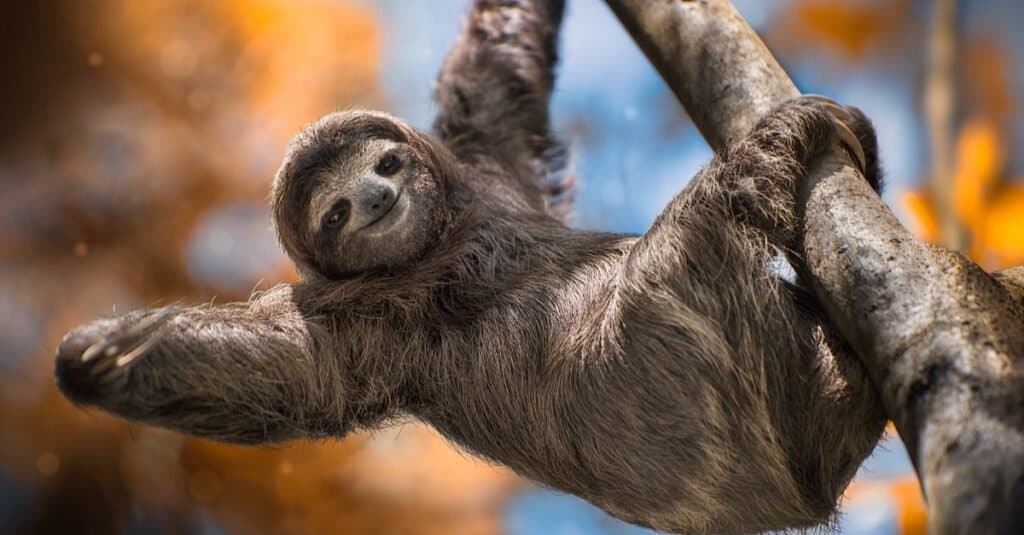
A pop culture icon, the three-toed sloth is one of Earth’s slowest moving arboreal animals. These creatures live in Central and South America, where they spend most of their time either in the trees or swimming in freshwater lakes, rivers, and swamps. Three-toed sloths have fearsome claws on their front feet, but these are not used for attack. Instead, they’re used for climbing high into the trees in search of food. Sloths have famously slow metabolisms, which is why they move so slowly, to conserve energy. They’re folivores and strictly eat leaves, which they digest extremely slowly.
2. Koala
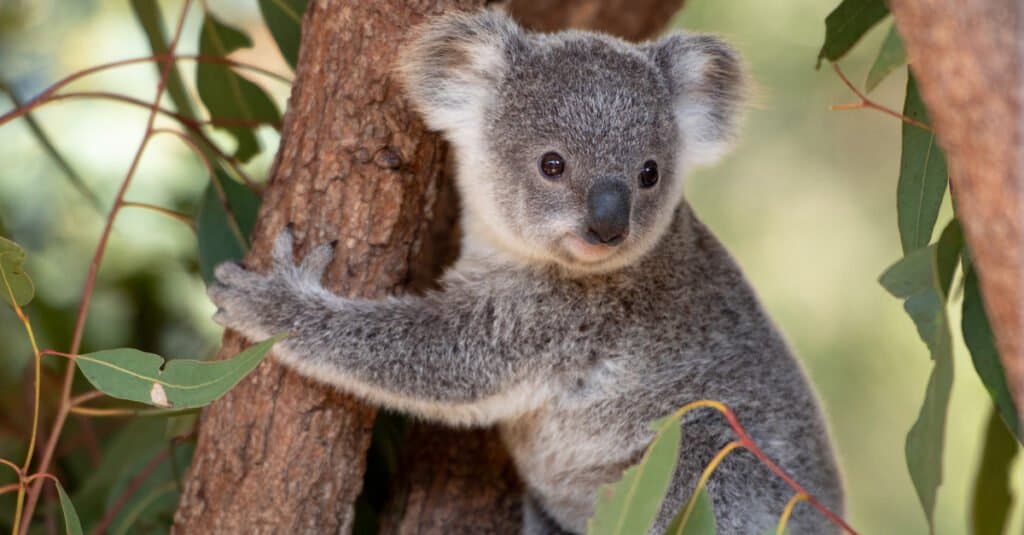
The koala is one of the most famous of all arboreal animals. These marsupials are native to the forests of eastern Australia, where they live on eucalyptus leaves. Koalas grow up to three feet tall and have fluffy, gray-brown bodies. They have short limbs, large, rounded ears, and cartoonishly cute faces. Koalas spend most of their lives in the trees, making easy prey for domestic dogs and other predators on the ground. They spend their days sleeping in the tree canopy when they’re not eating.
3. Rough Green Snake
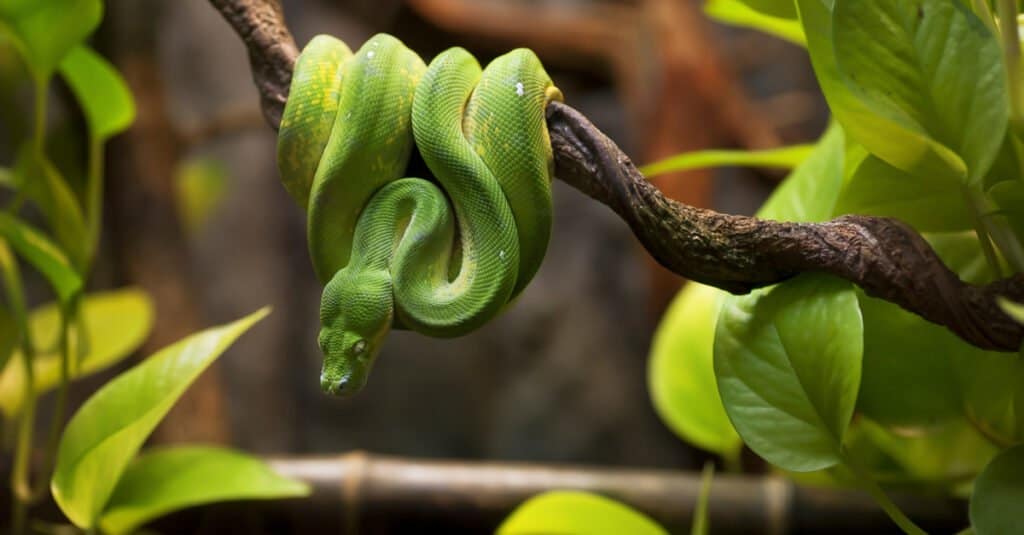
Rough green snakes are arboreal animals that live in the southeastern United States. Thin-bodied, with bright green sides, backs, and pale bellies, these snakes grow up to 32 inches long. They’re non-venomous and present no threat to humans. Because of their small size, rough green snakes are limited to eating tiny creatures, like spiders, grasshoppers, and insects. They’re common near rivers or other sources of fresh water.
4. Tree Kangaroo
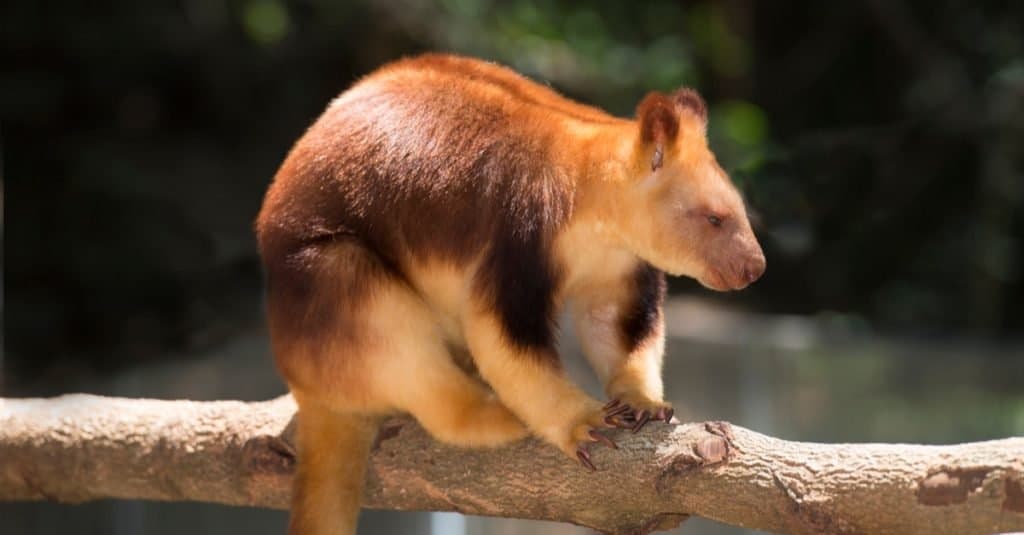
These arboreal animals are marsupials, like kangaroos, wallabies, and opossums. But, unlike kangaroos, they spend their lives in the forests of Australia and Indonesia. There are over ten distinct species of tree kangaroo, all of which have furred bodies, rounded ears, and long tails. Tree kangaroos are omnivorous, eating snakes, birds, bird eggs, nuts, tree bark, and sap. Most species are under threat from habitat loss and fragmentation.
5. Leopard
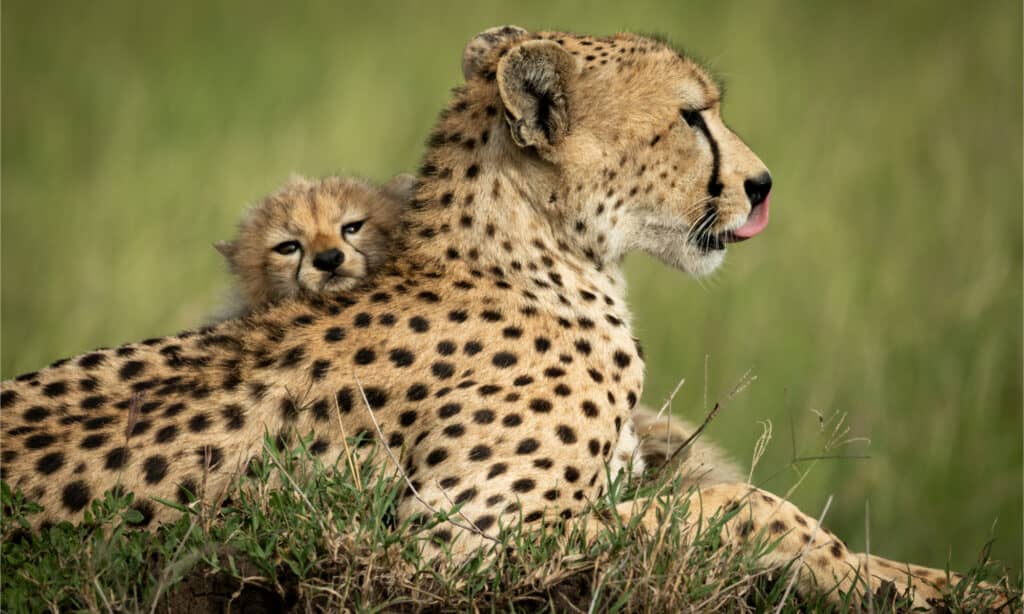
Leopards are among the most famous, most loved, of all big cats. These African predators spend time on the ground and in the trees. They’re arboreal animals and use their tree climbing abilities to hunt, evade larger predators (like lions), and consume their prey in peace. Leopards are listed as vulnerable to extinction. Their greatest threats are poaching for their beautiful furs and other body parts, habitat fragmentation, and retaliatory killing by locals. These big cats are carnivores and eat gazelle, wild pigs, baboons, fish, birds, and reptiles. Their main competitors are lions, hyenas, cheetahs, and wild dogs.
6. Orangutan
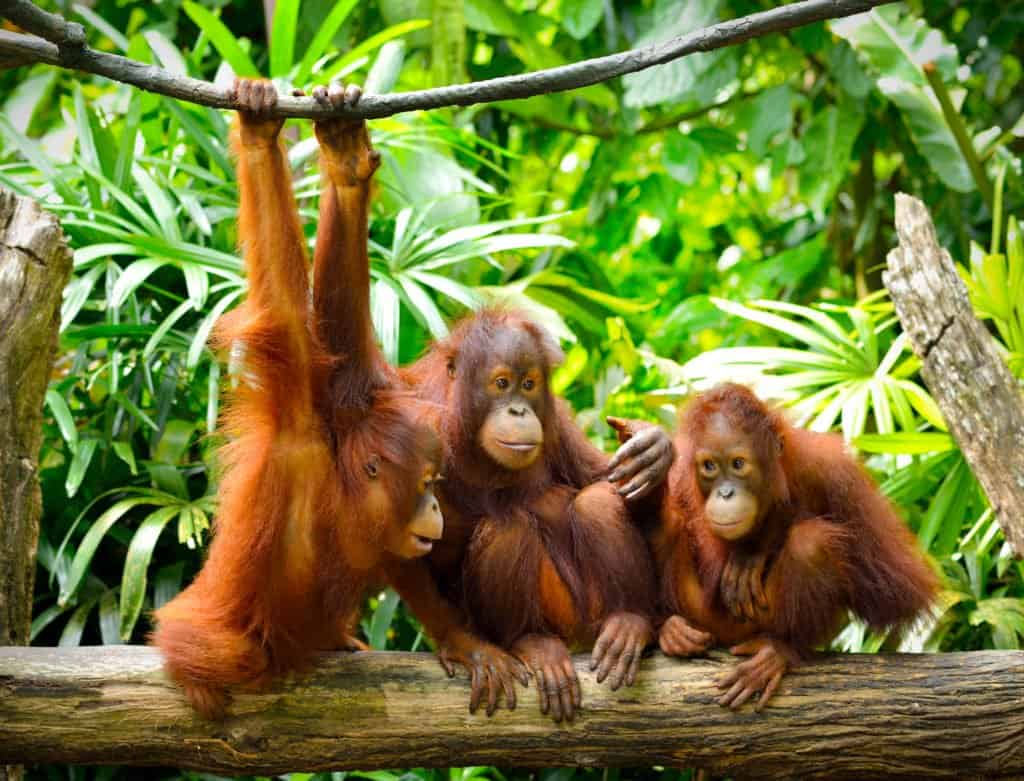
Orangutans are some of the most critically endangered arboreal animals on Earth. They live only in Indonesia, where their greatest threat is habitat loss due to the booming palm oil business. Orangutans are famously orange in color, with long arms that help them swing from tree to tree. They’re Great Apes, like humans, chimpanzees, gorillas, and bonobos. Despite their large size and the fearsome canines of large males, they subsist mainly on fruit. Orangutans are closely related to humans; they share 96.4% of our DNA. Females grow to four feet tall, while males grow to five feet tall. They have long lifespans, up to 40 years in the wild, and females raise just one baby at a time.
7. Kinkajou
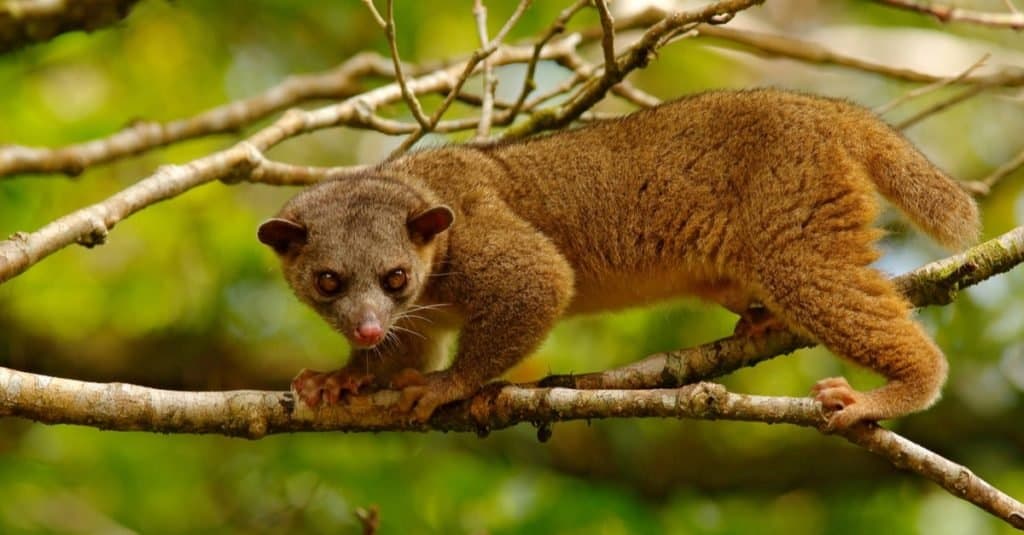
Kinkajous are one of the strangest looking, cutest arboreal animals out there. They’re related to raccoons, olingos, ringtails, and coatis. These tree-dwelling creatures live in Central and South America, growing up to 30 inches long. Kinkajous have amber-colored fur, large eyes, small, rounded ears, and long, prehensile tails. They’re technically carnivores, though most of their diet consists of nectar, fruit, bird eggs, and insects.
8. Howler Monkey
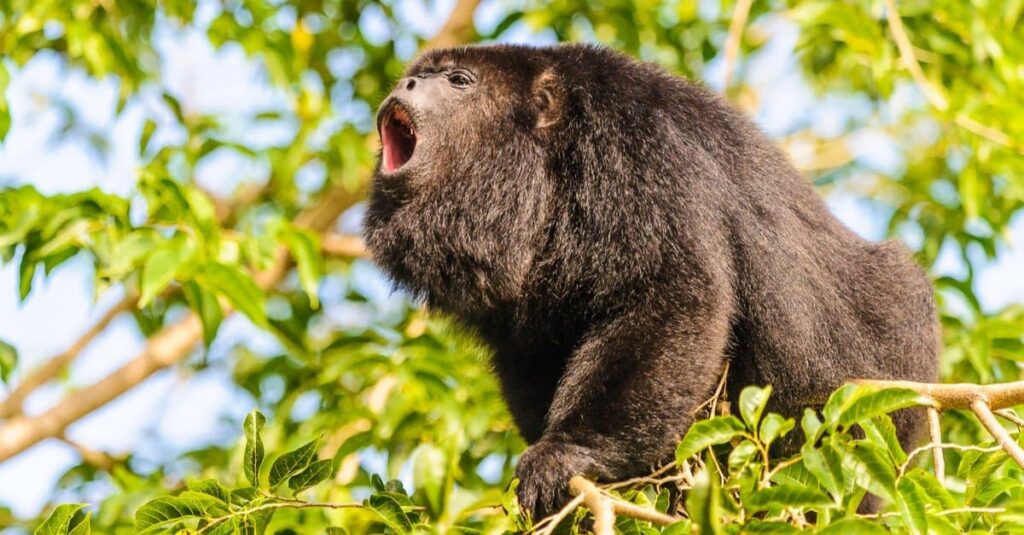
The howler monkey is one of the best well-known of all arboreal animals. These primate family members live only in South and Central America, where they spend their lives high in the tree canopy. There are over ten species of howler monkeys, ranging in color from black to orange. They grow to three feet tall and often live as long as 20 years. Howler monkeys come equipped with a prehensile tail, which can be used as an extra hand. As frugivores, they subsist mainly on nuts, fruit, flowers, and the occasional bird egg.
9. Aye-Aye
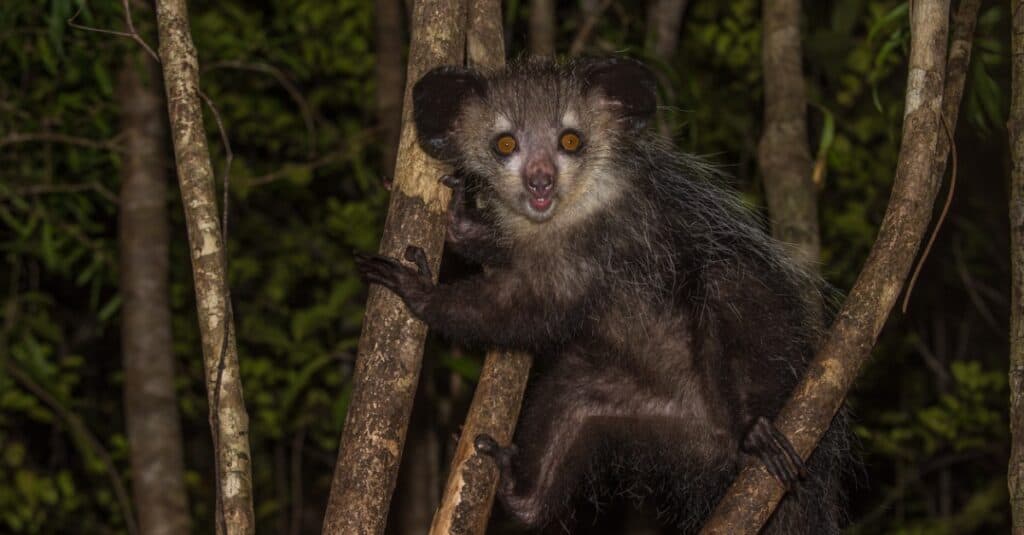
Aye-ayes are some of the strangest creatures on the planet. These arboreal animals are members of the primate family, along with humans. They live only in the rapidly disappearing forests of Madagascar and are some of the most critically endangered animals on Earth. Aye-ayes grow to about 15 inches long and have fluffy tan and black fur, with large, rounded ears. But, their strangest feature is the third finger of each front foot. It’s very long and thin and is used only for fishing grubs out of trees.
10. Green Mamba
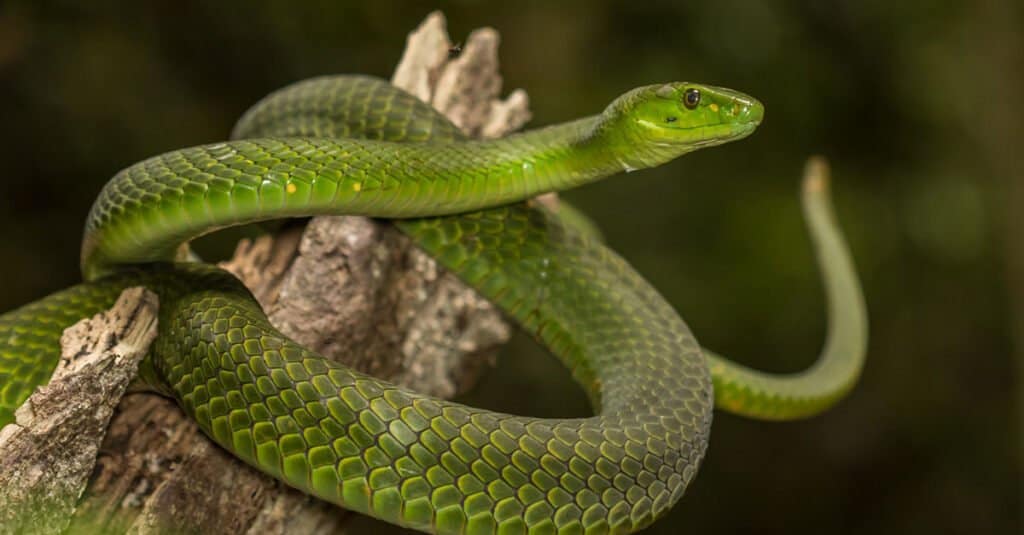
The green mamba is one of many species of tree-dwelling snake in the world. These arboreal animals live in the rainforests of coastal East Africa. As their name suggests, they’re bright green, with slender, light bodies that grow up to seven feet long. Like their relative, the black mamba and green mambas are highly venomous members of the viper family. Luckily, bites on humans are rare. These incredible snakes prefer to snack on bird eggs, small birds, bats, mice, and rats.

Post a Comment for "10 Tree-Dwelling Creatures You Should Know"
Post a Comment