
A century lost, now a comeback: California condors return to the Bay Area
California Condor Makes a Remarkable Return to the Bay Area
The California condor, one of the most iconic and endangered birds in North America, is making a significant comeback in the Bay Area. This majestic bird, known for its impressive wingspan and large size, has been spotted in regions where it hasn’t been seen for over a century. The return of these birds marks a hopeful development in conservation efforts.
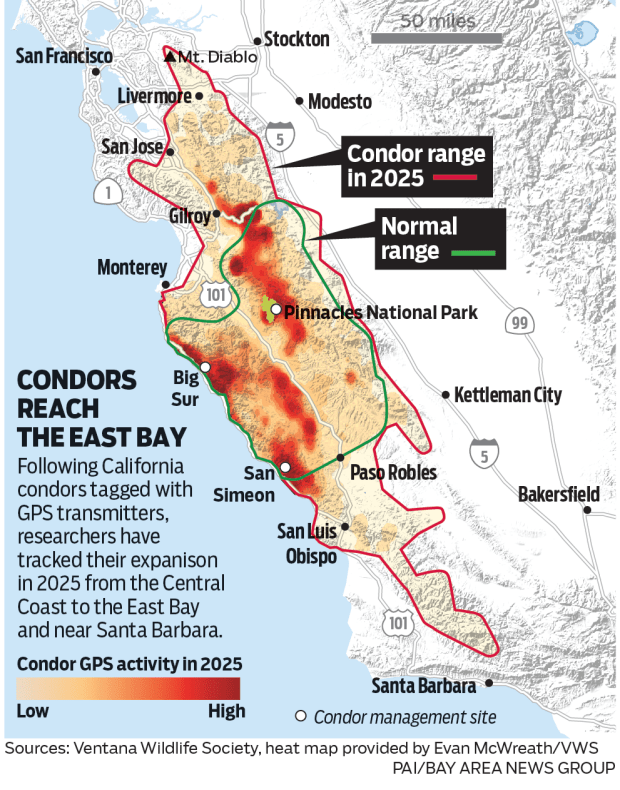
The Ventana Wildlife Society, an organization dedicated to trapping, breeding, and rehabilitating condors for release into the wild, has tracked 30 different condors that have made multiple trips to areas in Alameda and Contra Costa counties within the past two years. These movements are the first documented in over 100 years, according to Kelly Sorenson, the executive director of Ventana.
A New Era of Exploration
One particular condor, a 6-year-old male named #996, has emerged as a leader in this expansion. He has taken over 60 trips into the East Bay since 2023, as he reaches breeding age and begins searching for potential mating grounds. His journey represents a new chapter in the condor’s history.
Another notable trip was recorded in 2021 when a female condor, #828, flew from Pinnacles National Park east of the Salinas Valley, passing through Livermore and reaching near Mount Diablo before returning home. More recent sightings, such as on September 17 when two condors were observed in the mountains south of San Antonio Reservoir in the Sunol Regional Wilderness, indicate a growing presence of these birds in the East Bay.
A History of Decline and Recovery
Historically, California condors soared freely along the West Coast, including British Columbia, in the 1800s. However, by the 1960s, their population had dwindled to less than 100 due to manmade poisons. By the early 1980s, every known condor was taken into captivity to prevent extinction. In 1982, only 23 condors remained globally.
Since then, conservation efforts have led to a gradual recovery. Ventana Wildlife Society began releasing condors into the wild in 1997, starting in Big Sur and later expanding to Pinnacles National Park. The National Park Service also initiated its own release program. Today, the flock has grown to about 110 condors, with another planned release on October 25 near San Simeon.
Challenges and Threats
Despite these positive developments, experts emphasize that the condor population remains vulnerable. The entire wild population is estimated to be less than 400, with additional flocks in Southern California, Northern California, and parts of Arizona and Baja California. Condors can fly up to 150 miles in a day but typically return to their home base daily.
Younger condors have been exploring further north into Alameda County from nests in Central California, possibly influenced by longer and warmer days during mid-summer. However, spotting these birds in the wild is challenging, often requiring hikes through mountainous regions where they prefer to soar at high altitudes.
Ongoing Conservation Efforts
Conservationists use GPS and radio trackers to monitor condors daily. Despite encouraging signs, scientists remain cautious. Condors reproduce slowly, laying just one egg every two years, with a long period of care required for each chick.
Manmade threats continue to pose risks. Lead ammunition, which has historically affected condor populations, remains a concern. In 2022, condor #828 died of lead poisoning, leaving her partner, “Ninja.” Ventana has been working with hunters and ranchers to promote the use of unleaded ammunition made from materials like copper or steel.
The Road Ahead
While the movement of some condors into the East Bay is exciting, experts caution that significant population growth is necessary for continued expansion. Belli noted that the 2020 Dolan wildfire in Big Sur resulted in the deaths of 12 condors, highlighting ongoing challenges.
Despite these obstacles, there is hope. Sorenson expressed his wish to see condors spread across the state in the future. As conservation efforts continue, the return of the California condor to the Bay Area offers a glimpse of what can be achieved through dedicated environmental stewardship.

Post a Comment for "A century lost, now a comeback: California condors return to the Bay Area"
Post a Comment