
Arizona University reacts to White House proposal
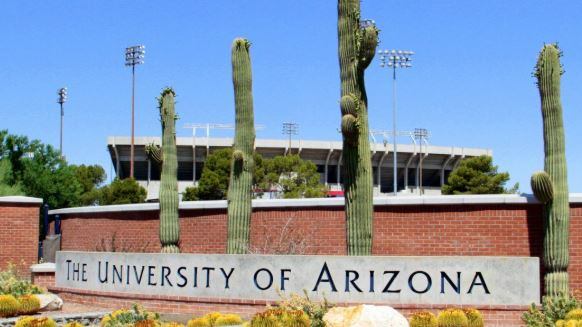
TUCSON, Ariz. (13 News) - On Monday, the University of Arizona shared its response to the White House’s Compact for Academic Excellence offer. In a letter addressed to the university community, President Suresh Garimella stated that the institution has not agreed to the terms outlined in the draft proposal. He noted that the federal government had indicated it was seeking constructive dialogue rather than a definitive written response.
Although the university did not accept the compact as proposed, Garimella emphasized that several of the federal recommendations merit careful consideration. He suggested that reforms within the national higher education system have been too slow to develop and that some of the ideas in the compact are already in place at the University of Arizona.
The university was expected to provide general feedback, and while it could not agree with the compact as written, its response highlighted areas where there is common ground. The institution aims to remain a leading voice in higher education discussions.
“Whatever comes out today, we are hopeful that we will hear a strong defense of our basic freedoms and our continuing practices with which we always try to improve,” said University of Arizona Chair of the Faculty Dr. Leila Hudson.
Dr. Hudson has been closely observing how University of Arizona President Dr. Suresh Garimella and his leadership respond to the White House compact. In a letter to Secretary of Education Linda McMahon, Garimella expressed willingness to engage with other universities, higher education associations, members of Congress, and the administration to advance and implement their principles in alignment with the national interest.
“I think giving feedback is actually very important. I think this compact is going to be with us,” Dr. Hudson said.
The University of Arizona’s Statement of Principles addresses requirements in the compact, such as prohibiting discrimination based on sex or race:
“The University explicitly prohibits discrimination in admissions based on race, color, religion, sex, national origin, age, disability, veteran status, sexual orientation, gender identity, and genetic information.”
The compact sought assistance in eradicating terrorist activity and limiting foreign enrollment to 15 percent of the student body. The university’s statement responded by emphasizing its commitment to protecting intellectual property and assets crucial to economic competitiveness and national security.
Regarding the compact’s requirement to prohibit intimidation of conservative speech, the university’s statement noted that it maintains and publishes disciplinary guidelines for students or employees who disrupt speech, instruction, or access to campus, and holds accountable those who infringe on protected speech or engage in ideological litmus tests.
“You cannot run a university, let alone a world-class university with any unconstitutional restrictions on people’s speech,” Dr. Hudson said.
The university’s statement pointed out that only about four percent of the student body is foreign enrollment. While the compact required a five-year freeze on tuition, the university’s statement noted that in-state tuition did not increase this year.
How this could change the compact before the November deadline to sign it remains to be seen.
The Arizona Board of Regents and Garimella met in executive session on Friday to discuss the compact. At the same time, more than 100 students and faculty rallied on campus, demanding that the university reject the agreement.
The compact, sent to nine universities nationwide, offered preferential access to federal funds in exchange for meeting a list of demands. The University of Arizona was one of five institutions still considering the offer, with a feedback deadline just three days away.
The University of Arizona faculty senate, Tucson City Council, and Pima County Board of Supervisors previously voted in opposition to signing the compact.
Statement of Principles to Secretary of Education Linda McMahon can be read below.
GARIMELLA LETTER
Dear campus community,
The University of Arizona was one of nine universities invited on Oct. 1 by the U.S. Department of Education to provide feedback on their proposal to advance excellence in higher education. The proposal has generated substantial feedback on our campus, in our community, and through a national discussion.
Since receiving the draft, we have engaged in a robust consultation process with the Arizona Board of Regents, our faculty, staff, and students and shared governance groups, campus leadership, higher education associations, community members, alumni and leaders in the state and federal governments as well as from universities across the nation. Thank you to everyone who has provided constructive and detailed feedback. Your input helped inform our response.
We also received further clarification during a recent call with federal government representatives that they were seeking constructive dialogue rather than a definitive written response. Given the importance of the issues at stake, engagement is in the best interest of the university.
A number of the proposed federal recommendations deserve thoughtful consideration as our national higher education system could benefit from reforms that have been much too slow to develop. In fact, many of the proposed ideas are already in place at the U of A.
At the same time, principles like academic freedom, merit-based research funding, and institutional independence are foundational and must be preserved.
As a result, the university has not agreed to the terms outlined in the draft proposal, but instead submitted a Statement of Principles to the Department of Education that I am sharing with you.
I encourage you to review the response letter and the University of Arizona’s Statement of Principles articulated in the letter which were informed by the feedback from hundreds of U of A stakeholders and partner organizations.
This response is our contribution toward a national conversation about the future relationship between universities and the federal government. It is critical for the University of Arizona to take an active role in this discussion and to work toward maintaining a strong relationship with the federal government while staying true to our principles.
We will continue to collaborate with other higher education institutions and associations, as well as with our community, Gov. Katie Hobbs, our state legislature, Congress, and the administration. Strengthening higher education and reaffirming the values that make the University of Arizona one of the country’s preeminent educational and research institutions requires that we all work together.
Thank you again to our campus community for your engagement, feedback, and passion for our institution and our mission.
STATEMENTS
Arizona Board of Regents Chair Doug Goodyear – “The Arizona Board of Regents has been in regular consultation with the University of Arizona since it received the draft Compact for Academic Excellence in Higher Education, and we support President Garimella’s response to it. Given that the federal government is the system’s largest single funder, our universities have a responsibility to provide thoughtful feedback. The board is committed to protecting the values of Arizona higher education that have made it the best in the world - most importantly academic freedom, institutional independence, and merit-based research. And that remains our focus.”
PREVIOUS COVERAGE
On Friday, 18 student organizations formed a coalition called No Compact 9 to oppose the agreement. The group held a rally asking Garimella to reject the Trump administration’s demands.
The compact asks universities not to consider race, sex, or other demographic factors in enrollment or financial aid. It also limits what faculty members can say about political and social issues, requiring what the agreement calls “institutional neutrality.”
Daniela Triadin, a professor of anthropology for more than 25 years at the school, said the demands could directly impact her ability to teach.
“They’re specifically saying that units that are not in compliance with the compact should be eliminated, which really means that pretty much anybody that’s in the humanities or social studies could be targeted with this,” Triadin said.
Triadin said she feels the university has a historic obligation to its students and worries that signing the compact may pressure administrators into actions that aren’t best for the community.
“We’re a land grant university; we are here to serve the people of Arizona,” she said.
Not everyone opposes the compact. Michael Mueller, a veteran and student at the university, said that based on his military experience, he doesn’t view the compact’s limitations as restricting free speech.
“Not representing the university while you’re exercising your U.S. citizenship rights of speaking out about something, that’s the same as what the military is held to,” Mueller said.
Four of the nine universities that received the compact have already rejected it, citing concerns over academic freedom and independence.
Luke Felix-Rose, a representative for No Compact 9, said the rally was meant to draw attention to Garimella and get clarity that the group has been demanding for weeks.
“I’d love to see more democracy at the U of A,” Felix-Rose said. “I’d love to see more transparent governance, and I’d love to see shared governance between the administration and all those their decisions affect.”
You can submit your breaking news or weather images here.

Post a Comment for "Arizona University reacts to White House proposal"
Post a Comment