
Bringing Neanderthals Back: A 20-Year Possibility?
The Possibility of Resurrecting Neanderthals
In 2010, scientists made a groundbreaking discovery by sequencing the Neanderthal genome. This achievement revealed that Neanderthals interbred with human ancestors before mysteriously going extinct. As a result, many people alive today share up to 4% of their DNA with Neanderthals. This genetic breakthrough provided valuable insights into the evolutionary history of Neanderthals and Homo sapiens, but it also sparked a new question: Could we bring back Neanderthals?
George Church, a Harvard University professor of genetics, answered this question in the affirmative in an interview with Der Spiegel in 2013. He suggested that by chopping the Neanderthal genome into thousands of chunks and reassembling them in a human stem cell, it would be possible to create a Neanderthal clone. However, this process would require an "extremely adventurous female human" to serve as a surrogate.
In 2025, the company that Church co-founded, Colossal Biosciences, gained attention for "de-extincting" the dire wolf through cloning and gene editing, creating genetically-engineered "woolly mice," and announcing plans to de-extinct the dodo. Their long-term goal is to de-extinct woolly mammoths. However, while Church was confident a decade ago that Neanderthal resurrection was a near-term possibility, other experts have raised concerns about the feasibility and ethics of such an endeavor.
"That is one of the most unethical things I can possibly think of to attempt — full stop," said Jennifer Raff, a biological anthropologist at the University of Kansas, when asked about the idea of bringing Neanderthals back.
Technological Challenges of Resurrection
Resurrecting a Neanderthal is not technologically simple. According to Raff, "You can't just put a Neanderthal genome in a human egg." One major issue is potential immune system incompatibility, which often leads to the rejection of cross-species pregnancies. It is still debated whether modern humans and Neanderthals should be considered separate species.
Although humans and Neanderthals successfully interbred in the past, today there is at most 4% Neanderthal DNA remaining in some human groups. "That other DNA might not have been beneficial and so it was slowly purged out of the genome," Raff explained. Additionally, experts have discovered that humans' Y chromosomes lack Neanderthal DNA, which may indicate a fundamental immune system incompatibility between male Neanderthal fetuses and the female Homo sapiens carrying them.
Another challenge involves the use of CRISPR technology to modify a human cell's genome to make it more similar to a Neanderthal's. While this has been done with gray wolves to create "dire wolf-like" animals, it does not produce actual dire wolves. Similarly, modifying a human embryo to resemble a Neanderthal would not result in a true Neanderthal.
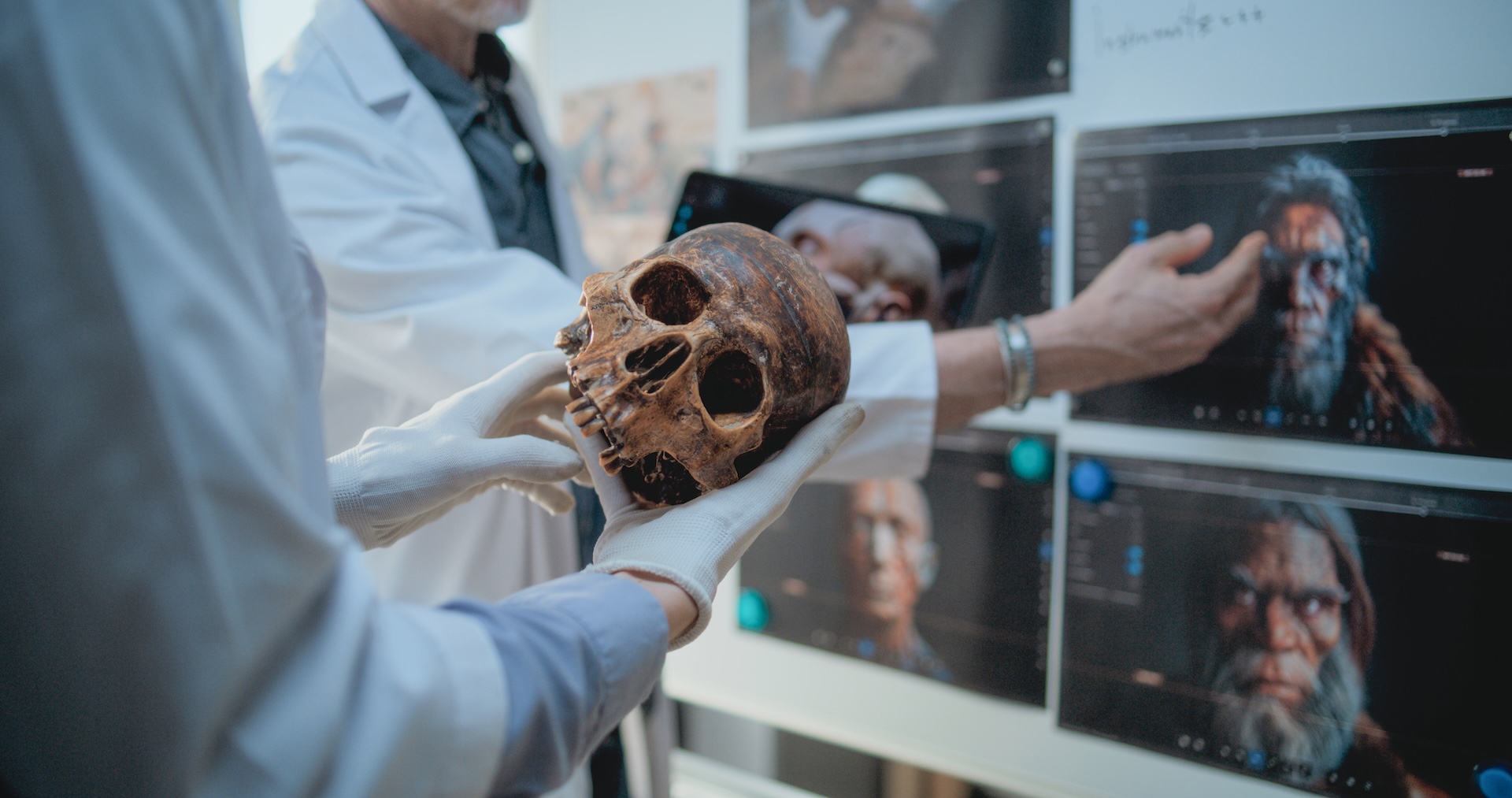
CRISPR is not error-proof, and it is difficult to incorporate many genetic changes at once. Hank Greely, director of the Center for Law and the Biosciences at Stanford University, noted that while it is currently possible to make 20 to 50 changes, "at some point, you'll be able to change the entire thing."
New techniques like base editing, which allows scientists to change individual letters in DNA's code, may make genome editing faster and more precise in the future. Greely speculated that within 20 years, it might be possible to have a baby with a wholly Neanderthal genome born alive. However, he emphasized that ethical and legal concerns would likely prevent such an endeavor from occurring.
Ethical and Legal Considerations
De-extincting Neanderthals raises significant ethical concerns. Raff described the idea as "morally abhorrent to even conceive of trying to create another kind of human based on DNA using uncertain technologies to which they could not consent." However, Greely pointed out that human babies are born without consent, so the focus should be on ensuring the safety of the process.
Editing human embryos remains controversial, unproven, and risky. Greely noted that there is currently no evidence that transforming human embryos into Neanderthal embryos would be safe. Even if a Neanderthal embryo could develop into a healthy Neanderthal, the life they would face in the modern world would be isolating and potentially bleak.
Being the only Neanderthal in a 21st-century world could lead to loneliness and social exclusion. Raff warned that we might treat de-extincted Neanderthals like animals, keeping them in zoos, which would be abhorrent since "Neanderthals are human — they're just a different kind of human."
What Could We Learn?
It is unclear what scientists would learn from a resurrected Neanderthal, given the vast changes in the world over the past 30,000 years. Raff argued that a reconstructed Neanderthal would not be living in the past but in the present, in an environment that is neither appropriate nor safe for them. Without knowing how Neanderthal genes interacted with their original environment, it would be impossible to determine how physically similar the reconstructed Neanderthal was to past Neanderthals.
Rebecca Wragg Sykes, an archaeologist and author of "Kindred: Neanderthal Life, Love, Death and Art," emphasized that even if scientists could bring back a healthy Neanderthal, studying them would not provide much insight into their language or culture. Teaching a Neanderthal a modern language would not reveal what they actually used, just as reconstructing an ancient musical instrument would not tell us what songs were played on it.
Legal Uncertainties
The legality of bringing back a Neanderthal is unclear. While human embryo editing of this nature is illegal in the U.S. and the E.U., it is unlikely that every country has relevant laws on the books. Greely noted that "nobody has said it is illegal to make Neanderthals," and that a wealthy individual could theoretically set up a lab in a country with lax regulations.
Bioethicist Arthur L. Caplan warned that private entities could undertake the de-extinction of human predecessors at any time. He urged scientists to start a conversation now, while the idea is still theoretical.
Colossal Biosciences' chief science officer, Beth Shapiro, emphasized the need for informed consent, noting that it is unclear how to obtain it from a Neanderthal. However, she acknowledged that other unscrupulous entities might pursue the idea if it were legal.
Instead of focusing on de-extinction, some scientists believe finding well-preserved Neanderthal remains could provide more valuable insights into their culture and living conditions. Examples like Ötzi the Iceman and Tollund Man demonstrate how analyzing ancient remains can reveal details about diet, clothing, and even causes of death.
Wragg Sykes concluded that finding a Neanderthal in permafrost or a wetland context could teach us more than a cloned Neanderthal ever could.

Post a Comment for "Bringing Neanderthals Back: A 20-Year Possibility?"
Post a Comment