
Close-Up Look at Ann Arbor's High-Density Housing on Walking Tour
Exploring Ann Arbor's Changing Urban Landscape
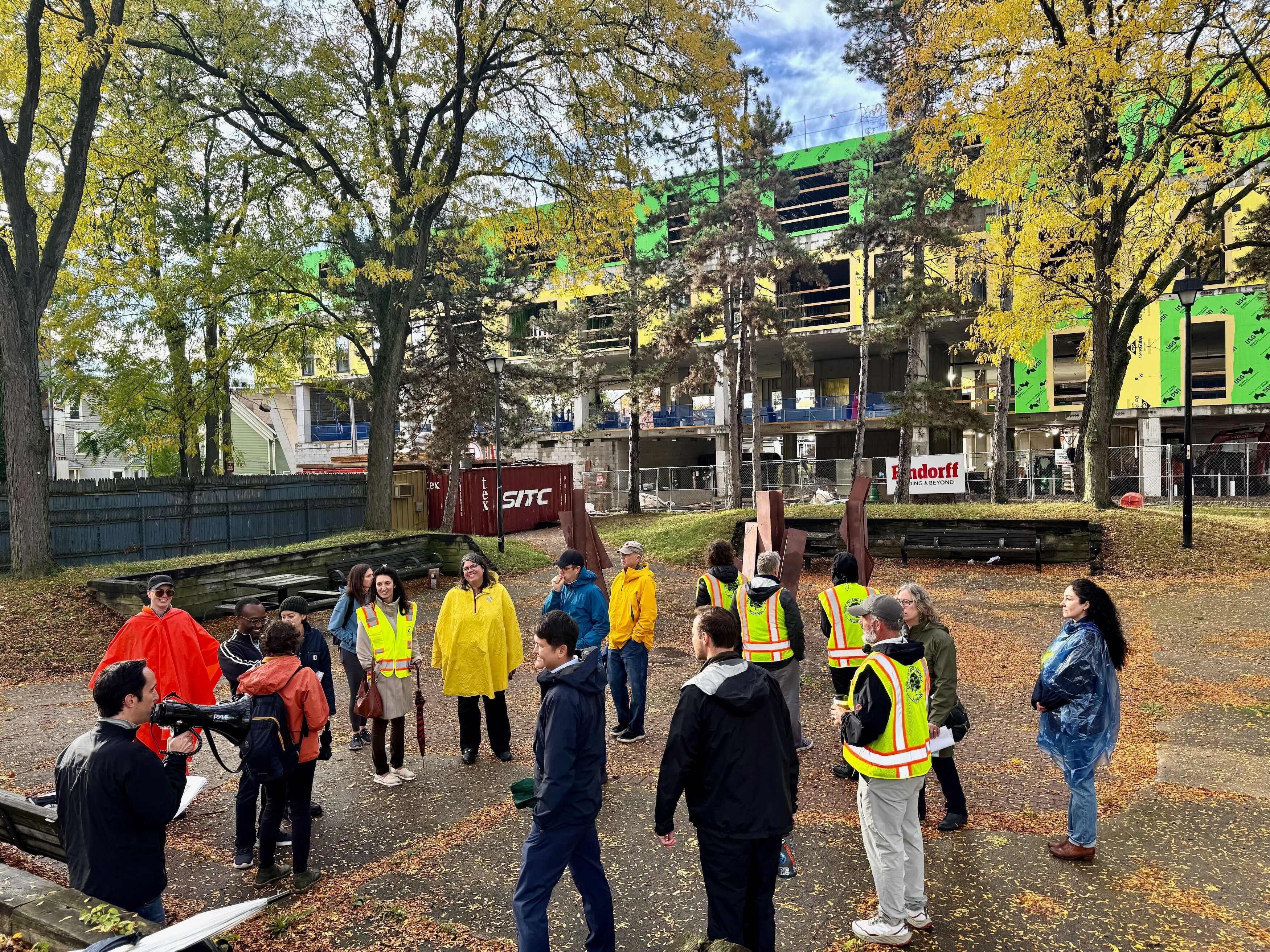
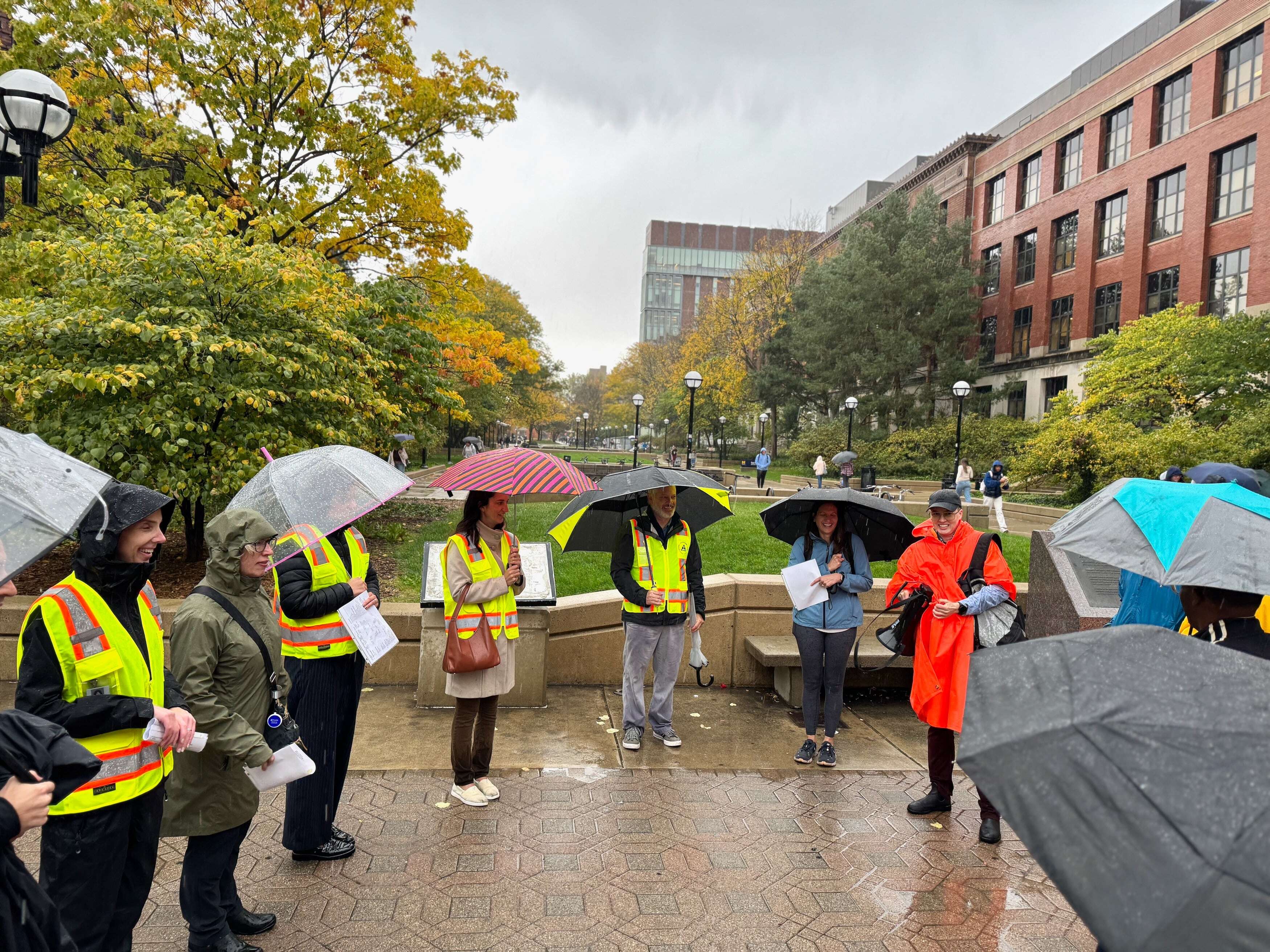
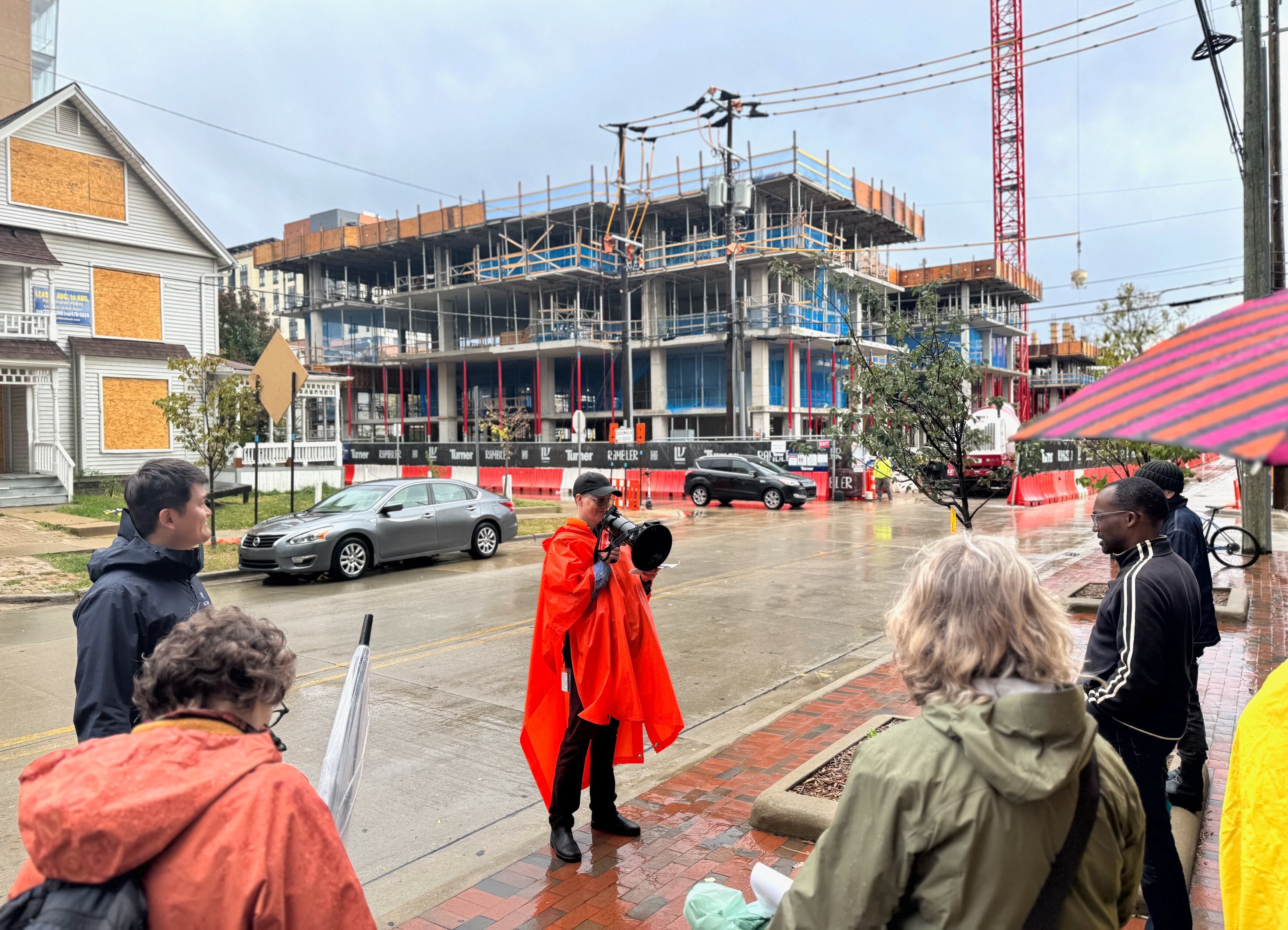
Ann Arbor, Michigan, experienced a chilly and rainy day, but that didn’t stop planning officials from taking a two-hour walking tour of downtown development sites. The Planning Commission’s outdoor retreat on Tuesday, October 21, gave commissioners and staff an opportunity to see firsthand the city’s evolving landscape as new buildings rise and discussions about zoning changes continue.
“We’re all suffering for the greater good here, for planning,” said Deputy Planning Manager Hank Kelley at the start of the tour, as officials huddled under umbrellas in the rain.
The tour began on South University Avenue, where participants were given an overview of the city’s changing environment. City Planner Julia Shake highlighted two new apartment high-rises set to open on South U, primarily aimed at University of Michigan students.
New High-Rise Developments
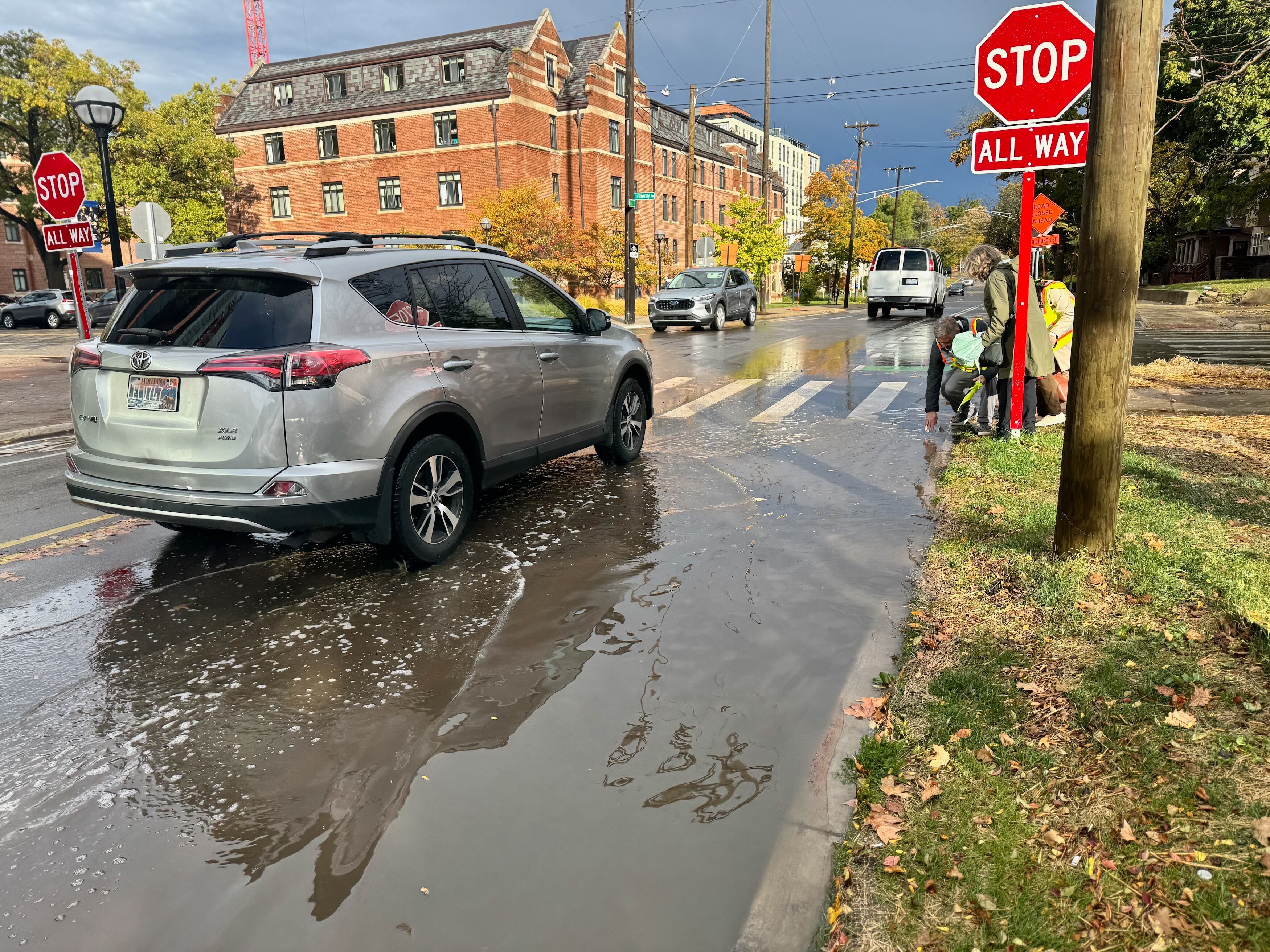
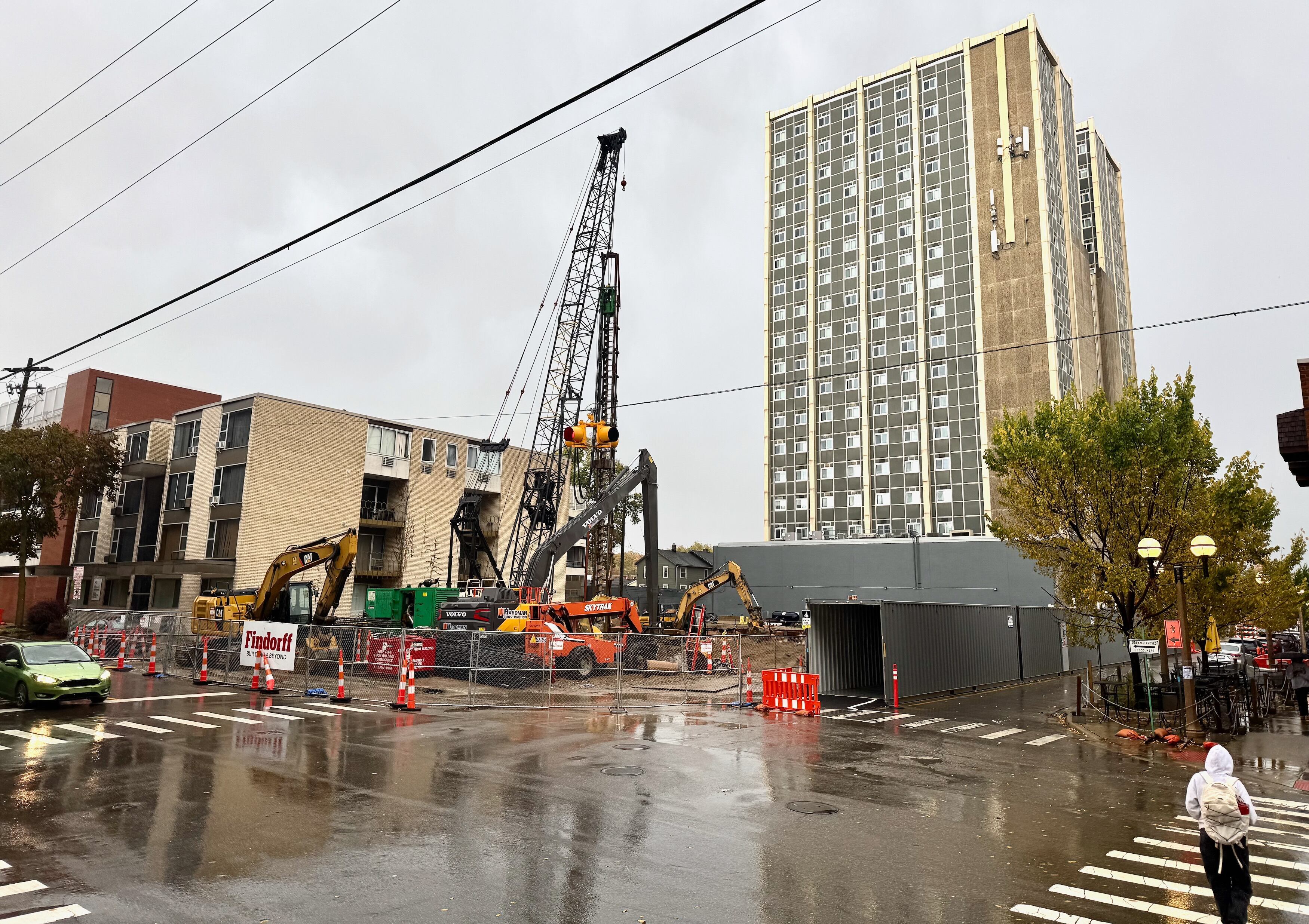
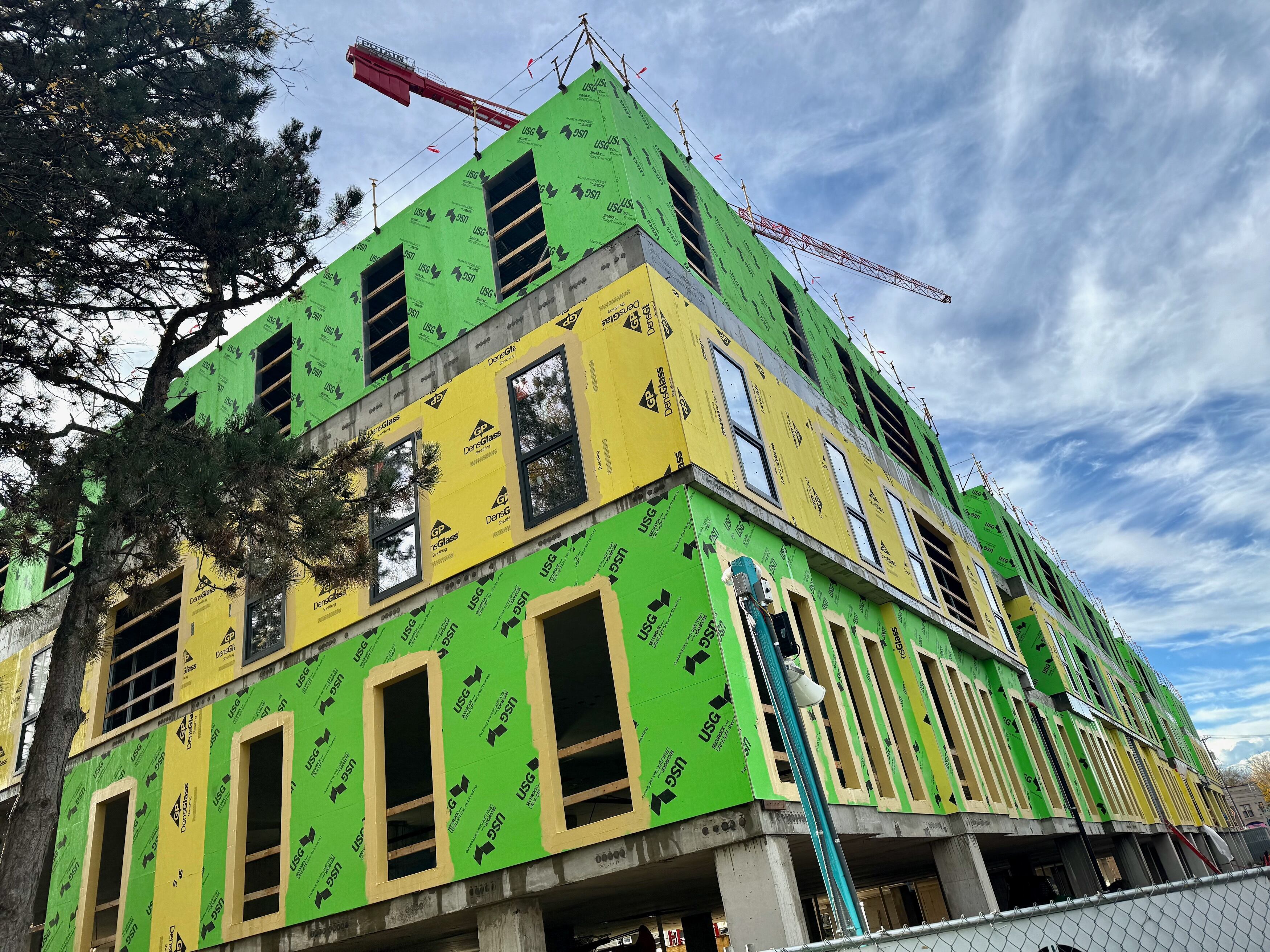
Construction is currently underway for the 19-story Chapter high-rise at the northeast corner of South U and Church Street. This building is expected to bring 183 apartments with 625 beds, along with new ground-floor retail space. Just across the street, an 18-story high-rise will replace both the Galleria Mall on South U and a small apartment building next to it on Forest Avenue. Plans call for 259 apartments and nearly 1,000 beds, including everything from studios to six-bed units, plus ground-floor retail.
Both high-rises are receiving a 30% height bonus for incorporating sustainability features such as solar panels and going all-electric, with the exception of emergency gas generators. Officials also noted the 12-story, 257-bed Vic Village North high-rise completed in 2019 without any onsite automobile parking, proving such a concept is feasible.
Joe Gatto of Chicago-based development firm Core Spaces provided an update on the high-rise his team is planning next to Rick’s nightclub at 625 Church St. Described as 19 stories with 198 apartments, the project is considered 20 stories by the city. It will be an all-electric building with about 700 beds, an activated ground floor, and no parking. There were plans for a basement commercial space and Core Spaces was trying to bring Rick’s into it, possibly as a “Rick’s 2.0” concept, but those plans have been scrapped due to construction timing issues.
Gatto hinted at a phase-two building to come just to the north, where Rick’s stands, possibly with a hotel component, though he said that wouldn’t happen until the nightclub’s lease runs out years from now. Core Spaces would work with Rick’s then to try to accommodate the nightclub.
Other Major Projects
Kelley gave an overview of the 17-story Rambler high-rise taking shape at 711 Church St., a project by Texas-based developer LV Collective. While the project didn’t comply with the neighborhood’s lower-density zoning, and the Planning Commission and staff recommended voting it down, City Council approved it as a planned unit development under special PUD zoning. The approved plans called for 273 apartments with 1,009 beds, and 52 automobile parking spaces, plus a ground-floor cafe.
The big public benefit that secured PUD approval was a $7.25 million payment to the city’s affordable housing fund.
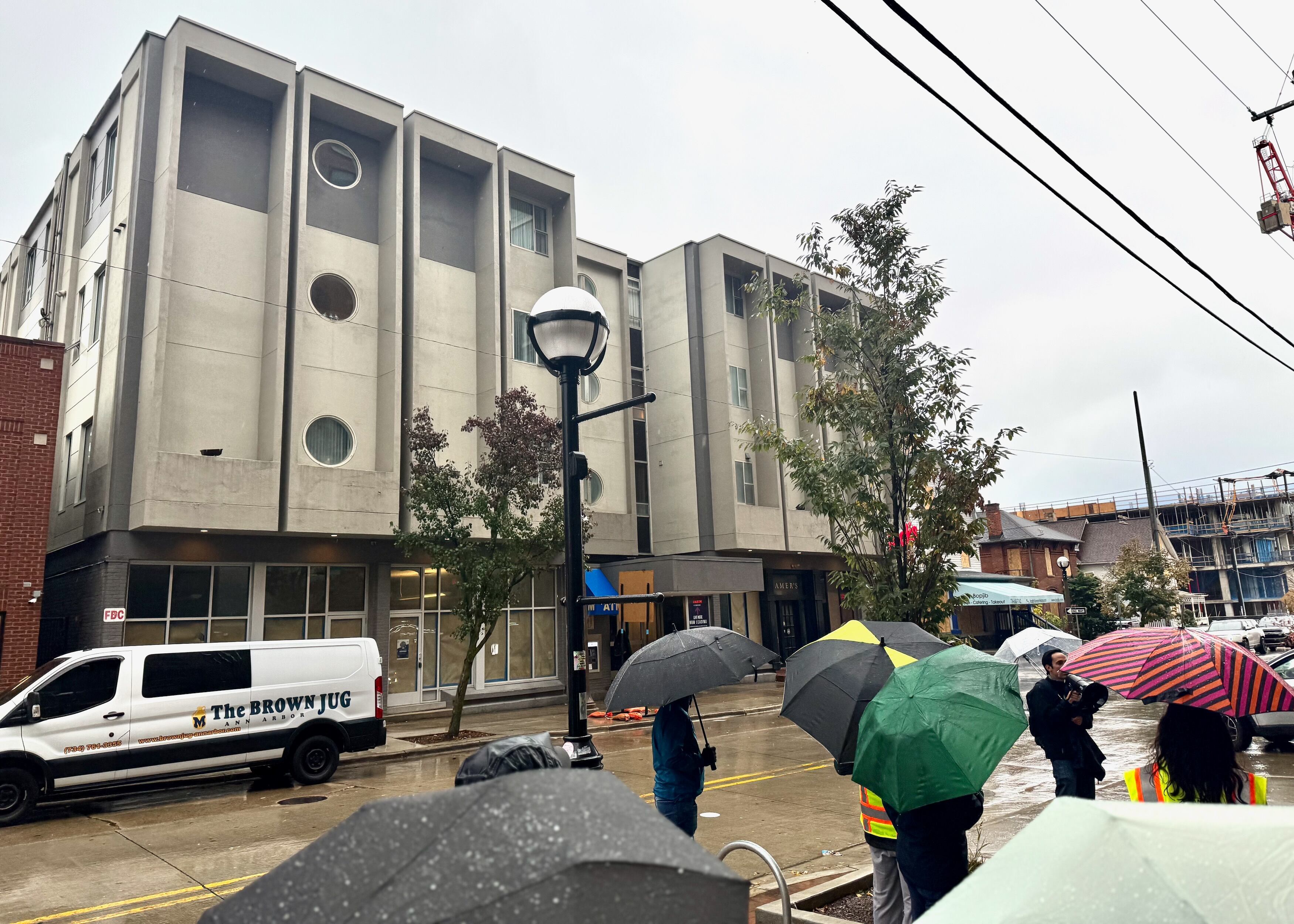
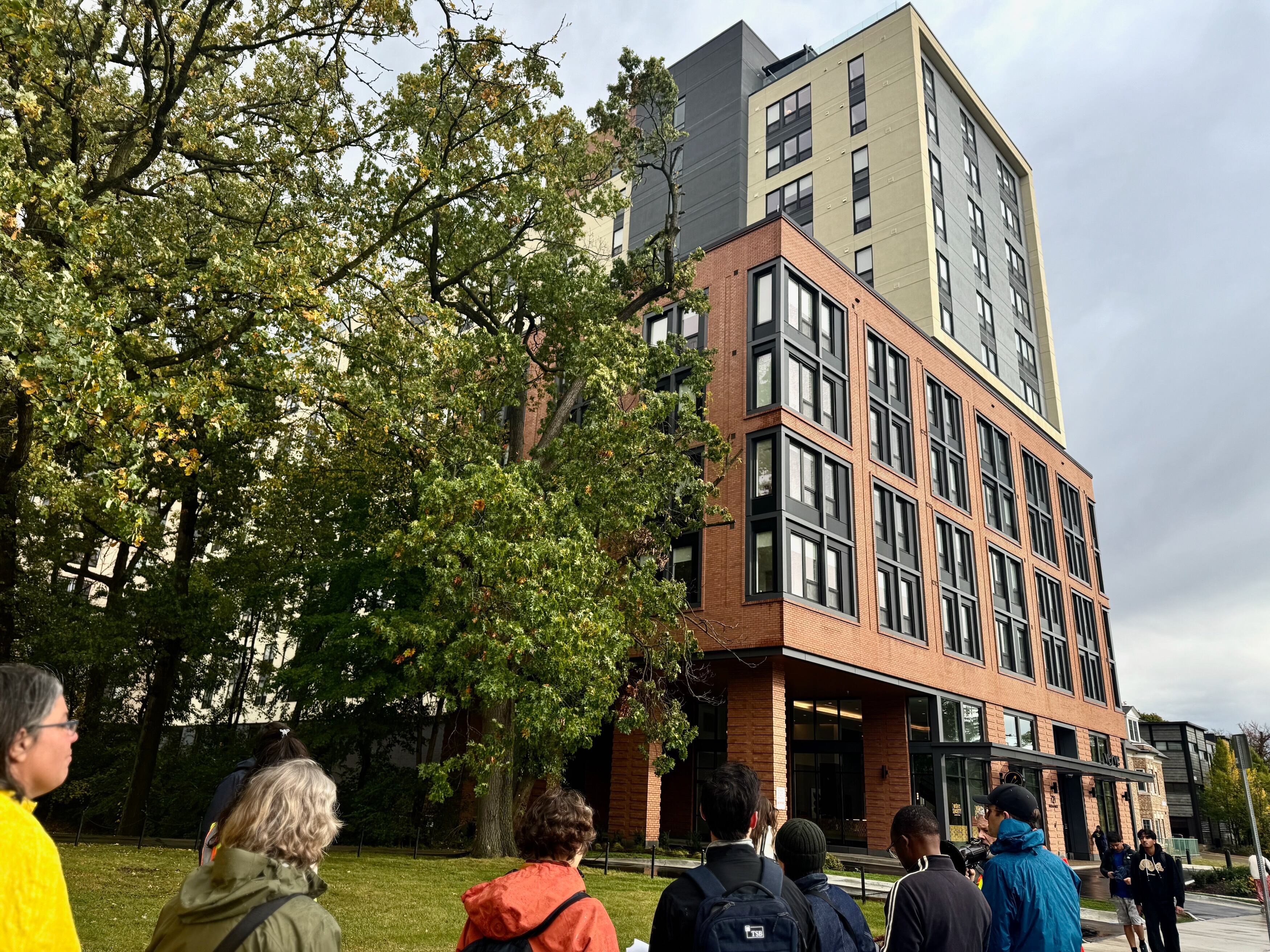
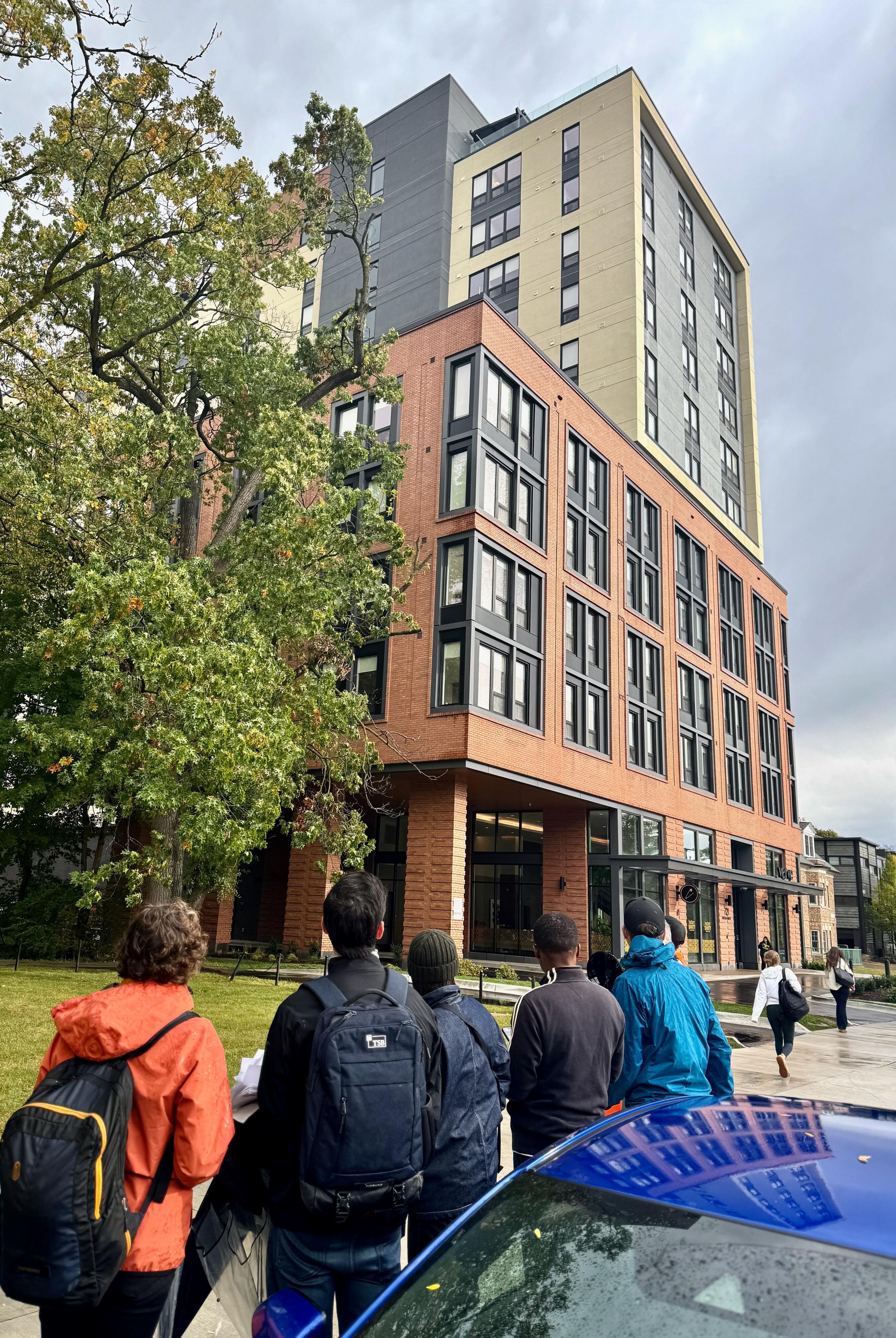
Another stop on the tour was the newly completed, 13-story Verve high-rise at 721 S. Forest Ave., with 228 apartments and 741 beds, plus a ground-floor coffee shop. It’s another case where planning staff recommended denial, arguing it’s out of scale with the neighborhood outside of downtown, but council approved it anyway with special PUD zoning. In exchange, the developer agreed to provide $4.7 million to the city’s affordable housing fund, plus $50,000 to the Housing Commission for sustainability upgrades to its buildings.
Commission Chair Donnell Wyche said it’s close enough to the South U area cluster of high-rises and feels like it fits. St. Louis-based developer Subtext paid over $15 million to purchase the property for the development where a smaller apartment building previously stood. The annual property taxes since have gone up significantly, now over $1 million.
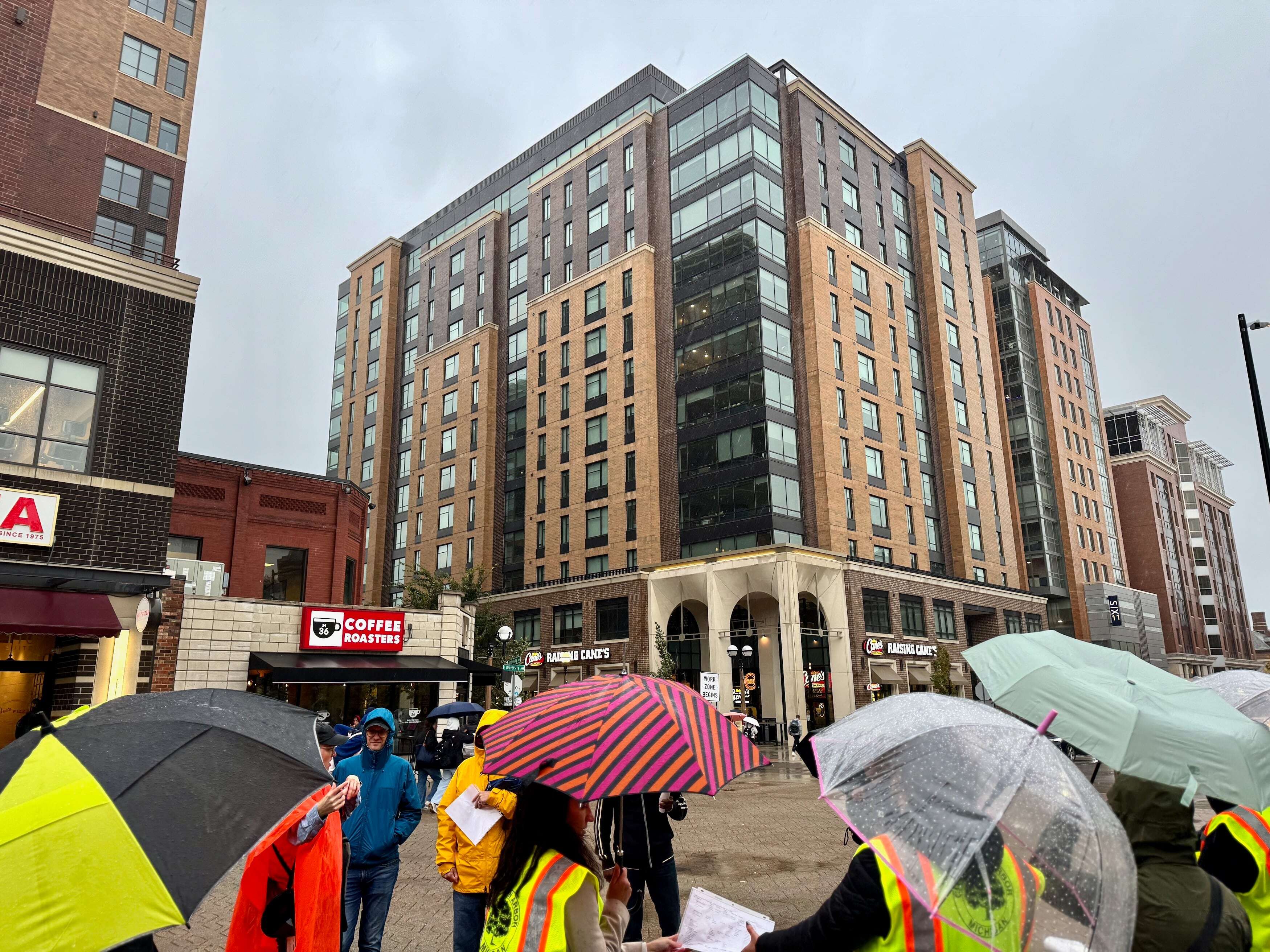
City Planning Manager Brett Lenart credited the developer for making streetscape and infrastructure improvements that extend beyond the private property into the public right-of-way, including a wider sidewalk to accommodate more pedestrians.
Core Spaces is aiming to provide dense student housing in close proximity to campus with its various projects in Ann Arbor, including another apartment high-rise under construction next to the downtown library along William Street, Gatto said.
Lenart pointed out the five new UM dorm buildings taking shape on the old Elbel Field property along Hill Street, ranging from five to seven stories tall. They’re expected to add 2,300 campus beds in 2026. Lenart also noted about 50 residential structures to the north have been demolished by UM to make way for more dorms as a phase-two project expected to add about 2,500 more beds.
Another 14-story high-rise called The Dean is proposed to replace old rental houses around the corner on Madison Street with 182 new apartments. With so many developments happening, going forward with a new student housing development in Ann Arbor is not as easy as in years past and it’s harder to capitalize projects, officials and the Core Spaces representative acknowledged.
Gatto expressed confidence UM enrollment will continue to grow and development will keep pace, though the cost of housing in Ann Arbor — despite efforts to provide some smaller, lower-cost units — will leave some commuting from surrounding areas.
Continuing the tour to the west side of downtown, Joe Giant, the city’s economic development director, said the old Kline’s parking lot is one of the best development sites in the Midwest. The city has big plans for it, partnering with Hines, a real estate developer also behind new apartments coming to Briarwood Mall.
Council gave the city’s administration the green light in September to negotiate a deal with Hines, which offered to pay the city $14 million to $17.5 million for the Ashley Street property depending on housing unit counts. Hines indicated it sees potential for 554 housing units and 10,000 square feet of ground-floor retail space in two towers.
Giant said he’s been talking with surrounding businesses. While there are concerns about losing public parking in the Main Street area if the Kline’s lot goes away, he said there are other parking facilities nearby that have vacancies. And while nothing is finalized, there are early talks of including maybe about 40 or 50 public parking spaces in the new development, he said.
A previous proposal for a Sports Illustrated Resorts development on the lot failed to win council support.
Council also has given the green light to work out a deal with developer BaseBld, which has offered the city $2 million for the vacant and polluted 415 W. Washington St. property across from the YMCA. The developer sees potential for 100 housing units in two phases with a mid-century-modern architectural style.
The first phase would be rentals and the second phase could be rentals or condominiums depending on market dynamics, officials said, and 15% of units would be reserved as affordable housing.
Delacourt said he expects details to be worked out in the next 90 to 180 days.
The development in the Old West Side Historic District would require Historic District Commission approval and have to meet historic district standards, he said, but it would be a by-right project once it goes to Planning Commission.
He’s impressed with BaseBld and likes the developer’s approach, he said, estimating it could take about $3 million for site remediation. A brownfield plan to capture new taxes from the development could finance the cleanup and more, he told commissioners, mentioning a possible $1 million for routing the Treeline pedestrian trail through the site and other possible investments in affordable housing and sustainability.
Officials concluded Tuesday’s tour by heading to city hall for an evening meal.

Post a Comment for "Close-Up Look at Ann Arbor's High-Density Housing on Walking Tour"
Post a Comment