
Comet 3I/ATLAS Threatens NASA's Jupiter Probe with Charged Particles—Could It Unveil Secrets?
The Europa Clipper and the Potential for Interstellar Discovery
The Europa Clipper, a spacecraft currently en route to Jupiter, may soon encounter a rare cosmic event involving charged particles from an interstellar comet. This prediction comes from two European researchers who have developed a computer model capable of identifying when the spacecraft could align with the ion tail of the interstellar comet 3I/ATLAS.
This alignment presents a unique opportunity for scientists to sample material from a comet that originated outside our solar system. While the event itself is harmless to the Europa Clipper, it offers a rare chance to gather data on the composition of an object from another part of the galaxy.
Samuel Grant, a researcher at the Finnish Meteorological Institute and lead author of the study, explained that the lack of data on interstellar comets makes this event particularly significant. "Sampling the tail in this way is the closest we can currently get to a direct sample of such an object," he said.
Despite the potential, several factors could hinder the Europa Clipper from making these measurements. One major challenge is the ongoing U.S. government shutdown, which has left the spacecraft in cruise mode with some instruments inactive. If the shutdown continues past the critical window between October 30 and November 6, scientists may not be able to activate the necessary equipment in time.
If the measurements are successful, they could provide valuable insights into the composition of 3I/ATLAS and help compare it to comets from our own solar system.
Understanding Comet Anatomy
Comets are known for their two distinct tails: a dust tail and an ion tail. The dust tail is formed by particles and dust lifted off the comet's surface, while the ion tail consists of charged particles that are pushed away by the solar wind.
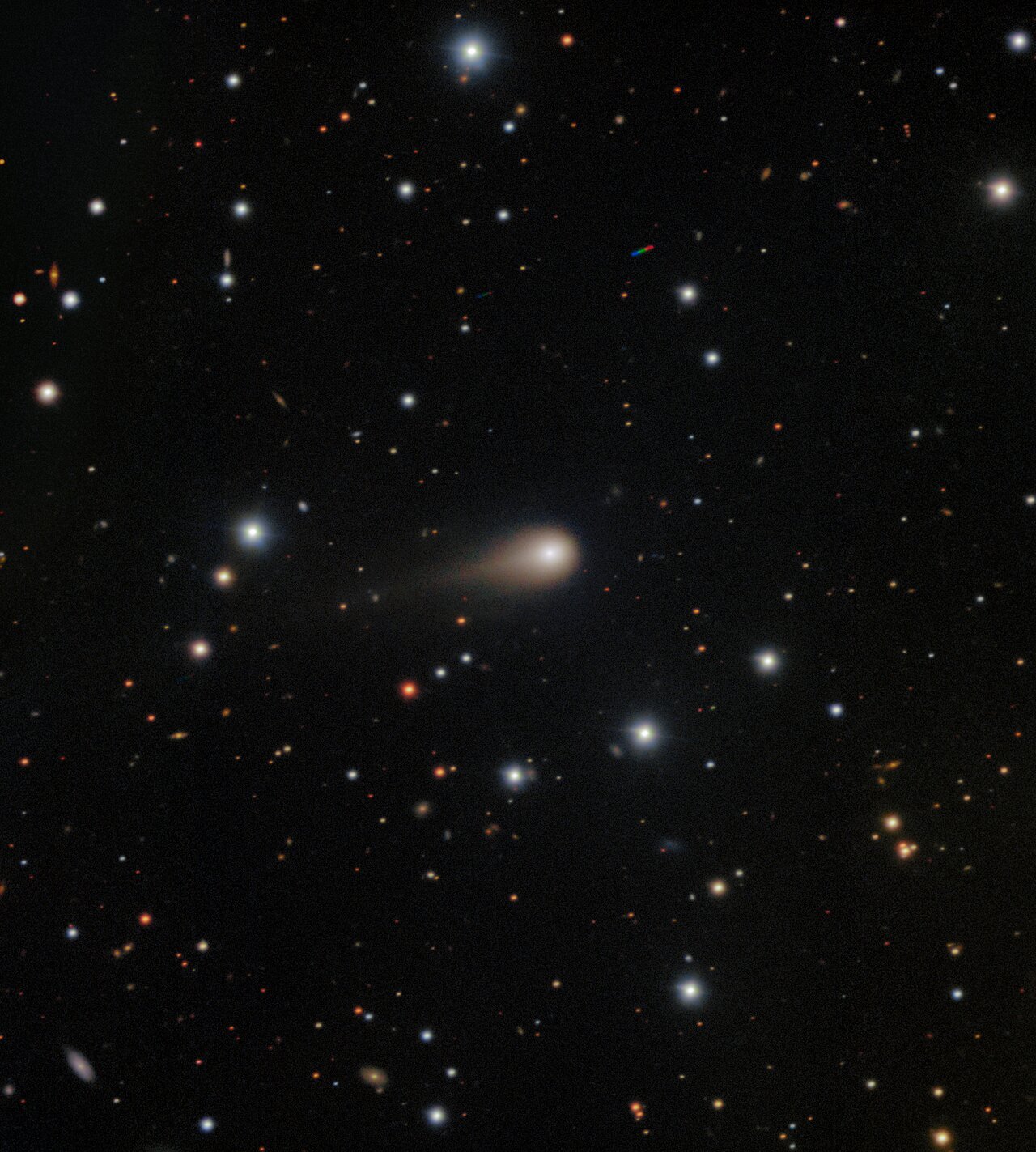
The ion tail always points away from the sun due to the influence of the solar wind. During its journey, the Europa Clipper will be positioned to potentially intercept ions from 3I/ATLAS' ion tail as they travel toward the spacecraft at hundreds of miles per second.
Grant and Geraint Jones, a principal investigator for the Comet Interceptor mission, used their Tailcatcher program to predict this ion tail crossing. Their model tracks the movement of solar wind packets and helps determine if they could interact with the comet's ions.
Distinguishing Cometary Ions from Solar Wind
One of the challenges in this research is differentiating between ions from the solar wind and those from the comet. Grant explained that cometary ions often contain heavier elements, such as water-group ions, which are less common in the solar wind.
Additionally, the presence of cometary ions can cause the solar wind to slow down and change direction, providing further clues about their origin.
Factors Influencing the Success of the Encounter
For the Europa Clipper to successfully detect these ions, several conditions must be met. The solar wind must flow in the right direction and be strong enough to carry the heavier ions to the spacecraft.
At the time of the predicted encounter, 3I/ATLAS will be at its closest point to the sun (perihelion) on October 29, which could increase the size of its ion tail and improve the chances of detection.
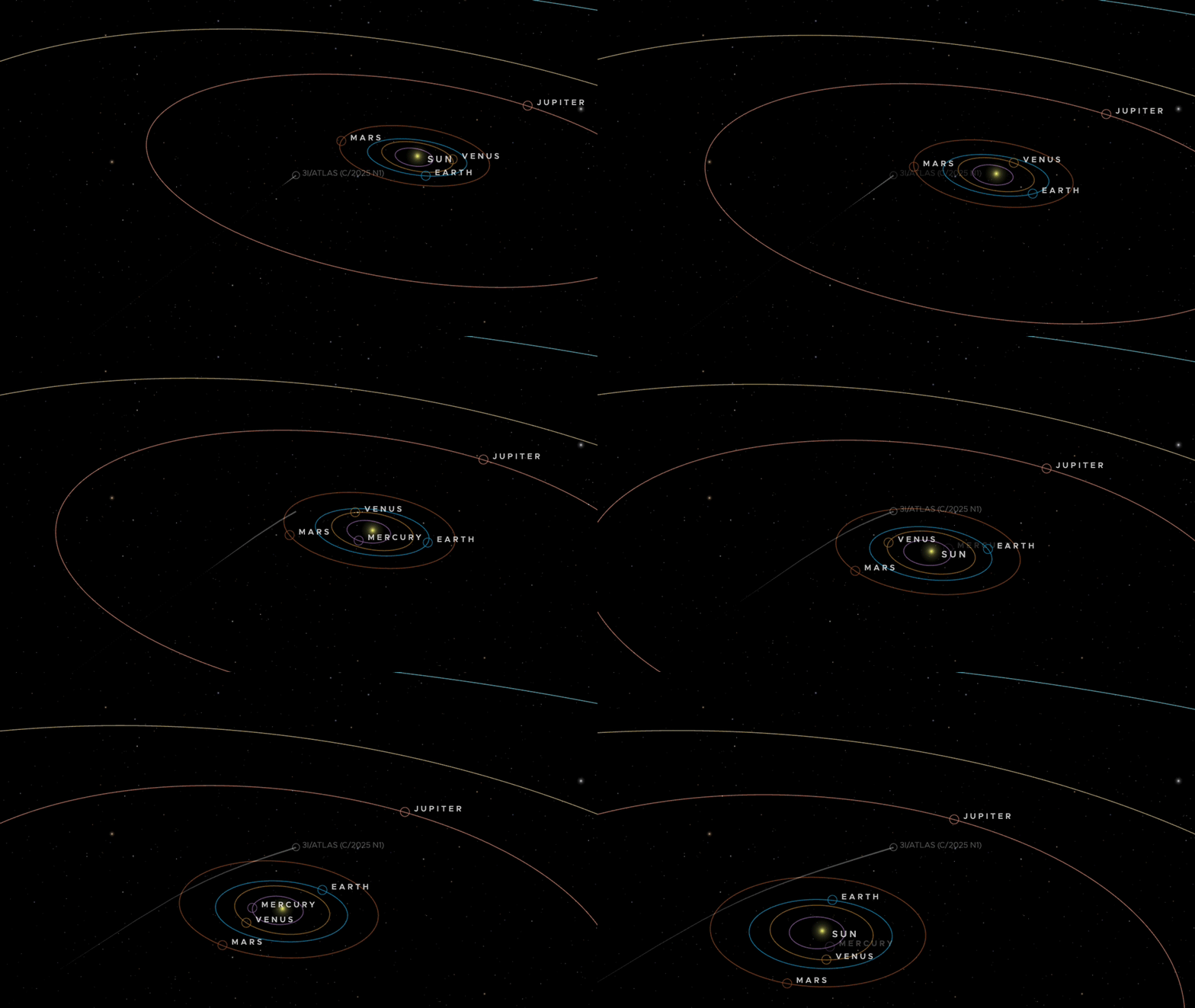
Meanwhile, the European Space Agency’s Hera spacecraft, heading toward the Didymos and Dimorphos asteroid system, may also be in a position to intercept solar wind packets carrying cometary ions. However, Hera lacks the necessary instruments to measure these particles.
Future Prospects and Scientific Impact
Although Grant and Jones are not directly involved with the Europa Clipper team, their work has already proven valuable. The Tailcatcher program was used to successfully predict an ion tail crossing in 2020, when the Solar Orbiter detected ions from comet C/2019 Y4.
Their research, published in a pre-print paper on arXiv, highlights the importance of predicting such events for future missions. The upcoming Comet Interceptor mission, set to launch in 2029, aims to directly sample the coma and tail of an interstellar or long-period comet.
Grant expressed hope that future spacecraft might be able to cross upstream of a comet's tail, offering even more opportunities for discovery.
This event underscores the value of predictive models in space exploration and the potential for new discoveries in the study of interstellar objects.

Post a Comment for "Comet 3I/ATLAS Threatens NASA's Jupiter Probe with Charged Particles—Could It Unveil Secrets?"
Post a Comment