
Emirates Boss Accuses Airlines of Killing the A380 to Undermine His Carrier
The Conspiracy Theory
Emirates President Sir Tim Clark has made a shocking claim that has stirred up the aviation industry. He alleged that major U.S. airlines and members of the Star Alliance intentionally worked to bring down the Airbus A380 superjumbo, aiming to weaken Emirates' competitive edge. Speaking on a recent episode of The Air Show Podcast, Clark suggested that there was a coordinated effort among rival carriers to avoid purchasing the A380, which ultimately led to its downfall in 2021.
Clark's claims have sparked renewed discussion about the politics within the aviation industry and the real reasons behind the A380's commercial failure. He described a "clear mandate" within the Star Alliance to boycott the A380, stating that it gave too much power to Emirates. According to Clark, if the alliance did not buy the aircraft, its demise would eventually follow.
He specifically pointed to American carriers, claiming they had no interest in the A380 because it was a tool in Emirates' arsenal. Clark argued that by not buying the plane, these carriers could prevent Emirates from gaining more influence with Airbus. This period was marked by heightened tensions between Gulf carriers and U.S. airlines, with accusations of unfair government subsidies leading to congressional hearings and trade disputes.
Emirates' A380 Dominance
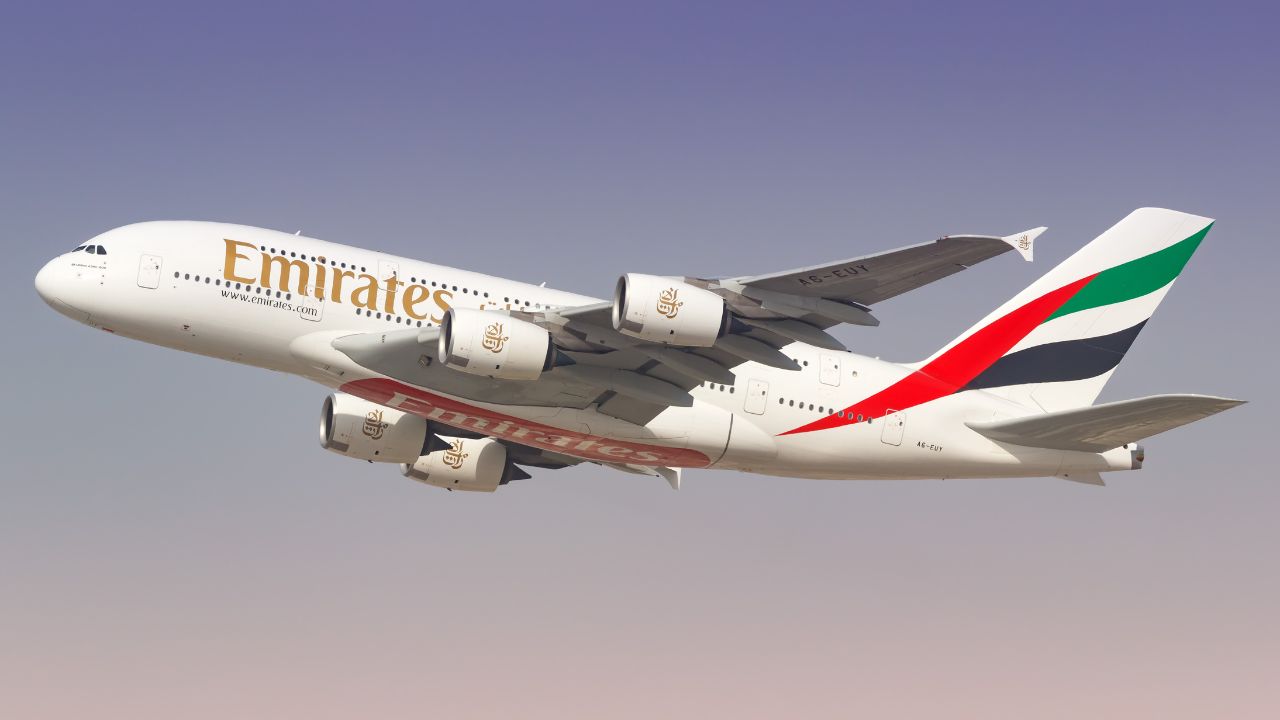
The context for Clark's claims lies in Emirates' remarkable success with the A380. The airline placed an order for 123 A380s, nearly as many as all other operators combined. This made the superjumbo a central part of Emirates’ hub strategy and global expansion. Under Clark’s leadership, the A380 became more than just an aircraft; it became a brand symbol.
Emirates introduced onboard bars, showers, and luxury suites, setting new standards for premium air travel. Clark even criticized competitors, saying that the interiors of other carriers' A380s looked like DC-10s. The aircraft became a key weapon for Emirates in competing against traditional network carriers, allowing the airline to transport large numbers of passengers between continents while offering an unmatched onboard experience.
The Financial Case for U.S. Carriers
Clark argues that U.S. airlines missed out on a significant opportunity by avoiding the A380. He claimed that carriers like United, American, or Delta could have operated the superjumbo profitably on routes such as Los Angeles to Tokyo. He questioned why any of these airlines couldn't make money on such a route.
According to Clark, U.S. carriers' business models, which prioritize frequency over capacity, led them to overlook the A380's potential on high-demand, long-haul routes where airport slots are limited.
Industry Skepticism
Aviation analysts have been skeptical of Clark's conspiracy theory. They argue that the A380 was never a natural fit for U.S. or European network models. Airlines like Delta, United, and American have traditionally focused on high-frequency routes using smaller, more efficient aircraft, a strategy that offers greater flexibility and better yields, especially in markets with seasonal demand.
The fact that major U.S. carriers have also avoided ordering Boeing's 777X, another very large aircraft, suggests their reluctance may be based on operational considerations rather than any coordinated effort to harm Emirates. Market realities worked against the A380's original premise, as the industry evolved toward point-to-point travel rather than the hub-and-spoke model that the superjumbo was designed to serve.
The Numbers Don't Lie
The commercial failure of the A380 program supports some of Clark's broader points, if not his conspiracy theory. Airbus built only 251 A380s before ending production in 2021, delivering aircraft to just 14 airlines. The program reportedly generated significant losses for Airbus despite years of development and Emirates' strong support.
Most operators struggled to make the A380 profitable outside of specific route structures. Even Lufthansa, one of the largest European operators, found limited success with the type compared to smaller, more fuel-efficient alternatives.
The Geopolitical Context
Clark's allegations must be viewed against the backdrop of the intense commercial and political battles between Gulf carriers and their Western competitors during the 2010s. U.S. airlines, supported by their government, accused Emirates and other Gulf carriers of receiving billions in unfair subsidies, leading to formal complaints and congressional hearings.
The tensions were so severe that Clark recalled some carriers telling Emirates: "There is no point hunting you; we must deal with you," suggesting a shift from confrontation to cooperation in recent years. The Trump administration ultimately dismissed the subsidy complaints, and relationships have since improved. Emirates now has partnerships with United Airlines, marking a dramatic change from the adversarial period Clark references.
Current Industry Dynamics

The aviation landscape has changed dramatically since the height of the A380 program. Emirates is now diversifying its fleet with orders for 65 Airbus A350-900s, 30 Boeing 787s, and 205 Boeing 777Xs, acknowledging that even the world's most successful A380 operator needs smaller, more efficient aircraft for many routes.
Clark continues to advocate for a new large aircraft, arguing that without planes like the A380 or Boeing 747, "rising fares" are inevitable as capacity constraints force airlines to use smaller aircraft on high-demand routes.
The Verdict: Conspiracy or Competition?
While Clark's allegations make for compelling drama, industry experts suggest the reality is more mundane. The A380's failure likely resulted from a combination of factors: changing airline business models, improved efficiency of twin-engine aircraft, high operating costs, and limited route applicability outside of specific hub operations.
As one industry observer noted, Clark's comments "can be read as equal parts challenge and nostalgia, the voice of an executive who built an empire on a bold vision of aviation, only to see the world move in a different direction."
Whether or not rival airlines actively conspired against the A380, the program's demise has certainly weakened Emirates' competitive position. The airline must now compete without its signature advantage, relying on operational excellence and service quality rather than unique aircraft capabilities.
Legacy of the Superjumbo
Despite its commercial disappointment, the A380 remains beloved by passengers and represents an era when airlines took bold technological bets. Emirates plans to operate its A380 fleet well into the 2040s, ensuring that Clark's vision of extraordinary air travel will continue for at least another two decades.
Clark's allegations, whether substantiated or not, highlight the intense competitive pressures and geopolitical tensions that shape the global aviation industry. They also serve as a reminder that in aviation, as in many industries, success often depends as much on market timing and industry politics as on engineering excellence.
For now, the A380 remains Emirates' crown jewel, a testament to Clark's bold vision and a symbol of an era when the sky truly seemed to be the limit. Whether its demise was the result of market forces or industry machinations may never be definitively proven, but the debate itself reveals the high stakes and intense rivalries that drive aviation forward.

Post a Comment for "Emirates Boss Accuses Airlines of Killing the A380 to Undermine His Carrier"
Post a Comment