
Jared Kushner and Steve Witkoff's 60 Minutes Exclusive
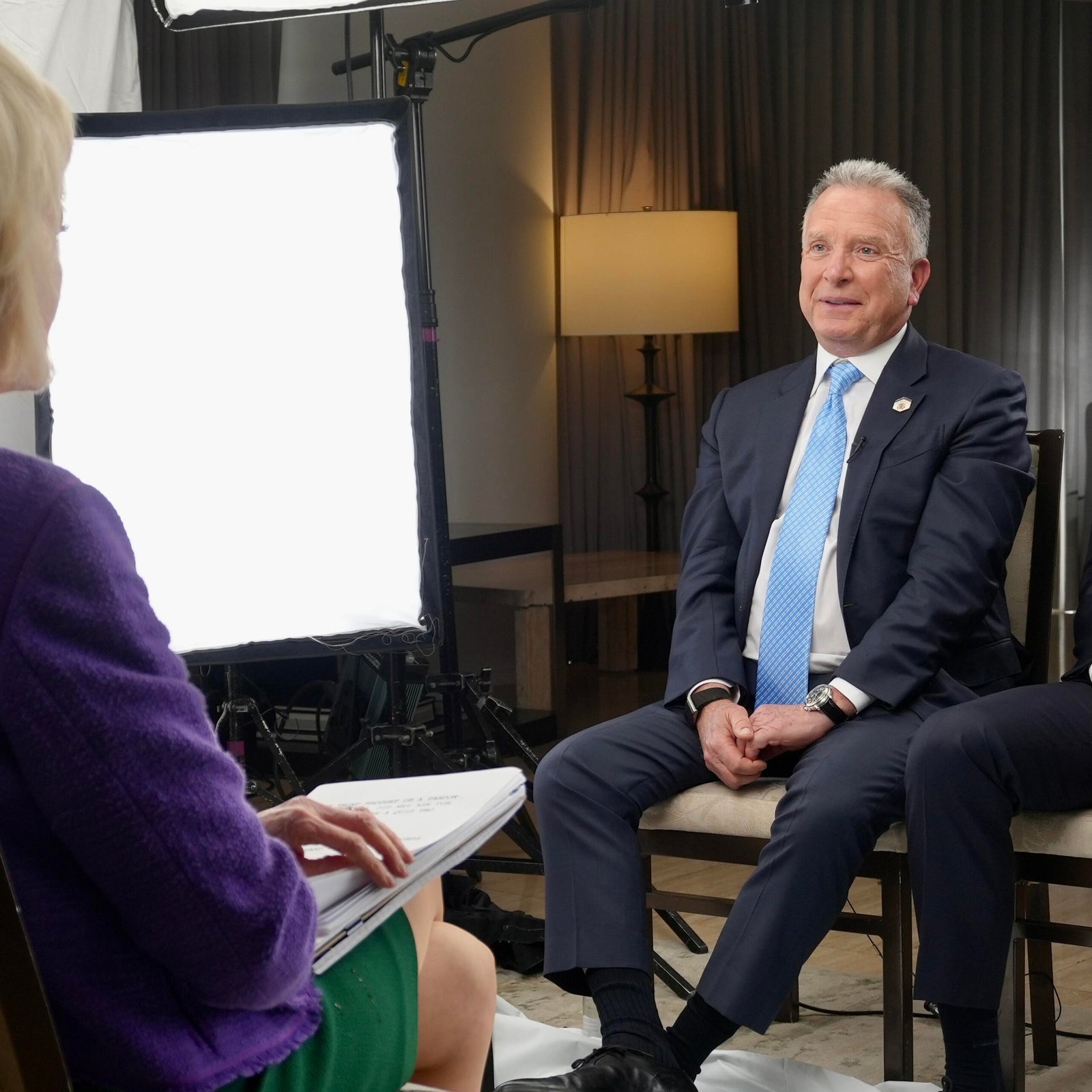
The video above is an extended version of the interview that was broadcast on 60 Minutes on Sunday, October 19, 2025. This extended version was condensed for clarity.
Lesley Stahl: So I understand that you were up at 4:30 in the morning, this morning, working, what on phase two? What were you working on?
Jared Kushner: So Steve is a very early riser. And my kids get up early to go to school. So-- the time before they get up is usually a great time for us to catch up before the day and go over what's been happening overseas. So this morning we were talking about a lot of the issues of getting the aid into Gaza and deconflicting some of the misunderstandings that are--
Lesley Stahl: Deconflicting? Meaning?
Jared Kushner: Meaning that you have-- a lot of people with good intentions right now. An example is the U.N. is trying very hard to get food into-- the people of Gaza. The Turks were offering to send a recovery and rescue team in to help search for some of the-- the dead hostages-- that-- that we're looking to recover. And-- there's just a lotta miscommunication that stalls and holds up some of these efforts. So-- getting all sides' perspectives and finding a mechanism to get quick adjudications, and the right adjudications-- is something that's very necessary to put in place.
Lesley Stahl: I heard the president asked you what the chances (LAUGH) were for success.
Jared Kushner: Yes.
Lesley Stahl: And you said?
Jared Kushner: 100%. And he said, "Why do you feel so confident?"
Lesley Stahl: Yeah.
Jared Kushner: And I said, "Well, we can't afford to fail."
Steve Witkoff: We just kept on thinking to ourselves, "This finish line? This finish line is about saving lives."
Lesley Stahl: I need to know if you did some bare-knuckle stuff. You know, I think of the real estate negotiation as hard-nosed, get your dukes up.
Jared Kushner: There were a couple intense moments that we had. But wha-- what led to this was really the trust that we were able to build. And-- I was trained in foreign policy really in President Trump's first term by seeing an outsider president come into Washington with a different school of foreign policy than had been brought in place for the 20 or 30 years prior. And his foreign policy was really about pragmatic realism, right? Taking pragmatic stances-- trying to use strength to avoid wars, and figuring out how to-- make deals, not lecture the world. And so-- the way that--
Lesley Stahl: Wait-- wha-- what does that mean? Make deals and not lecture the world?
Jared Kushner: Focus on interests over values sometimes. And figure out what are-- where do we have joint interests with other countries, and pursue those joint interests. And then where you have differences on interests or values, discuss those privately and try to find ways to get it to the best place possible.
But the way that we were successful in the first term with a lot of the different trade deals and-- peace negotiations, like Abraham Accords and the-- ending the GCC dispute was that we never approached it with people like we were across the table from you.
We sat-- with the people on-- from other countries and we said, "Let's agree on the same objective." And then once we agreed on the objective, we kind of locked arms and said, "Let's figure out ways that we can work together to try and get there."
We joke with the Abraham Accords that we succeeded at Plan C, but only because we went through the alphabet three times and failed at every letter and kept going, and we never quit.
Lesley Stahl: And was that true here as well?
Jared Kushner: We probably went through the alphabet seven or eight times--
Steve Witkoff: I think so.
Jared Kushner: --on this one.
Steve Witkoff: Yeah.
Lesley Stahl: And--
Steve Witkoff: This was more complex.
Lesley Stahl: I heard that one of the things that was different from a diplomatic approach was that you took risks, more risks, a lotta risks. Would you agree with that?
Steve Witkoff: Well, h-- h-- first, I would say that-- President Trump is a very different sort of president to work for. He delegates well. I don't think people realize that. He gave us a lot of authority to negotiate. He felt-- he-- he understood the dynamics of it. We put him in the room. We explained it to him I think thoroughly. But he gave us lots of authority-- Lesley. And I--
Lesley Stahl: To make decisions without having to check in all the time?
Steve Witkoff: Yeah. And it's not to say, by the way, that we wouldn't check in. We did check in, often. But that-- that feeling of comfortability on our part, it allowed us to-- to freewheel it a little bit.
Lesley Stahl: Give us an example of the freewheeling. Give us some insight into how that worked.
Jared Kushner: After the missile strike-- in Qatar from Israel-- Steve and I basically were-- were very upset about that. We thought that that really was not a smart strategic move, and it violated a lot of the trust that we felt-- like we deserved from the Israeli side.
And so at that point-- Steve and I basically sat together and said, "We need to take a whole new approach. And perhaps with all of this chaos can come an opportunity." And so we decided to take the previous ceasefire proposal and then the end of war proposal that we'd been working on, and merge it together into one document, and then focus on seeing if we can get the Qataris and the Arab world onboard.
And so we put that together, spoke with the Qataris, made a lotta progress, brought it to the president, and he said, "I love this idea. Let's go all in and let's push very hard to get the Arab world aligned. And then we'll figure out how to get Israel onboard and turn this whole negotiation around."
Lesley Stahl: Okay. I'm gonna come back to the attack on the-- compound in Doha. But let's-- move forward for one second.
Lesley Stahl: So, you have both done a lot of business with the Gulf states, billions and billions of dollars worth of business. And you've done some of the business while this negotiation has gone on and that has raised some issues of conflict. I mean, some blurring of a line between, you know, what you're doing in terms of foreign policy and benefiting financially from what's going on.
Jared Kushner: So first of all, Lesley, nobody's pointed out any instances where Steve or I have-- pursued any policies or done anything that have not been in the interest of America. Number two is--
Lesley Stahl: But the perception?
Jared Kushner: But Lesley, we-- we can't spend our time focused on perception as much as we have to focus on the facts. We're here to do good. These are impossible tasks. And because this is important, I've volunteered my time to help the President and Steve to try to make progress. But Steve nor I will be involved in awarding contracts or figuring out who does business-- you know, in Gaza after.
Steve Witkoff: Well, from my standpoint, Lesley, I-- I'm not in business anymore. I've divest--
Lesley Stahl: Yeah, but your family is.
Steve Witkoff: But I've divested. Like Jared, I receive no salary, and I pay all my own expenses.
Lesley Stahl: This has become an issue.
Jared Kushner: What people call conflicts of interests, Steve and I call experience and trusted relationships that we have throughout the world. If Steve and I didn't have these deep relationships, the deal we were able to get done, that freed these hostages would not have occurred.
Jared Kushner: We have trusted relationships in the Arab world and even in Israel, where we've both done business in the past. But that means they trust us. We understand their cultures. We understand how they work. And we're able to use those-- that knowledge and skill set to try to do things that advance the world.
Steve Witkoff: I would-- I would agree exactly with what Jared said. And I like-- his statement that-- conflict of interest is-- is-- a terminology used by some, and we call it experience. We really do.
Lesley Stahl: You call conflict of interest experience?
Steve Witkoff: Because we don't think there was a conflict of interest, Lesley. That's why. Because we don't think that-- we crossed any ethical barriers. Because there becomes this sort of per-- perception that there might be a conflict of interest because we can call Sheikh Mohammed in Qatar directly, or because we can call Bibi directly, or because we can call the foreign minister of Turkey, who is-- a very critical person in this-- equation, or call-- MB Zayed in the Emirates, or MBS.
Lesley Stahl: Get 'em on the phone? B--
Steve Witkoff: Immediately, and-- and garner support. The president, when we went to that UNGA-- meeting with the Arab leaders, came out of that with almost unanimity, a consensus of support from everybody there. We had been working those-- telephone lines to all the leaders of those countries. We were not talking to-- junior people or lieutenants over there. We were talking directly to the people who make the final decisions. And that ultimately became very, very critical to the-- to-- us being successful.
Lesley Stahl: I-- I wanna ask you about a statement you made that may have framed your outlook on this. Jared, you said, "Issues are simple. It's the people (LAUGH) who are com-- complicated and complex." Issues are simple? Now, that really is inverting the way diplomacy has worked.
Steve Witkoff: Yeah. Well, I agree with him, by the way. I agree with that statement. I-- I say all the time--
Lesley Stahl: The (UNINTEL) issues were so thorny. They're still impa-- you know, hard to--
Steve Witkoff: Well--
Lesley Stahl: --get through.
Steve Witkoff: I like to say, Lesley, and it's a version of what Jared-- your quote to Jared is just saying. I like to say that we're sort of like th-- we're-- our titles should be secretary of miscommunication (LAUGH) and correcting miscommunication because that's a lot of what we were doing out there.
You know, we were tryin' to build trust between people who didn't trust each others-- each-- each other for-- for-- because of decades of-- of mis and distrust. And that's not an easy thing to correct.
Jared Kushner: Can I say on the issues are-- on the issues are simple and the people are complicated, when I first started looking at this file, I spoke to everyone who'd been involved in the Middle East diplomacy for the 20 years prior.
Lesley Stahl: All the historians and all of those people--
Jared Kushner: Yeah. And the way they were explaining things to me just made no sense. And the foundational idea that I came to is that people just wanna be able to live with security and live freely. They wanna be together. They wanna have economic opportunity.
They want their children to be able to live a better life. And they wanna safely and freely practice whatever religion they choose to practice. And that for me was really what it was about. And so when you think about everything through that light, you have all these old historical conflicts, or Balkanization of communication, and it really is just getting people to focus on how do we make the future better, versus getting stuck in these old conflicts.
Lesley Stahl: We wanna walk through, you know, chronologically. And we wanna start with the bombing in Doha. We've been told that that bombing, the Israelis bombing the compound where the Hamas negotiators were in-- in the capital of-- Qatar-- that that was a turning point. That the Israelis had crossed some line. Explain how that was a turning point. What went through everybody's mind? How did it move your negotiations from one place to another place?
Steve Witkoff: Well, Lesley, we were on that I wanna say Monday. It was Monday, Jared, right?
Jared Kushner: Yeah.
Steve Witkoff: Yeah. We were Monday at m-- it was my turn to host the-- the-- negotiations. So me-- Ron Dermer, who is the--
Steve Witkoff: --lead minister in Israel, and-- Jared were at my home. And we were going through the peace proposals that we were putting on the table. And-- and at the time, we were discussing compromise deals. We were discussing what they called the ten and ten. Ten hostages come out, ten get left for the final negotiation.
We were discussing a complete deal. And we were sending-- Jared was drafting. He had his computer out. And-- he was drafting. And we were d-- the three of us having-- what I thought was-- you know, a very productive session. And we were sending these drafts back to the Qataris, who were sitting in the room with--
Lesley Stahl: In Doha?
Steve Witkoff: In Doha, presumably Hamas. And they were going over things. And we came away thinking that we were awful close to a deal. And in fact, I was supposed to go to Paris on Friday and meet Sheikh Mohammed and several other people. We had agreed to that trip, and we came up with-- this notion that we would let Hamas-- have a four and a half day-- period of time to get back to us as to whether the deal was done or not. We woke up the next morning to find out that there had been this attack. And, of course, I was called by the president.
Lesley Stahl: You had no idea obviously?
Steve Witkoff: None whatsoever.
Steve Witkoff: Y-- you know, I think both Jared and I felt-- I just feel we felt-- a little bit betrayed.
Lesley Stahl: Now, I had heard that the president h-- that he was furious.
Jared Kushner: I think he felt like the Israelis-- were getting a little bit out of control in what they were doing, and that it was time to-- it was time to be very strong and stop them from doing things that he felt were not in their long term interests.
Lesley Stahl: People should understand that Netanyahu, the Israelis, bombed the peacemakers, bombed the negotiating team.
Steve Witkoff: And by the way, Lesley, it had a metastasizing effect because the Qataris were critical to the negotiation, as were the ge-- the Egyptians and the Turks. And we had lost the confidence of the Qataris. And so Hamas went underground, and it was very, very difficult to get to them. And--
Lesley Stahl: And they were the-- your link to Hamas?
Steve Witkoff: Absolutely.
Lesley Stahl: You were dealing through the Qataris-- to make your proposals to Hamas.
Steve Witkoff: And it became very, very evident as to how important and how critical that role was.
Lesley Stahl: But there was something that happened that-- brought the Qataris back in. And that was this phone call that I think President Trump actually forced Netanyahu to make to the Qataris.
Steve Witkoff: I wouldn't call it forced.
Lesley Stahl: You wouldn't?
Steve Witkoff: No. I would-- I would say--
Lesley Stahl: It looked that way.
Steve Witkoff: --that-- I would--
Jared Kushner: He's becoming a diplomat now.
Steve Witkoff: Yeah.
Lesley Stahl: Clearly. (LAUGH)
Steve Witkoff: I would say that--
Steve Witkoff: That apology was pivotal. It was the linchpin that got us to the next place. It was really, really important that it happened. And I think we spent-- with the president, at his direction, we spent a lot of time discussing it with Dermer, discussing it with-- Prime Minister Netanyahu. And then the president weighed in.
Lesley Stahl: He was tough with Netanyahu?
Jared Kushner: P-- President Trump had a great line-- at his speech in the Knesset where he said, "Bibi's very tough, but that's what makes him great." And ultimately, Prime Minister Netanyahu wasn't gonna do anything, or say anything, or agree to anything that he didn't feel comfortable with. But he-- he knew what needed to be done at that moment to make peace. And I give him a lot of credit for meeting the moment and doing what needed to be done in order to get this deal done.
The goal of the phone call was to help things move forward. And now there's a trilateral mechanism between the countries which didn't happen before. So this is the first time there's a formal mechanism now between Israel and Qatar. And I believe over time Israel and Qatar could actually turn out to be incredible allies in the region to advance things forward.
Steve Witkoff: The apology needed to happen. It just did. We were not moving forward without that apology. And the president said to him, "People apologize." I-- I remember him saying, "I apologize sometimes." I'm talking about President Trump. And--
Lesley Stahl: Rarely.
Steve Witkoff: I don't know about that. I've-- I've seen him-- I've seen him--
Lesley Stahl: Okay, three times. (LAUGH)
Steve Witkoff: But--
Jared Kushner: No. Pr-- pr-- pre-- President Trump told Prime Minister Netanyahu that it was time to make peace. And he said, "We're not gonna make you do anything that will create long term security issues for your country. But we want you to work very closely with us and be flexible on the areas where you could be flexible in order to give us what we need to get the Arab world onboard and get this deal done."
Lesley Stahl: So after this, the Qataris are back in, and-- so th-- they were kind of squeezing Hamas. And you were kinda squeezing-- the Israelis. Is that the right way to say it? And how did you-- doing that, how did things move forward from there?
Jared Kushner: I don't think "squeezing" is the right word. I think refining the different variables that were truly necessary--
Lesley Stahl: Now you're the diplomat. (LAUGH)
Jared Kushner: No, I-- I say this very sincerely, which is at the end of the day, it goes back to the issues were pretty simple. We wanted the hostages to come out. We wanted a real ceasefire that both sides-- would respect. We needed a way to bring humanitarian aid into the people. And then we had to write all these complex words to deal with the 50 years of stupid word games that everyone in that region is so used to playing. Both sides wanted the objective. And we just needed to find a way to help everyone get there.
Lesley Stahl: But you w-- you were dealing with the Israelis, and the Qataris were dealing with Hamas. And you were dealing with--
Steve Witkoff: Yes--
Lesley Stahl: --the Qataris?
Steve Witkoff: Yes and no. The Qataris were the interlocutors directly talking to Hamas. But then we were on the phone with the Qataris, the Egyptians, and the Turks. And the notion was to convince everybody that those 20 Israeli hostages who were alive, were no longer assets for Hamas. They were a liability.
Lesley Stahl: How did they become a liability and not their sort of--
Steve Witkoff: Beca-- because they weren't--
Lesley Stahl: --bargaining chip?
Jared Kushner: What did Hamas gain by keeping these hostages? You had tens of thousands of Palestinians who were killed in these wars. You have half of Gaza, or more than half of it, is absolutely destroyed. And so what's been the gain? And so they saw the commitment from President Trump and the Arab mediators to say, "We wanna help the Palestinian people. We wanna help them find a way to have a better life. And that can't begin until the hostages are returned and this war is ended."
Lesley Stahl: So the same day-- of the phone call, I think, the president announced his 20-point plan for peace in the region. And the Israelis were supposed to stop the bombing, and Hamas was supposed to release the hostages as point one outta the 20 points. So how did you move from there to get an agreement because--
Jared Kushner: We--
Lesley Stahl: --th-- it wasn't-- you weren't that close that day.
Jared Kushner: So the way we designed the 20-point plan-- with President Trump was to give it enough room so that we can then not get into the same technical, longated negotiations that had occurred in the past and give a lot of people the ability to stall and kill the deal.
So we tried to make everything as defined as possible. And what that did was it put the ball in the court of Hamas, and it turned the Arab world against them because now the Arab world had endorsed this plan, and President Trump had gotten Israel to agree to the plan.
So whereas two weeks earlier Israel was globally isolated, within two weeks Hamas was now globally isolated and their Arab benefactors were now all saying, "It's time to make a deal." So that maneuver changed the entire global dynamic. And what then we did is we said, "Well, they need to respond."
So-- the Qataris, the Turks, and the Egyptians all went in together to sit with Hamas and said, "It's time to make this deal, and let's figure out what we really need to make it in a way where you could have the assurances you need to feel like it can be successful."
Lesley Stahl: Does that lead to the Sharm El-Sheikh meeting on October 8th?
Steve Witkoff: It does, but--
Steve Witkoff: We shifted the narrative. And that helped with the-- with the-- Arab mediators. But it was also important at the same time, Lesley, that Hamas felt that there were certain things in that 20-point plan that benefited them. And it was important that we were able to demonstrate that the president stood behind that. An amnesty program-- all kinds of other things. Redeployment of-- Israeli forces. Aid coming in. And it was important that we demonstrate that because you can't make a deal where you don't consider each-- e-- each person on the other side. It's gotta be a fair deal or the deal's gonna be broken.
Lesley Stahl: One of the points was that-- Hamas did not have to leave Gaza. I guess that was something that was important to them.
Jared Kushner: Well, if you go through-- normally when there's wars, they usually give the deck of cards where they have all the different, you know, top generals, second level generals, third level generals. We said to the Israelis is, "Everyone who you sought to target after October 7th has basically been killed. And so it's been a major turnover with Hamas. They've lost over 20,000 soldiers in this conflict. And so at some point, you have to stop the killing and you have to give an opportunity for something new and better-- to hopefully come and take its place. And if people can get tired of the war, then maybe they're ready to try peace."
Lesley Stahl: But I heard that the Israelis did not wanna stop the war despite that argument.
Jared Kushner: I think everyone wants to end war. I don't think they believed that it was possible to stop the war in a way where they can get their hostages back and where it wouldn't pose a threat again from Gaza.
Steve Witkoff: Bibi had set forth five principles to end the war. And it became very clear to him that diplomatically, in this 20-point agreement, that we had absorbed those five principles.
Steve Witkoff: And yet, created other points that-- where Hamas felt that they were being heard and they were being respected. And it was the joining of those two things--
Lesley Stahl: So--
Steve Witkoff: --that led to this.
Lesley Stahl: So the Israelis are onboard, at least for part one of the plan. Now you go to Sharm el-Sheikh and the whole point is to get Hamas onboard. So tell us about this meeting. Set the stage.
Jared Kushner: Well, before you go to Sharm el-Sheikh, after-- Bibi was at the White House with President Trump and they announced his agreement to the-- President Trump's 20-point plan, then there was a couple days of waiting to see what would Hamas do. And that Friday in the afternoon-- we were getting word from the mediators that they were gonna come out positive, but with a couple of conditions and different things that they wanted to see modified in any final agreement. But the vibe we were getting was quite positive.
Steve Witkoff: Well, first one thing-- one thing I'm gonna point out is that we were getting-- because of our relationships, and this goes back to-- you know, that conflict of interest question you had for-- for us. But we-- our relationships were direct with the leaders of these three countries. And we were hearing that Hamas was positive on the deal, and yet I was reading intelligence reports every day and getting briefings from the CIA three times a day. And those intelligence briefings were suggesting that Hamas was going to say no.
And so Jared and I had to make dis-- had to make a decision as to where we thi-- thought this was going. And both of us, you know, we didn't need to convince one another. We really felt that this was going in a positive way, and sure enough Hamas came out and said-- you know, "We accept the president's plan." And that allowed us to-- get into the next gear.
Jared Kushner: Yeah. And one thing that also caused confusion after that was they put in some language-- that was really very face-saving for them-- in order to do. And one thing I would tell everyone is in the Middle East you just have to ignore all of the public statements that everyone puts out-- because they're all just talking to their political bases.
But the message they were telling us was that they were onboard with releasing the hostages, they wanted to end the war. They wanted to negotiate on some of the different variables in the agreement. But on the little stuff and not the big stuff.
What Steve and I said to the mediators is, "Let's go to Sharm el-Sheikh. We'll do the negotiation. But we would prefer that they pre-agree to as many things as possible.
We don't have to start the negotiations when we get there. There are certain issues that could be adjudicated now. And if they're not going to in-- to agree to those issues, then let's not bother with the trip." So we c-- we tried to diffuse some of the more complex issues before they came to Sharm el-Sheikh in order to give us a higher probability of success and a more efficient negotiation when we got there.
Lesley Stahl: Did you have the authority to make the deal, to make these compromises? What kind of authority did you get? Lemme ask it that way.
Jared Kushner: To not make a bad deal. (LAUGHTER)
Lesley Stahl: But Hamas was--
Jared Kushner: Does that describe President Trump's--
Steve Witkoff: I would say--
Jared Kushner: --mandate? "Don't make a bad deal."
Steve Witkoff: Don't make a bad deal.
Lesley Stahl: But Hamas was gonna be there. And I know that you spoke directly. So did you have to get authority to do that? Or was--
Steve Witkoff: Yes.
Steve Witkoff: We both described it to the president as this: If we would have an opportunity to meet Hamas, and if in our view that opportunity could lead to a deal, were you comfortable with allowing us to go meet with Hamas? That-- that was the question that we asked him and the entire foreign policy staff.
Lesley Stahl: And?
Steve Witkoff: And the answer came back, "If you feel that you can get to a deal, of course. Why wouldn't we? Why wouldn't I encourage," I being President Trump. "Why wouldn't I encourage you to get into that room and get it finished?"
Lesley Stahl: Steve, was there-- an understanding before this meeting that U.S. diplomats don't speak to organizations like Hamas?
Steve Witkoff: I said to the president, "Are you comfortable with this?" And he looked at me quizzically and saying, "How would I not be comfortable? Who wouldn't take that meeting if that was gonna lead to a deal?"
Lesley Stahl: But I'm asking--
Steve Witkoff: If we're gonna get--
Lesley Stahl: --if-- the diplomats would not have done it.
Jared Kushner: I can answer that. In m-- in President Trump's first term when I was working on this file I raised the idea of potentially meeting with Hamas to have conversations. And it basically was shut down and-- and ridiculed by everyone I brought it up with.
Lesley Stahl: The diplomats were not supposed to do that. That's why--
Steve Witkoff: I just wanna say this. First of all-- I think the president was very, very comfortable with it. But I can remember thinking to myself, "This is as courageous a decision as I've witnessed." It was-- those lives are more important. Bringing-- certainty and closure for these families is important. Stopping the killing is important. And we-- if we need to do that, then, you know, go do it.
Lesley Stahl: I just wanna--
Steve Witkoff: And it felt courageous.
Lesley Stahl: I'm-- I'm just trying to-- set-- set the stage for this meeting on October 8th, that-- that it was an-- an-- unusual thing, that you're deal makers, you know, you're different.
Steve Witkoff: Lemme give you sort of the crux of what's at the bottom of-- why meeting them was so important. There's so much mistrust between Hamas and the Israelis. Doha accentuated that.
Steve Witkoff: The president said "We will stand behind this deal. We will not allow the terms of this deal for any party to be violated."
Jared Kushner: And-- and both sides will be treated fairly.
Steve Witkoff: And both sides will be treated fairly.
Lesley Stahl: So you get to the meeting in Egypt and you're in a meeting with the chief Hamas negotiator, right? And you're meeting him for the first time. This is just a month after the attack in Doha.
Steve Witkoff: The president said "We will stand behind this deal. We will not allow the terms of this deal for any party to be violated."
Jared Kushner: And-- and both sides will be treated fairly.
Steve Witkoff: And both sides will be treated fairly. So we got into the room. The lead negotiator was sitting right next to me.
Lesley Stahl: That negotiator was in Doha when the Israelis struck.
Steve Witkoff: Correct.
Lesley Stahl: He survived— Steve Witkoff: Mhmm. Lesley Stahl: --but his son was killed. Steve Witkoff: Right-- Lesley Stahl: Is that right? Steve Witkoff: That's right-- And we expressed our condolences to him for the loss of his son. He mentioned it. And I told him that I had lost a son, and that we were both members of a really bad club, parents who have buried children. Steve Witkoff: And-- you know, Jared describes it maybe a little bit better than me. Lesley Stahl: 'Cause you were watching. Jared Kushner: Yeah, what I saw at that moment was very interesting. You had-- we go into a room and you have the Qataris, the Turks, and the Egyptians. And then we meet the four representatives of Hamas, which is a terrorist organization. And I'm looking at these guys and I'm thinking these are hardened guys who have been through two years of war. They've obviously, you know-- they-- they green-lit an assault that raped and murdered and did some of the most barbaric things. They've been holding hostages while their-- their-- while Gaza's been, you know, bombed. And they've-- they've withstood all the suffering. But when Steve and-- and him spoke about their sons, it turned from a negotiation with a terrorist group to seeing two human beings kind of showing a vulnerability with each other. Lesley Stahl: Is it true that once the deal was agreed to that the Israelis there at that meeting and the Qataris began to hug each other? Steve Witkoff: Absolutely. And I thought to myself, "I wish the world could've seen it." I wish people could see people from Qatar hugging people from Israel. And by the way, it happened with the Turks too, and it happened with the Egyptians, which sort of, I don't know, makes you feel a whole lot better about what the possibilities are for the world. Lesley Stahl: So how did you get to an agreement with them? Jared Kushner: The basic framework of the deal was that the 48 hostages would be returned in exchange for-- a ratio of Palestinian prisoners that the Israeli government had agreed to. Lesley Stahl: Forty-eight, meaning 20-- Jared Kushner: Tw-- 20-- Lesley Stahl: --who were alive. Jared Kushner: --20 alive and 28 deceased. And one of the big sticking points from Israel's point of view was they didn't wanna do a full withdrawal and allow Hamas to regenerate in the Strip and then become-- a future threat. And what if they didn't fulfill their obligation? What if they didn't return the hostages? So what we got Israel to do is to withdraw to a yellow line that we worked with them on. So it was-- a middle-ground repositioning. And then over time they agreed that if there was a stabilization force in place from the international community, and they saw a real pathway towards disarm-ment of Hamas and the destruction of all the military capability, they would further withdraw with the goal of ultimately-- Gaza being peaceful and Israel no longer needing-- a presence. So there was a lot of conditionality built into the deal and a lot of elements that would be trust. Hamas's worst nightmare in this deal would be that Israel withdrew to the agreed upon line-- Hamas released all the hostages, and then once that occurred Israel just resumed the war and went back to going after them. So what they needed was a guarantee from President Trump that-- that President Trump would hold Israel to their word as long as Hamas kept their word. And obviously, given the dynamics of the Middle East, given the relations between Israel and Hamas, there was zero trust anywhere to be found. Lesley Stahl: Now, here's something-- about you being business people, deal makers-- that was different from-- the normal in negotiations. That you just accepted point one of this 20-point deal and said, "Okay, let's get done what we can get done and move on later." But it's like kicking the hard issues down the road. Lesley Stahl: Can you tell me why-- you accepted just part one? Jared Kushner: A lot of business is reading your opponent and hearing what he's willing to say now and what he's willing to do later. What re-- what we read in their response was that they wanted to get there but they needed a way to save face, and they still had some work to do to figure out some of the finer points that we weren't gonna be able to solve at that moment in time. Lesley Stahl: So let's go to the cabinet meeting in Israel-- where Netanyahu's government is called upon to ratify the agreement. And you are there, and you're sitting on one side, you're sitting on the other side. In Israel they called you the Bibi sitters. (LAUGH) Bibi sitters-- as if you were there to make sure that he stuck to the deal. At least that was the sort of message that came through. Steve Witkoff: Well, that's-- but that's bad messaging 'cause that's not what happened. What happened was Jared and I were sitting in Prime Minister Netanyahu's office. We were going over-- everything that had to occur. He was-- telling us that the cabinet was waiting upstairs. And then it was a spur-of-the-moment thing, and I give him huge credit for this. Lesley Stahl: He invited you to join. Steve Witkoff: He invited us to join. Lesley Stahl: And I understand that one of the more right-wing members of his cabinet, Ben-Gvir, started to lecture you and yell at you and-- Steve Witkoff: A little bit. A little bit. (LAUGH)

Post a Comment for "Jared Kushner and Steve Witkoff's 60 Minutes Exclusive"
Post a Comment