
New LACMA Exhibit Reveals Hidden Histories Through Art and Science
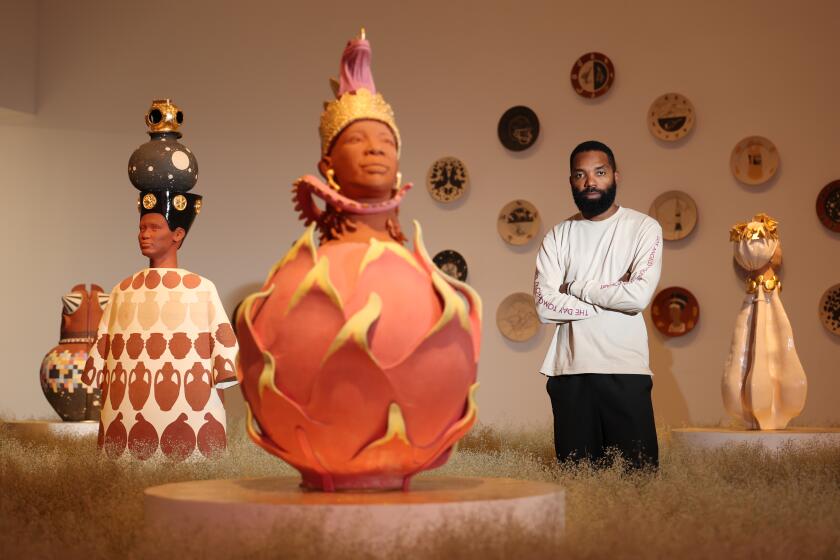
Tavares Strachan is an artist who thrives on challenging the boundaries between art, science, and historical reflection — as well as the connections between past, present, and future. Born in Nassau, Bahamas, Strachan has made a name for himself by creating works that provoke thought and inspire action. One of his most striking projects involved carving a 4.5-ton block of ice in the Alaskan Arctic, shipping it back to the Bahamas via FedEx, and displaying it in a solar-powered freezer. This piece served as a powerful commentary on climate change, displacement, and the interconnectedness of our world.
Strachan became the first Bahamian to visit the North Pole, driven by a desire to understand the harsh conditions faced by Matthew Henson, the Black explorer who accompanied Cmdr. Robert Peary on polar expeditions in 1909. Henson was likely the first person to stand at the top of the world, yet his achievements were long overlooked due to racial bias. Strachan’s journey to the North Pole was not just an exploration of geography but also a tribute to a figure whose contributions had been erased from history.
In another project, Strachan honored Robert Henry Lawrence Jr., America’s first Black astronaut. Lawrence died in a plane crash while training as a test pilot in 1968, never getting the chance to go into space. To commemorate his legacy, Strachan sent a replica of an artwork inspired by Lawrence into orbit aboard a SpaceX rocket. This act was both a tribute and a symbolic gesture, ensuring that Lawrence’s story would reach beyond Earth.
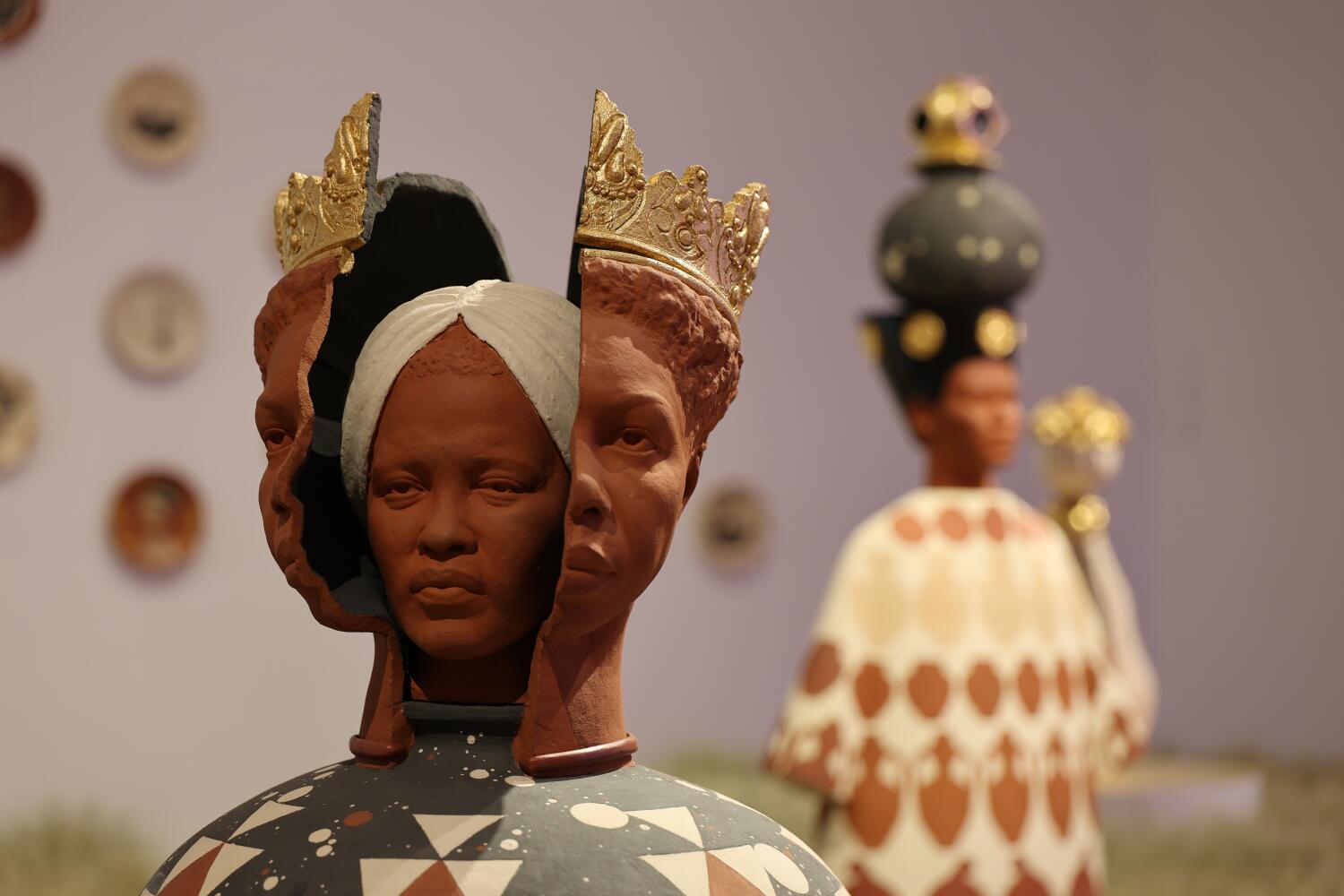
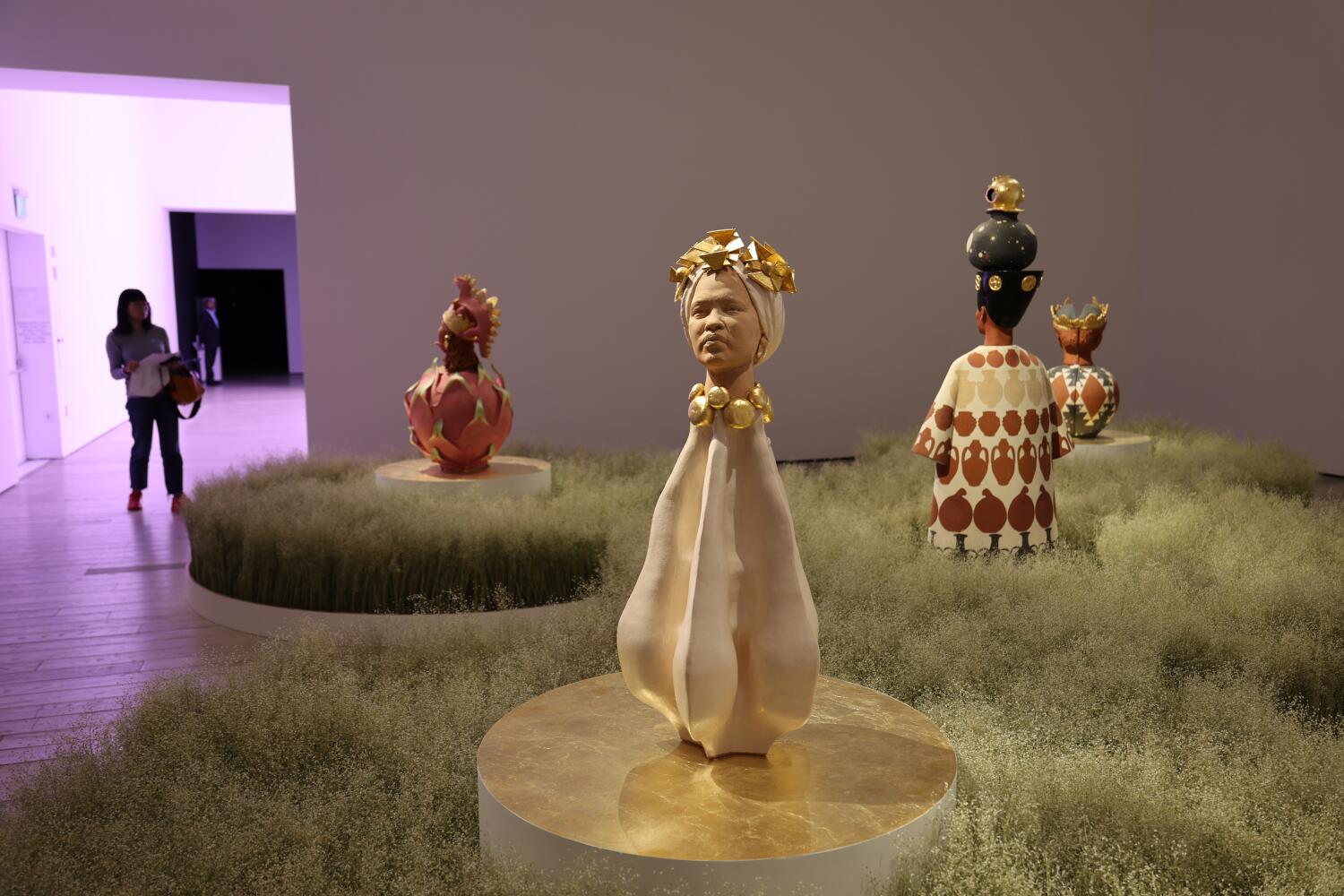
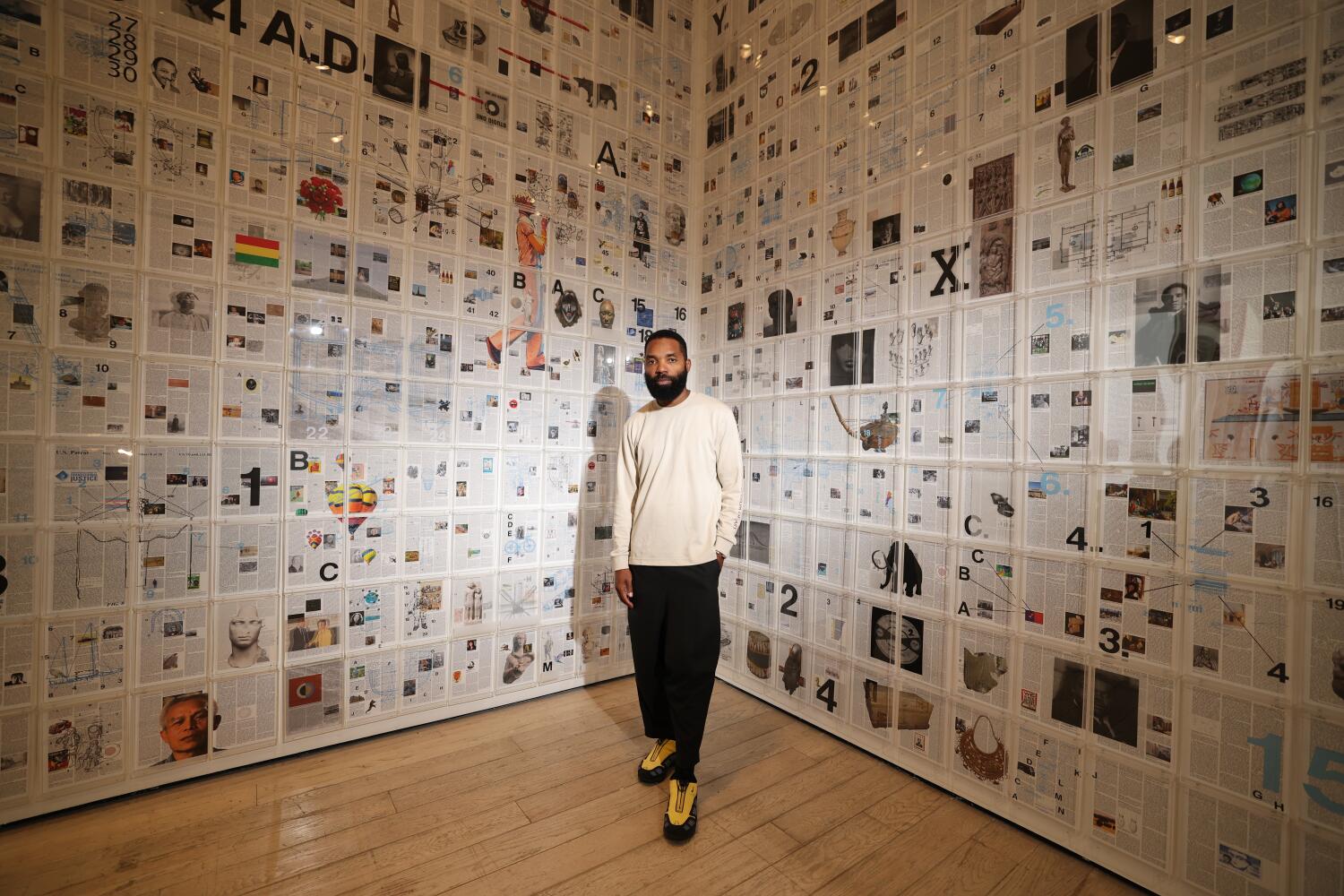
Now, a collection of Strachan’s work is on display at the Los Angeles County Museum of Art in an exhibition titled “The Day Tomorrow Began.” This is his first museum show in the city and offers a multisensory experience that challenges viewers to reconsider what they know about human progress. The exhibition includes illustrations, diagrams, traditional African hairstyles, mohair collages created with South African weavers, ceramics, and even a field of rice grass designed to evoke olfactory memories.
One of the standout pieces features two neon signs spelling out quotes by James Baldwin and Mark Twain. Baldwin’s words appear upright, while Twain’s are upside down, playing with the themes of chemistry and the power of language to explore identity. Another room showcases dramatic bronze sculptures that reframe the triumphs of Western civilization, placing the focus on the oppressed. A sculpture of the moon, with a bust of Henson on its north pole and an upside-down bust of Peary on its south pole, highlights the contrast between recognition and erasure.
Strachan’s work often feels like a dialogue between opposing forces — boundlessness and constraint, presence and absence. His fascination with science and hidden histories began during his childhood in Nassau, where he was exposed to encyclopedias that lacked representation of people who looked like him. This early realization sparked a lifelong curiosity about visibility, invisibility, and the stories that shape our understanding of the world.
As a teenager, Strachan worked on a fishing boat, spending weeks at sea and developing a deep connection to the natural world. He learned to navigate using celestial bodies and read the ocean currents, drawing on the knowledge passed down by his elders. These experiences expanded his worldview and fueled his imagination, leading him to question the gaps in historical narratives.
Strachan’s work also brings attention to the contributions of marginalized figures, such as John Edmonstone, a formerly enslaved Black Briton who taught Charles Darwin taxidermy. By highlighting these overlooked stories, Strachan challenges the dominant narratives that have shaped history.
Curator Diana Nawi describes Strachan’s projects as a resistance to the “calcification of history,” a process in which dominant groups reinforce their own narratives while ignoring or erasing others. She sees his work as a call to retell and reclaim history, especially in a time when monuments and public displays of history are being reevaluated.
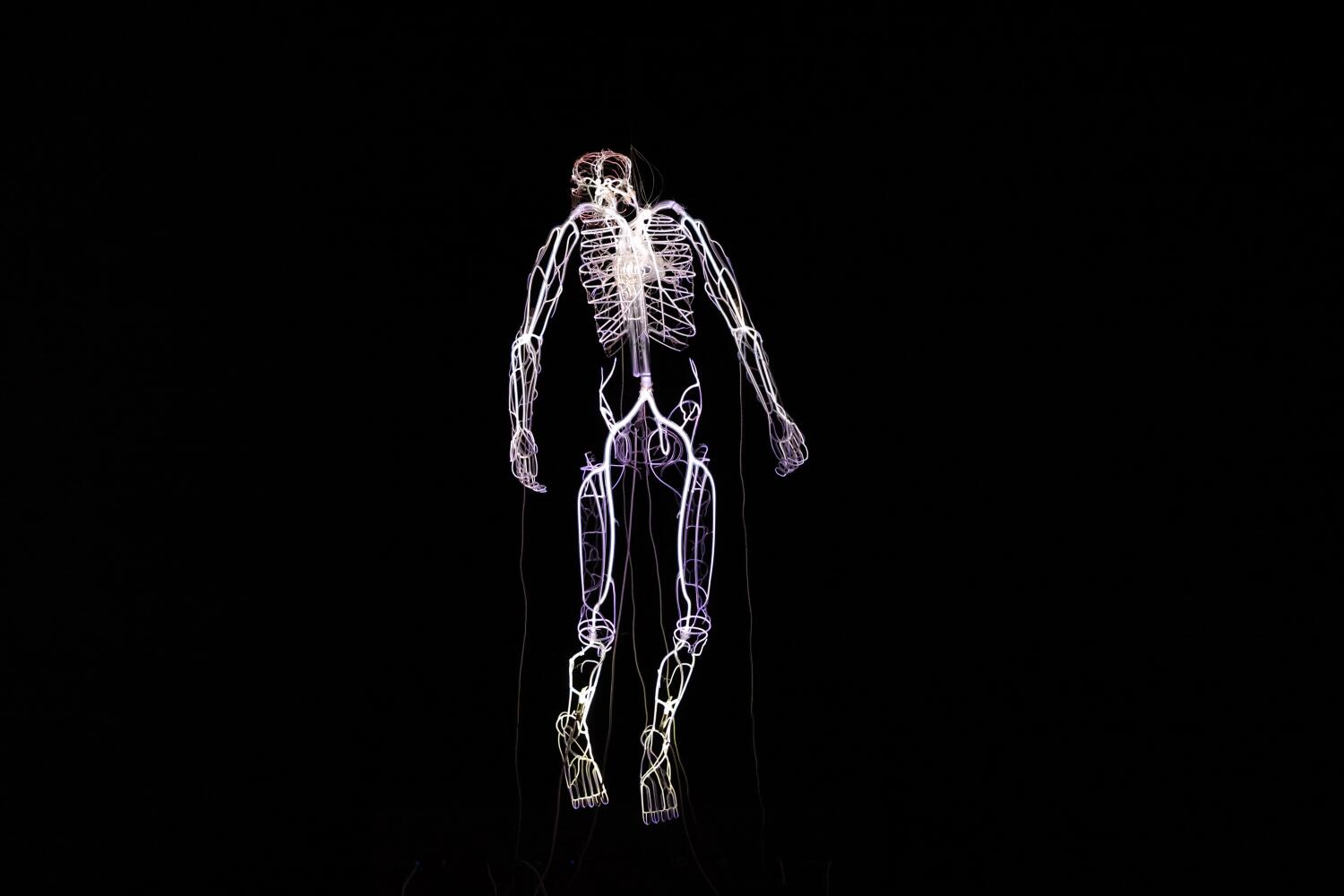
In one darkened room of the exhibition, a life-size glass portrait of Robert Henry Lawrence appears to float, lit from within by argon trapped in electrified tubes that mimic the human circulatory system. This piece symbolizes the idea of capturing and honoring Lawrence’s spirit, even though he never got to transcend Earth’s atmosphere.
Strachan’s work is a testament to the power of storytelling and the importance of ensuring that incredible achievements are recognized and celebrated. Whether through art, science, or historical reclamation, Strachan continues to push boundaries and challenge the status quo.

Post a Comment for "New LACMA Exhibit Reveals Hidden Histories Through Art and Science"
Post a Comment