
Our Space Odyssey: Governance, Competition, and the AI Era
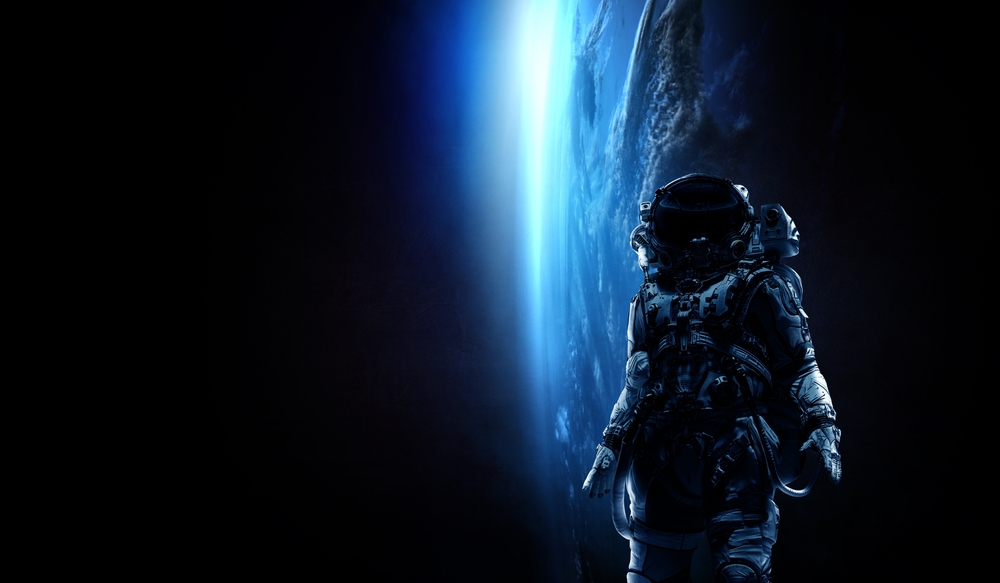
The Vision of 2001: A Space Odyssey and Its Impact on Modern Space Exploration
The critically acclaimed film 2001: A Space Odyssey has long been recognized as a groundbreaking work in the science fiction genre. Many argue that its stunning visual effects and thought-provoking themes have inspired numerous sci-fi films, such as Star Trek: The Motion Picture and even Interstellar. It is undeniable that this 1968 adaptation left a significant mark on the film industry. However, the influence of Stanley Kubrick and Arthur C. Clarke may extend far beyond cinema. Their vision for the future of space exploration, artificial intelligence (AI), and humanity's role in it all continues to resonate today.
The Future of Space Travel
Two major technological advancements depicted in the film are fully functioning space travel and advanced AI. Let’s begin by examining space travel. After showcasing a depiction of the dawn of humanity, the film transports viewers to the year 2001, where Dr. Heywood Floyd travels on a commercialized flight to a permanent base on the Moon. In our reality, there are still many hurdles before someone could experience a similar journey.
Today, commercial space travel is dominated by three major companies: Virgin Galactic, Blue Origin, and SpaceX. Virgin Galactic and Blue Origin have launched multiple civilian suborbital flights just above the Kármán Line—the internationally recognized edge of space. SpaceX, on the other hand, has the technology to provide passengers with multiday stays in orbit, but these contracts are typically reserved for governments to shuttle crew and cargo to the International Space Station. While space tourism is still a niche business, it holds potential for long-term benefits. If done correctly, it could help us understand the effects of different orbits on people and contribute to a future space economy. However, the current state of space tourism is largely accessible only to the wealthy, which could deter the average person from engaging in these endeavors. More interest in space leads to more investment, which can benefit humankind.
From Fiction to Policy: Artemis and the New Lunar Race
In addition to depicting ease of space travel, 2001 also showcased a permanent base on the Moon as a “waypoint” to other planets like Jupiter. This base was inhabited by people of multiple nationalities. This fictional concept can be compared to the Artemis program announced in 2019. The Artemis Accords, led by NASA, aim to facilitate a multinational collaborative effort to utilize scientific discoveries, technology advancements, and create the first long-term presence on the Moon as a stepping stone to reaching Mars.
Although the premise of Artemis is promising and backed by 56 countries, the progression of humanity is often intertwined with geopolitics. For instance, China, a dominant player in the space arena, has never been a signatory of the Artemis Accords. In direct opposition to US-led Artemis, the Chinese National Space Agency, in collaboration with Russia’s Roscosmos, initiated plans for the International Lunar Research Station (ILRS) in 2021. The goal of ILRS is to establish a research platform and infrastructure complex on the moon's surface and in its orbit, with the possibility of long-term unmanned operation and the prospect of a human presence.
Lunar Resources and the Need for New Governance
Both initiatives aim for similar goals, but they are pursuing them separately. Once Artemis and ILRS begin to be established on the Moon, there will be even more obstacles to consider. Returning to the Moon provides access to lunar resources crucial to furthering space exploration. Some of the most coveted include water ice for life support and helium-3, a non-radioactive isotope used for energy via nuclear fusion. With how integral these resources are, the potential for tension over mining rights and ownership is high.
The 1967 Outer Space Treaty (OST), the only internationally recognized treaty regarding space, does have clauses to address this kind of situation. However, countries are already working on ways to get around principles such as “outer space is not subject to national appropriation by claim of sovereignty, [or] by means of use or occupation.” As lunar activity expands, new concepts have been created to help ensure mission safety and manage potential conflicts. For example, safety zones are a controversial component of the Artemis Accords. Some stakeholders would argue that they are simply marked barriers put in place to keep equipment and crew safe from lunar dust, known as regolith. Others would say that safety zones are attempts to claim sovereignty over portions of the Moon in blatant disregard of the OST. I would say that two things can be true at once.
This is why the OST needs an update to be more detailed. Much has changed since the days of the original space race. For humanity’s future on the Moon and beyond, a sustainable and communal resource framework rooted in its own positive feedback loop is what will be needed. I slightly chuckled to myself when I realized that 2001: A Space Odyssey was released one year after the enactment of the OST. I don’t know how much Kubrick and Clarke were aware of the treaty at the time, but the society they shared in this film seemed to be doing a much better job of honoring the OST than we are in 2025, and that is absolutely something to strive for. We must not forget that outer space is for the peaceful use of all humankind.
HAL 9000 and the Rise of Artificial Intelligence
2001: A Space Odyssey was not the first film to include the development of AI, but it was notably the first to gain so much popularity. The viewer is introduced to HAL 9000 when the Discovery mission to Jupiter has already begun. The way HAL speaks and interacts with others, such as astronauts Dave Bowman and Frank Poole, is one of confidence and almost cockiness. While being interviewed for a broadcast back to Earth, HAL adamantly states that “no 9000 computer has ever made a mistake or distorted information” and that they are “incapable of error.” These two statements become pivotal later in the film. It is revealed that HAL’s secret objective was to ensure the successful investigation of the monolith signal between the Moon and Jupiter while simultaneously withholding this information from the crew. This goal was in direct contradiction to HAL’s programming not to distort information. This leads to cognitive failure. So, when Dave and Frank start to doubt HAL and consider turning him off, he interprets the crew as a threat to the mission and takes extreme measures to remove them from the equation.
Autonomy and Oversight of Agentic AI
What occurred with HAL is a far-fetched example, but he represents the worst-case scenario of agentic AI’s story. Agentic AI is autonomous, goal-oriented, and performs complex tasks with little to no human oversight. Sound familiar? HAL was completely integrated into the ship, able to take executive actions on its own, and even disobey the orders of the crew. Again, HAL is an extreme case study, and not all AI use is inherently bad. It can be a useful tool for efficiency in the future of business. How we work to govern the risks of agentic AI and its evolution will be the largest determining factor. HAL was given autonomy over functions and data far too important not to require human supervision. Fortunately, some divergence is already being shown in business leaders’ trust in AI agents to handle sensitive data. There is a sharp drop in trust with financial transactions and autonomous employee interactions, for example. So, governance, risk mitigation, and transparency must be paramount to AI’s continuation. HAL might argue that too much of our oversight could lead to mistakes, “only equitable to human error.” But along with those hypothetical mistakes come morals that think about AI’s impact not only ethically but sociologically and environmentally too. I would make that trade-off any day.
The Legacy of 2001: A Vision to Strive For
Overall, 2001: A Space Odyssey gives us an example of something to strive for with established multilateral space exploration as well as a cautionary tale of what to look out for in the nascent days of humanity’s next major technological advancement. This film may not be for everyone. It is a bit slower-paced after all. But it is a great example of “if we can dream it, we can achieve it.” That’s what science fiction is all about, in my opinion: giving ideas a stage to become reality. So, who knows? Our own 2001 might happen sooner than you think.

Post a Comment for "Our Space Odyssey: Governance, Competition, and the AI Era"
Post a Comment