
Sprouts Targets 14% Sales Growth with 37 New Stores in 2025 Amid Challenges
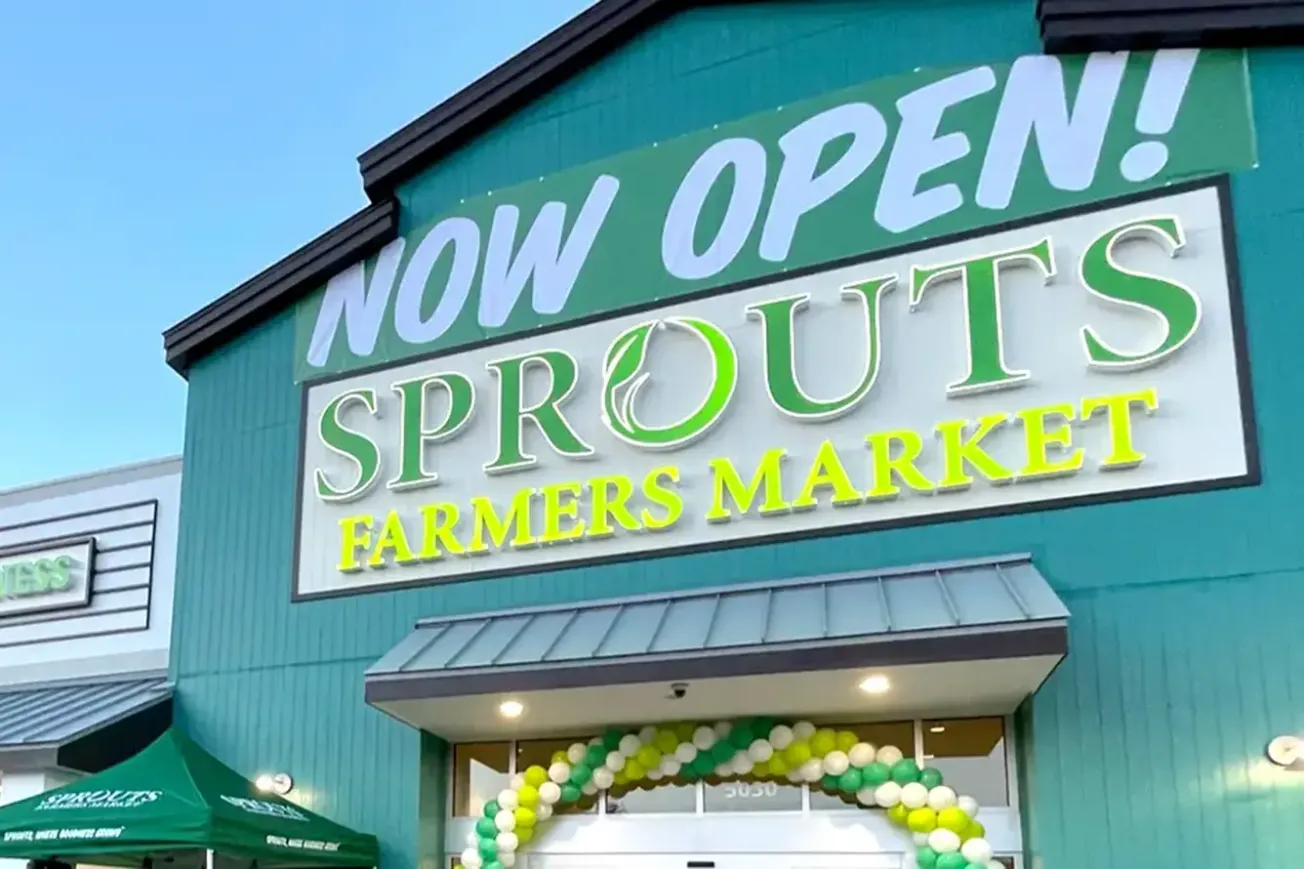
Earnings Call Insights: Sprouts Farmers Market (SFM) Q3 2025
Management View
Jack Sinclair, CEO of Sprouts Farmers Market, shared that the company achieved a 34% year-on-year increase in earnings during the third quarter. This growth was fueled by a 5.9% rise in comparable store sales and strong performance from new locations. Sinclair emphasized that the company’s results are driven by its strategic execution. He noted an increase in customer traffic due to effective engagement with target customers, while the company's unique and attribute-based products continued to boost sales as it expands its presence.
Sinclair acknowledged that comparable sales growth slowed more quickly than expected, attributing this to challenging year-on-year comparisons and signs of a softening consumer. He highlighted the company’s ability to manage its business and deliver earnings growth moving forward.
Curtis Valentine, CFO, reported total sales of $2.2 billion for the quarter, representing a $255 million or 13% increase from the prior year. E-commerce sales grew by 21% and accounted for 15.5% of total sales. Valentine mentioned that the company had anticipated stronger top-line results but underestimated the impact of lapping strong numbers from the previous year in a context of a softening consumer environment. He also noted a gross margin of 38.7%, up 60 basis points, driven by improved shrink, and announced the opening of 9 new stores, bringing the total to 464 locations at the end of the quarter.
Valentine reported year-to-date operating cash flow of $577 million, with $194 million in capital expenditures and $342 million returned to shareholders through share repurchases. He highlighted the new $1 billion share repurchase authorization, with $966 million remaining.
Sinclair outlined ongoing investments in innovation, digital capabilities, and store expansion. He noted that the Sprouts brand now accounts for more than 25% of sales, with the launch of new wellness bowls and plans for 7,000 new products in 2025. The Sprouts Rewards loyalty program has fully launched, showing early signs of increased shopping frequency and sales per customer.
Outlook
For the full year 2025, Sprouts expects total sales growth of approximately 14% and comparable sales growth of about 7%. The company plans to open 37 new stores in 2025. Earnings before interest and taxes are projected to be between $675 million and $680 million, with earnings per share expected to range from $5.24 to $5.28. Capital expenditures are anticipated to be between $230 million and $250 million.
For the fourth quarter, Sprouts forecasts comparable sales growth in the range of 0% to 2% and earnings per share between $0.86 and $0.90. Valentine stated, "Despite pressure to our top line, we expect to be able to grow EBIT dollars in line with our sales growth to deliver stable year-over-year margins in the fourth quarter."
Financial Results
Third-quarter net income was $120 million, with diluted earnings per share of $1.22, marking a 34% increase from the prior year. EBIT for the quarter was $157 million. Gross margin was reported at 38.7%. SG&A expenses totaled $653 million.
Sprouts ended the quarter with $322 million in cash and cash equivalents. The company closed a $600 million revolving credit facility, replacing the previous $700 million revolver.
Q&A
Michael Montani from Evercore asked about competition and cyclical headwinds. Sinclair responded, "We're lapping some tough numbers from last year...there's a kind of consumer context that feels like things are getting a little bit more difficult for the consumer," but emphasized confidence in the strategy and innovation pipeline.
Seth Sigman from Barclays inquired about unique business drivers and customer retention. Valentine noted "pockets and windows where we've had some outsized growth and gains," and cited softness in middle-income and younger trade areas.
Leah Jordan from Goldman Sachs asked about the comp slowdown and value proposition. Sinclair attributed the slowdown to tough comparisons and a softer consumer, maintaining that the company is "very strong in terms of managing our margins, managing our costs."
Mark Carden from UBS questioned differentiation and wallet share. Nicholas Konat, President & COO, indicated "our most differentiated and innovative products continue to be the place that we see the strongest growth in comps," with share of wallet holding steady or slightly up.
Edward Kelly from Wells Fargo sought detail on fourth-quarter comp expectations and loyalty program impact. Valentine reported stabilization but ongoing caution. Sinclair and Konat expressed optimism about loyalty driving engagement and growth in 2026.
Additional topics included investment pace amid moderation (Konat: "we're going to continue to invest in the business"), aggressive share buybacks (Sinclair: "we'll be more aggressive depending on where the shares settle out"), and regional competitive dynamics, especially in Texas and versus Whole Foods/Amazon.
Sentiment Analysis
Analysts expressed concerns regarding comp sales slowdowns, competitive pressures, and the durability of recent growth, with a slightly negative or cautious tone, frequently probing on competitive dynamics and consumer softness.
Management acknowledged headwinds but maintained a confident tone in both prepared remarks and responses, repeatedly citing the strength of their innovation pipeline, store expansion, and cost management. Sinclair stated, "We're pretty confident about the future," even as he recognized near-term challenges.
Compared to the previous quarter, there was a noticeable shift from positive momentum to a more defensive and cautious management tone, particularly around consumer trends and comp sales outlook.
Quarter-over-Quarter Comparison
Guidance was revised downward from the previous quarter, where the company expected total sales growth of 14.5% to 16% and comp sales of 7.5% to 9%. The Q3 update targets 14% and 7%, respectively, reflecting a more conservative outlook.
Comp sales growth moderated from 10.2% in Q2 to 5.9% in Q3, and management acknowledged faster-than-expected deceleration. Gross margin improvement slowed compared to Q2's 91 basis points increase.
Analyst focus shifted from expansion and innovation to concerns over lapping strong prior-year results, consumer softness, and market share dynamics. Management’s tone became more cautious, emphasizing resilience and cost control over aggressive growth.
Risks and Concerns
Management cited challenging year-over-year comparisons and signs of a softening consumer as primary concerns. Valentine pointed to "pockets and windows where we've had some outsized growth and gains" that will be tougher to lap.
Analyst questions highlighted risks of increased competition, regional pricing pressures, cannibalization from new stores, exposure to SNAP policy changes, and macroeconomic uncertainty impacting customer spending behavior.
Management addressed these concerns by reiterating ongoing investment in innovation, loyalty, and cost control, while noting the flexibility to adjust share buybacks and capital allocation as needed.
Final Takeaway
Sprouts Farmers Market leadership conveyed confidence in the company’s long-term growth trajectory, emphasizing continued investment in differentiated products, store expansion, and digital engagement. While management acknowledged slower comparable sales growth and a more challenging consumer environment, they underscored the durability of their strategy, ongoing cost discipline, and a robust pipeline of innovation and store openings as key drivers for sustained earnings growth into 2026 and beyond.

Post a Comment for "Sprouts Targets 14% Sales Growth with 37 New Stores in 2025 Amid Challenges"
Post a Comment