
The Decline of the Bachelor's Degree: What's Next?
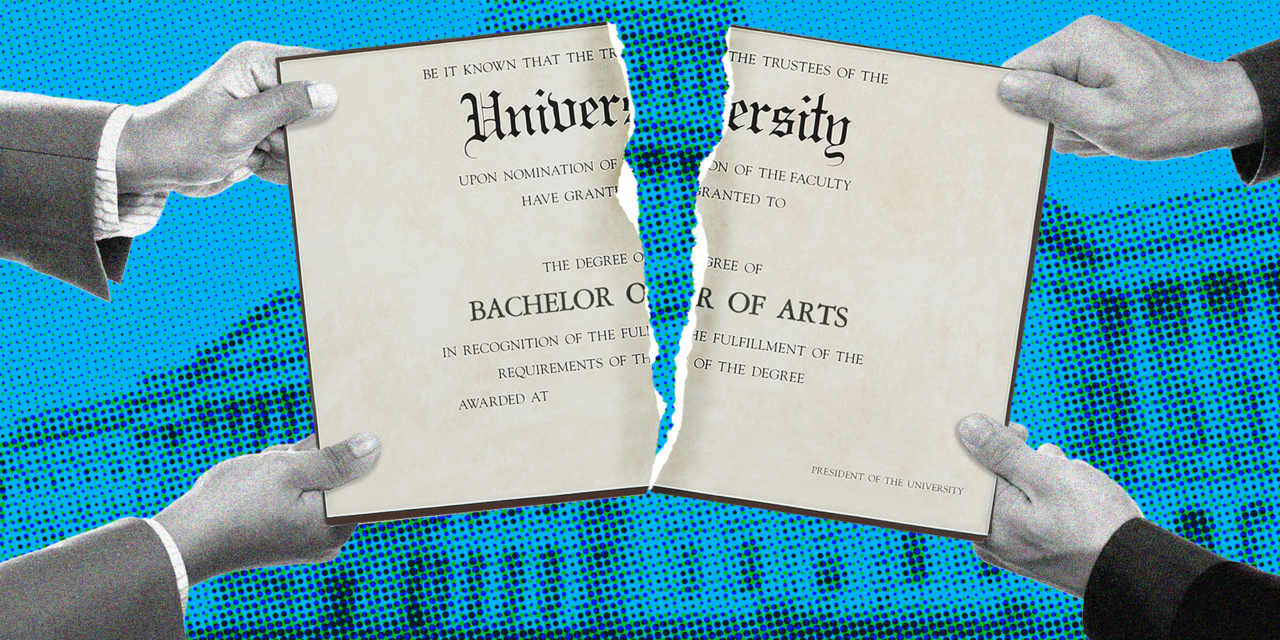
The Growing Movement to Question the Value of a Bachelor’s Degree
The number of Americans with a bachelor’s degree has steadily increased over the years. At last count, around 2 million people across the country were receiving one each year. However, a growing movement is now questioning the value and necessity of this degree.
Republican politicians and conservative figures have been vocal about their desire to reduce the number of bachelor’s degrees awarded. Christopher Rufo, a key figure in the Trump administration's efforts to reform higher education, has called for halving the number of students enrolling in four-year colleges. Similarly, Secretary of Education Linda McMahon has encouraged rethinking the role of a four-year degree, suggesting it should be reserved for specific professions.
This sentiment is not limited to the political right. Randi Weingarten, head of the American Federation of Teachers, has urged readers of the New York Times to stop pushing everyone toward college. During her presidential campaign, Kamala Harris proposed eliminating unnecessary degree requirements for federal jobs if elected.
The debate is not just theoretical. Congress has allocated more government funding for short-term programs, and institutions like Brown University have agreed to pay $50 million to workforce-development organizations. President Trump has also shown interest in supporting trade schools, while the Trump administration has criticized the “college for all” approach and pledged to invest in alternatives.
Colleges are responding by offering three-year programs, and changes in Republican legislation may make student loans harder to repay for many. This shift reflects a broader skepticism of higher education that has grown over the years, fueled by rising student debt and high-profile examples of successful individuals without degrees.
The Financial Risks of a Bachelor’s Degree
Despite these concerns, there are valid reasons to be worried. About half of students who earn a bachelor’s degree from a public or private nonprofit four-year college use debt to finance it, borrowing an average of $30,000. While manageable with a job, the unemployment rate for young graduates is at its highest in over a decade, and colleges struggle to prepare students for an AI-driven labor market.
Experts argue that the movement to de-emphasize the bachelor’s degree lacks viable substitutes. For many Americans, a bachelor’s degree remains the best path to financial stability. In the next seven years, the U.S. will need 4.5 million more workers with at least a bachelor’s degree, according to Georgetown University’s Center for Education and the Workforce. Currently, over 500,000 students from the top half of their high school class don’t complete a college credential each year.
Rajeev Darolia, an economist at the University of Kentucky, notes that a bachelor’s degree still offers the best return on investment for most students. He warns that diverting students away from longer-term degrees could harm poorer students, who might be pushed into cheaper but less valuable options.
The Changing Role of College in Society
A college education was once reserved for the elite, but policies like the Morrill Land Grant Act of 1862 and the G.I. Bill expanded access. The “college for all” approach aimed to push everyone toward four-year colleges, believing in the economic benefits of higher education. However, this consensus is shifting as the value of a bachelor’s degree declines.
Jeff Strohl, director of Georgetown University’s Center on Education and the Workforce, notes that the college-wage premium — the difference in earnings between college graduates and high school graduates — has flattened since 2000. This means that a bachelor’s degree is no longer a guaranteed path to success.
The value of a degree depends on the field of study and the institution attended. Catharine Bond Hill, managing director at Ithaka S+R, points out that the most prestigious 300 colleges receive disproportionate funding and attention, yet educate a small share of students. This creates a gap in outcomes, with lower-income students attending underfunded schools that offer less quality.
Zach Bleemer, an economist at Princeton University, highlights how the value of a college education has declined for lower-income students. State funding has increasingly favored large research-oriented colleges, leaving regional public colleges under-resourced and struggling to support low-income students.
The Impact of the 2007-09 Recession
The 2007-09 recession marked a turning point in perceptions of higher education. Student debt surpassed $1 trillion, driven by state funding cuts, weaker labor markets, and the rise of for-profit colleges. Mark Huelsman, director of policy and advocacy at the Hope Center for Student Basic Needs, notes that the politics of higher education became more complex after the recession.
The Risks of Alternative Pathways
While alternative pathways like certificate programs are gaining attention, they come with their own risks. The Republican megabill allows Pell grants for short-term credentials, but experts warn of potential issues, including poor program quality and strain on the financial aid system.
States are investing in career and technical education, with short-term certificates becoming the fastest-growing credential. However, research on their effectiveness is still emerging. Clare McCann, managing director of the Postsecondary Education & Economics Research Center, compares these programs to “10-minute abs,” highlighting the gap between promise and reality.
The Debate Over College’s Role in Job Training
Employers have shifted away from training employees, leaving colleges to fill the gap. Peter Cappelli, professor at the Wharton School, notes that companies now see training as an administrative expense rather than an investment. This has put pressure on colleges to adapt, though many are slow to change.
Brian Rosenberg, former president of Macalester College, observes a growing disconnect between higher education and the job market. Students are increasingly pursuing STEM fields, but colleges must balance practical training with long-term development.
The Future of Higher Education
As the debate over the value of a bachelor’s degree continues, the challenge lies in finding a balance between accessibility, affordability, and relevance. While alternatives offer promise, they also carry risks, particularly for lower-income students. The future of higher education will depend on addressing these challenges while ensuring that all students have access to meaningful opportunities.

Post a Comment for "The Decline of the Bachelor's Degree: What's Next?"
Post a Comment