
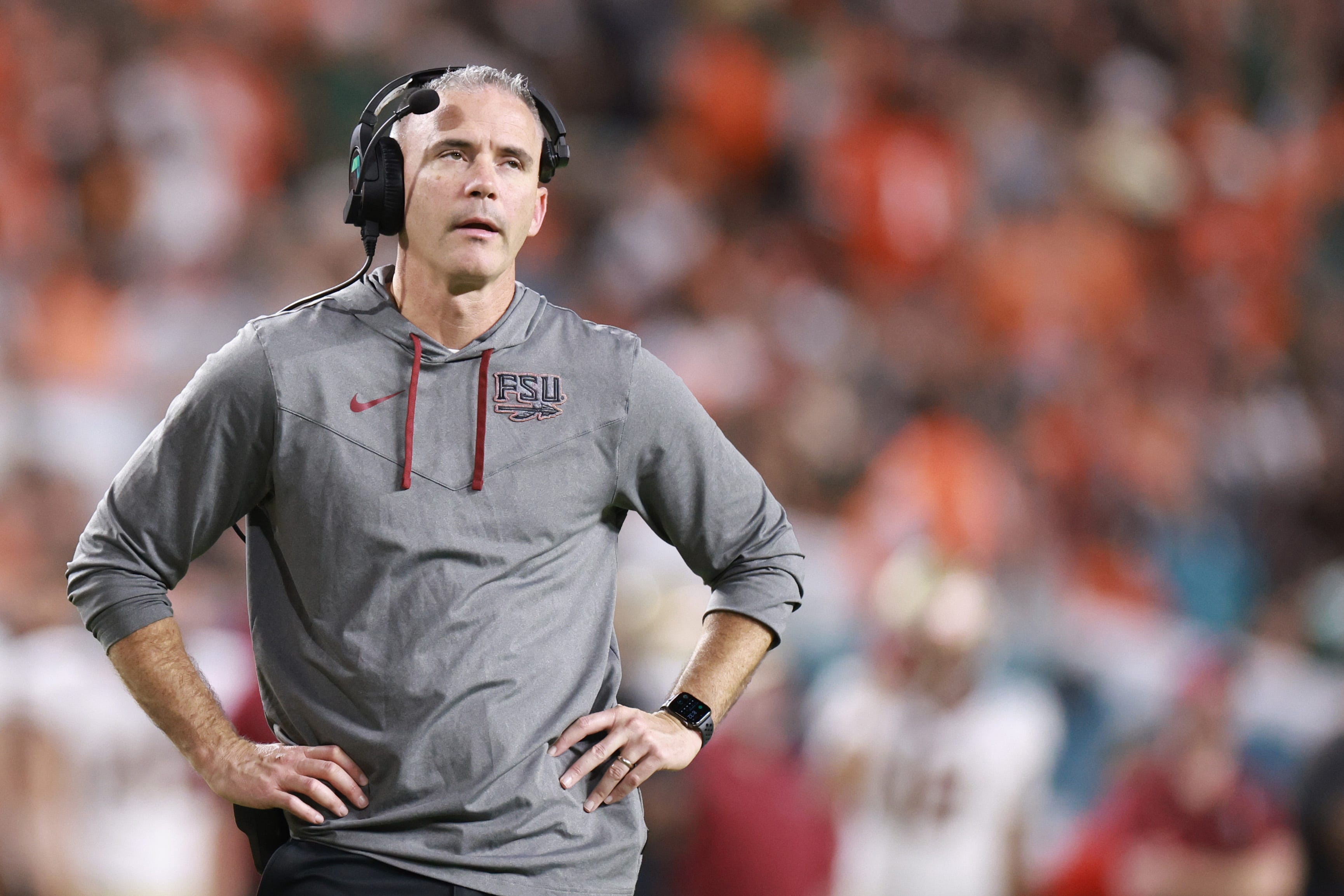
The shocking rise and fall of Florida State's Mike Norvell
Let’s take a step back and try to make sense of the situation at Florida State University. The institution, which has been vocal about its financial struggles over the past two years, has recently found itself in a peculiar position: it is close to paying nearly $60 million to a football coach who is not going to continue coaching. This comes after the university spent over $265 million on stadium renovations and a new $138 million football facility. Just months ago, they extended their head coach for 10 years and more than $80 million.
So what exactly is happening at Florida State? The situation seems to be a mix of financial missteps, strategic miscalculations, and an unusual twist in how the university is handling its football program.
A Financial Mess
The root of the problem may not lie solely with the football coach, Mike Norvell, but rather with the university's leadership. The recent decision to consider firing Norvell despite his long-term contract raises questions about the direction of the program. It also highlights a larger issue: the university’s approach to managing its finances and its football operations.
In 2022, Florida State floated the idea of leaving the ACC due to financial concerns and a competitive disadvantage. This move was seen as a potential way to secure better revenue and resources. However, it’s unclear whether this was a genuine strategy or just a tactic to gain leverage in negotiations. Either way, the outcome has led to a situation where the university is now facing significant financial commitments without clear benefits.
The Law of Holes
This brings us to the "Law of Holes" — a concept that suggests if you find yourself in a hole, the best course of action is to stop digging. For Florida State, this could mean reevaluating its entire approach to football and athletics. Instead of continuing to pour money into facilities and contracts, the university might need to focus on sustainable strategies that align with its long-term goals.
The recent decision to extend Norvell’s contract was based on the belief that he could consistently find impact players from the transfer portal. However, the results have not matched expectations. The team has struggled, losing its past nine ACC games and 11 of 12 contests overall. This has led to questions about whether the university made a poor decision in extending Norvell’s contract.
A Pattern of Missteps
Another key point is the timing of events. The decision to extend Norvell came just days before Alabama’s head coach, Nick Saban, announced his retirement. This timing may have influenced the university’s decision-making process, as they were likely looking for ways to strengthen their program. However, the subsequent performance of the team has raised doubts about whether this was the right move.
Norvell’s success in 2023, including an unbeaten regular season, was partly due to favorable circumstances, such as a strong quarterback and a manageable schedule. However, the team’s performance in the Orange Bowl against Georgia exposed weaknesses in the roster, particularly when key players opted out of the game. This loss may have been a turning point that highlighted the flaws in the university’s strategy.
The Cost of Mistakes
The financial implications of these decisions are staggering. Florida State has already invested over $483 million in football facilities and is now considering spending an additional $70 million to pay Norvell to leave. This would be followed by another $70 million to hire a new coach, bringing the total investment to over $625 million. This level of spending raises serious questions about whether the university is making the right choices for its football program.
Moreover, the decision to stay within the ACC while trying to compete with the SEC and Big Ten seems contradictory. The university has spent heavily on infrastructure, yet it still faces challenges in maintaining competitiveness. This suggests that there may be deeper issues at play, beyond just the football program.
A New Approach Needed
At this point, it seems clear that Florida State needs to reassess its approach to football and athletics. The current strategy has not delivered the desired results, and the financial burden is becoming unsustainable. Rather than continuing down this path, the university should focus on building a more stable and sustainable model for its football program.
This includes rethinking how it recruits players, invests in facilities, and manages its finances. It also means taking responsibility for the decisions that have led to the current situation, rather than placing the blame solely on the coach.
Conclusion
Florida State’s situation is a cautionary tale about the risks of financial mismanagement and poor strategic decisions. The university must now decide whether to continue down this path or take a different approach that prioritizes long-term stability over short-term gains. The stakes are high, and the consequences of further missteps could be severe.

Post a Comment for "The shocking rise and fall of Florida State's Mike Norvell"
Post a Comment