
Treating Deep Wounds: Plastic Surgeons Aid Gaza War Victims
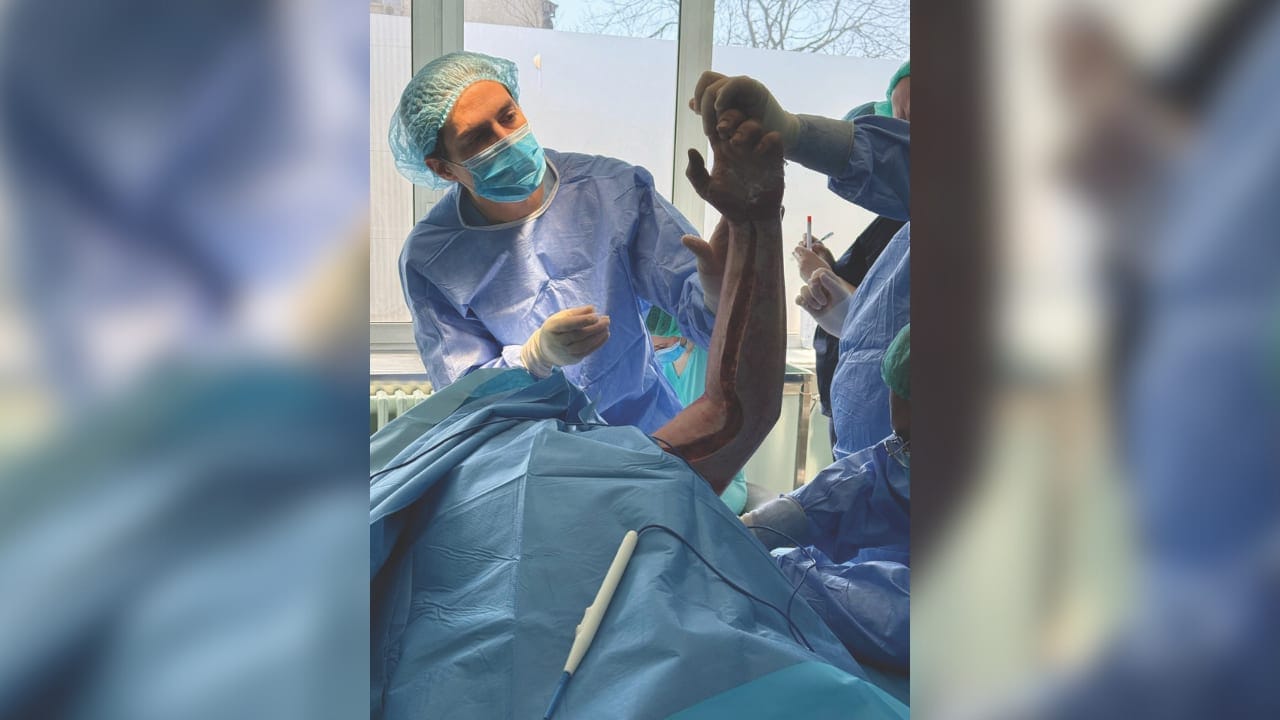
In the past two years, the expertise and experience of plastic surgeons in Israeli medical centers have significantly improved. This advancement has placed their skills among the best in the world. However, this progress was driven by necessity, as they worked to heal and restore the normal function of a large number of soldiers and civilians injured during the ballistic missile attacks on the North and South, as well as the war in Gaza.
There are between 150 and 200 plastic surgery specialists in Israel who are members of the Israel Association of Plastic and Aesthetic Surgery. This organization represents plastic surgeons in the country and is part of the International Society of Aesthetic Plastic Surgery. However, most of these professionals work in private clinics, focusing on procedures like abdominoplasty, rhinoplasty, and body contouring rather than treating severe burns, limb loss, or the effects of cancer surgery.
The government has reported that approximately 20,000 Israelis have been wounded or injured since the Hamas incursion and other Palestinian terrorist attacks on October 7. Trauma specialists in hospital emergency rooms were the first to receive the wounded, who arrived via helicopters and ambulances. These patients often had blast and shrapnel wounds. Once their conditions stabilized, plastic surgeons, along with burn unit nurses, pain specialists, occupational therapists, and psychologists, took over to help restore the victims' lives to a more normal state.
The English-language Israel Medical Association Journal (IMAJ) dedicated its August issue to plastic surgery. The graphic images of patients’ limbs and torsos provided a glimpse into the daily challenges faced by plastic surgeons.
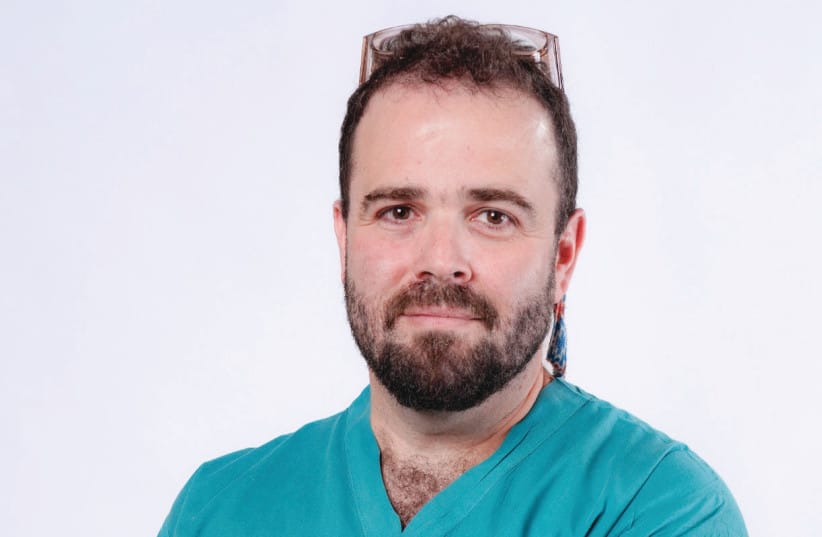
Dr. Gilad Spiegel, a senior plastic surgeon at Jerusalem’s Shaare Zedek Medical Center (SZMC), specializes in burns and skin ulcers for both civilians and soldiers. He told The Jerusalem Post that he and his colleagues are accustomed to seeing such scenes. "It's routine for us to see patients suffering from pain, and the shock of their families. Recovery can take months or even years."
Spiegel added that Israeli plastic surgeons have extensive experience and have helped people in disaster areas around the world. On October 6, 2023, a team from SZMC led by Prof. Ofer Merin, who is regularly sent by the Israel Defense Forces to lead such efforts, was in Armenia due to an explosion. When the Hamas incursion occurred, they returned to Israel. In the past year, teams were also sent to Macedonia following a factory fire. While teams have come to Israel to learn from local experts, this has decreased since the Gaza war began.
The prolonged war in Gaza has led to more varied and complex injuries. "We deal with a lot of pain, some chronic, including phantom limb pain after amputations," said Spiegel. "We work as a team and must treat not only the patient but also their family members with warmth."
Wounded soldiers were well cared for on the front lines by medics and paramedics. Some IDF emergency medical technicians were killed or wounded while helping. Most wounded were brought to trauma centers within half an hour of being injured in Gaza.
There is a growing number of women in the field of plastic surgery. Women are known for their ability to perform delicate tasks such as sewing and embroidery. Outstanding female physicians have successfully reattached fingers lost in accidents.
When asked about the future of his specialty, Spiegel said, "The technologies ahead will be amazing. Skin cells will be cultured to produce tissue from the patient without removing skin from other parts of the body. Lasers will reduce scars, robots will work on microscopic tissues, and artificial intelligence will be used regularly in surgical planning."
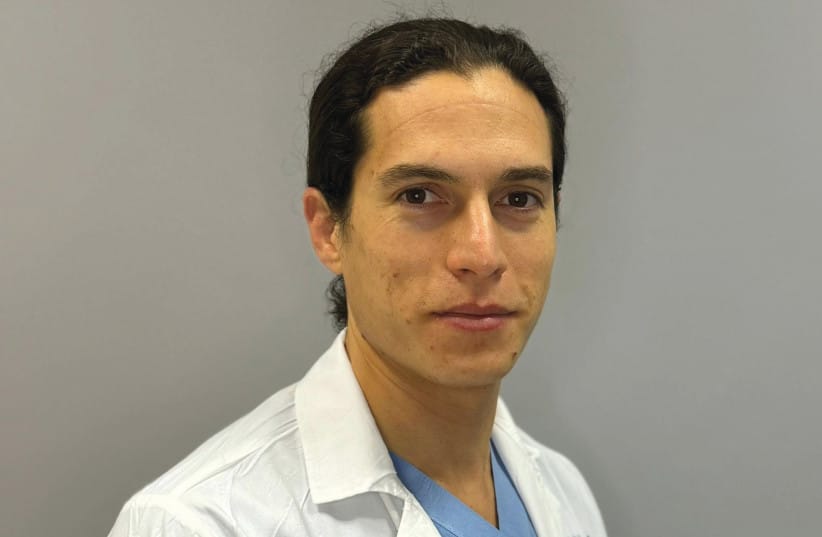
DR. STAV SARNA CAHAN, chairman of the plastic surgery department at Hadassah-University Medical Center in Jerusalem’s Ein Kerem, completed a six-year residency at Hadassah-University Medical Center. He then did a clinical fellowship in acute and reconstructive burn care management at Massachusetts General Hospital and pediatric burn care at the Shriners Hospital for Children in Boston. Upon returning to Ein Kerem, he established a center for burn patients.
His wife, Dr. Lea Ohana Sarna Cahan, also works in the field. She completed a fellowship at Beth Israel Deaconess Medical Center in Boston when her husband was at Massachusetts General. Today, she is a pediatric attending physician at the same hospital as her husband. “She was a paramedic in the IDF, then studied medicine and specialized in pediatric emergency medicine at Harvard University.”
Treating all types of injuries
He told the Post that his specialty treats various injuries—from orthopedics, trauma, and blood vessel damage to general surgery and burns. “We have treated hundreds of patients here in Jerusalem, mostly soldiers but also victims of October 7 in the southern border communities. We opened a special clinic at Hadassah Hospital on Mount Scopus to follow up with soldiers we treated. They come once a month for rehabilitation with occupational and physical therapy, plus psychological support.” The IDF has managed to reduce the severity and number of burns by providing more fire-resistant clothing to soldiers, he added.
Sarna Cahan noted that when wounded soldiers arrive, they are initially “proud, full of energy from their mission at the front despite their sudden disability. But then time passes, and reality hits, and it’s hard for them. There is a lot of post-traumatic stress disorder that has to be treated.”
A few decades ago, burns specialists and their nurses had to change bandages daily as dead skin was debrided and skin from other parts of the patients’ bodies or from Hadassah’s National Skin Bank healed, which was extremely painful. “Today, we do much less of this, thanks to new techniques.”
“When the patient doesn’t have enough skin to move to the site of wounds and burns, there are dermal substitutes made from beef or shark. Skin must be attached tightly with sutures or other means so it can heal, but not too tightly because if on the face, the patient has to eat, and the limb joint has to move. And there are always scars. No way has yet been found to completely eliminate them.”
Neither Hadassah nor SZMC uses the Brazilian technique of attaching skin from the tilapia fish to burns after debridement. “I saw it was tried in US hospitals, but I wasn’t enthusiastic. There, medical institutions have lots of money, so they try everything,” recalled Sarna Cahan. “I brought back to Hadassah what I thought would be game-changing.”

Post a Comment for "Treating Deep Wounds: Plastic Surgeons Aid Gaza War Victims"
Post a Comment