
A Bold Gaza Plan with Vague Details Heads to a Key UN Vote
The UN Security Council Votes on a New Resolution for Gaza
The United Nations Security Council is set to vote on a resolution aimed at moving Gaza from the current fragile truce into a more stable and sustainable peace. This resolution includes several key elements, such as the establishment of a Board of Peace (BoP) to oversee governance in Gaza for two years, supported by international forces and Palestinian police trained by Egypt. The BoP would be responsible for the disarmament of Hamas and other factions, which is a major Israeli demand, as well as the reconstruction of the region.
The proposed resolution builds upon the 20-point peace plan introduced by former US President Donald Trump in September 2023. However, it faces potential opposition from within the Israeli government and may encounter a veto from either Russia or China, or both, during the upcoming vote. Russia has already presented an alternative plan, and if a permanent member of the Security Council vetoes the resolution, it could effectively stall or even kill the proposal.
Governance in Gaza
The resolution calls for the creation of the Board of Peace as a transitional administration with international legal personality. This idea was initially part of Trump’s vision for interim governance in Gaza. The resolution states that the BoP would coordinate the redevelopment of Gaza according to the Comprehensive Plan, which is Trump’s 20-point blueprint.
However, it remains unclear who will serve on the BoP or what specific powers it will have. Diplomats familiar with the process have noted these uncertainties. At one point, former British Prime Minister Tony Blair was considered as a potential leader of the board under Trump’s chairmanship, despite his controversial reputation among some Arab states due to his support for the Iraq war and perceived pro-Israel stance.
Israeli officials have also expressed concerns about the composition of the BoP, stating that it should not include representatives of the Palestinian Authority, a rival to Hamas that governs parts of the occupied West Bank. Prime Minister Benjamin Netanyahu emphasized that Israel and the US would determine whether the BoP meets certain conditions, highlighting the complexity of the situation.
Foreign Troops and Stabilization Efforts
The draft resolution suggests the establishment of a "temporary International Stabilization Force (ISF)" in Gaza, which would operate under unified command and work closely with Israel and Egypt. The ISF would be tasked with demilitarizing the Gaza Strip, including the destruction and prevention of rebuilding of military, terror, and offensive infrastructure, as well as the permanent decommissioning of weapons from non-state armed groups.
As the ISF establishes control and stability, the Israeli military would withdraw from Gaza based on agreed-upon standards, milestones, and timeframes linked to demilitarization. However, this process is expected to be complex, given the need to disarm Hamas and other factions that still possess rockets and heavy weapons.
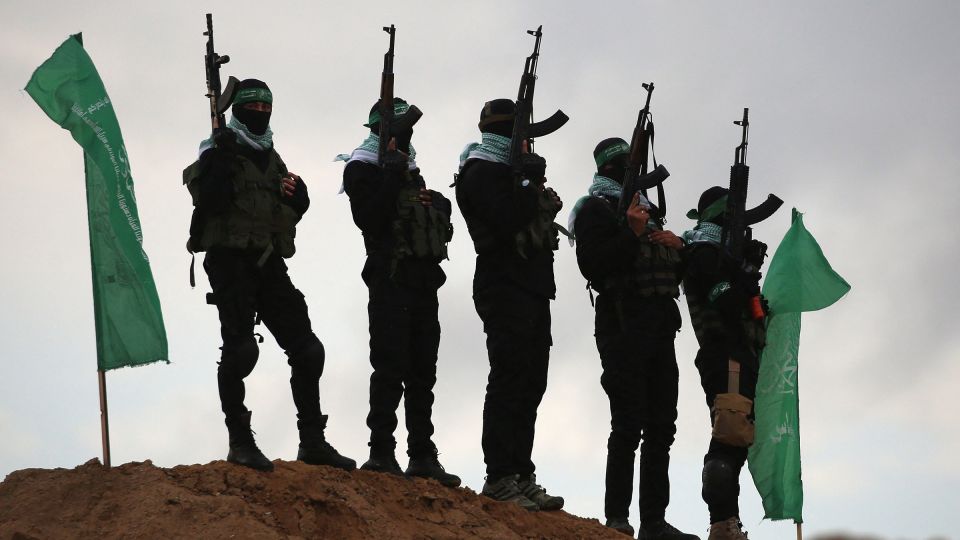
Some Hamas officials have rejected the idea of disarming their military wing, citing concerns about security from other groups in Gaza. Netanyahu has reiterated that the BoP must take charge of Hamas’ disarmament, stating that “Gaza will be demilitarized, and Hamas will be disarmed — either the easy way or the hard way.”
Several countries, including Indonesia, Turkey, and Egypt, have been mentioned as potential contributors to the ISF, but none have committed troops yet. There has also been little public discussion about the command structure of the ISF or its relationship with a Palestinian police force being trained in Egypt. Israel is likely to oppose a Turkish role in the force.
The United States is not expected to send ground troops and is struggling to assemble an international force willing to enter Gaza. According to an Israeli official, the US is considering skipping the demilitarization stage and moving directly to reconstruction, a move that would anger Israel and undermine the UN resolution.
The Role of the Palestinian Authority
According to the draft resolution, the BoP would eventually hand over to the Palestinian Authority (PA) once it has satisfactorily completed its reform program. The draft does not specify what these reforms should be but references a joint French-Saudi plan that includes a commitment by the PA to hold democratic and transparent elections within a year of the ceasefire.
French President Emmanuel Macron has pledged to help the PA draft a constitution for a future Palestinian state, as part of broader efforts to promote a two-state solution. However, the Israeli government prefers a civilian administration in Gaza led by neither the PA nor Hamas, making it challenging to find qualified Palestinians without allegiance to either group.
The Question of a Palestinian State
One of the most contentious issues in the resolution is the possibility of a Palestinian state. The document states that depending on the PA’s progress, the conditions may finally be in place for a credible pathway to Palestinian self-determination and statehood. It also mentions that the US will establish a dialogue between Israel and the Palestinians to agree on a political horizon for peaceful coexistence.
Despite these possibilities, the Israeli government has made it clear that it will not accept a Palestinian state. Netanyahu reiterated this stance, stating that “Our opposition to a Palestinian state on any territory west of the Jordan River exists, remains in force, and has not changed in the slightest.” Some far-right ministers have gone further, with National Security Minister Itamar Ben Gvir claiming that there is no such thing as a “Palestinian people.”
In contrast, Saudi Arabia, which is expected to play a major role in financing the reconstruction of Gaza, supports the idea of a Palestinian state. Its powerful crown prince is meeting with Trump this week, signaling a shift in regional dynamics. Saudi minister Manal Radwan has stated that a Palestinian state is a prerequisite for regional integration, emphasizing the importance of this issue in the broader Middle East context.

Post a Comment for "A Bold Gaza Plan with Vague Details Heads to a Key UN Vote"
Post a Comment