
A Glimpse into the Greatest Banquet in American History
During a recent trip to Chicago, we discovered one of the most remarkable events in American history: the greatest banquet ever held in the United States. This elite gathering took place thirteen years after the Civil War, in 1879. It was hosted at The Palmer House Hotel, a landmark that has welcomed travelers and hosted events since 1871. Among the attendees were President Ulysses S. Grant and the famous author Mark Twain. It’s fascinating to see how issues from over a century ago still resonate with our modern world.
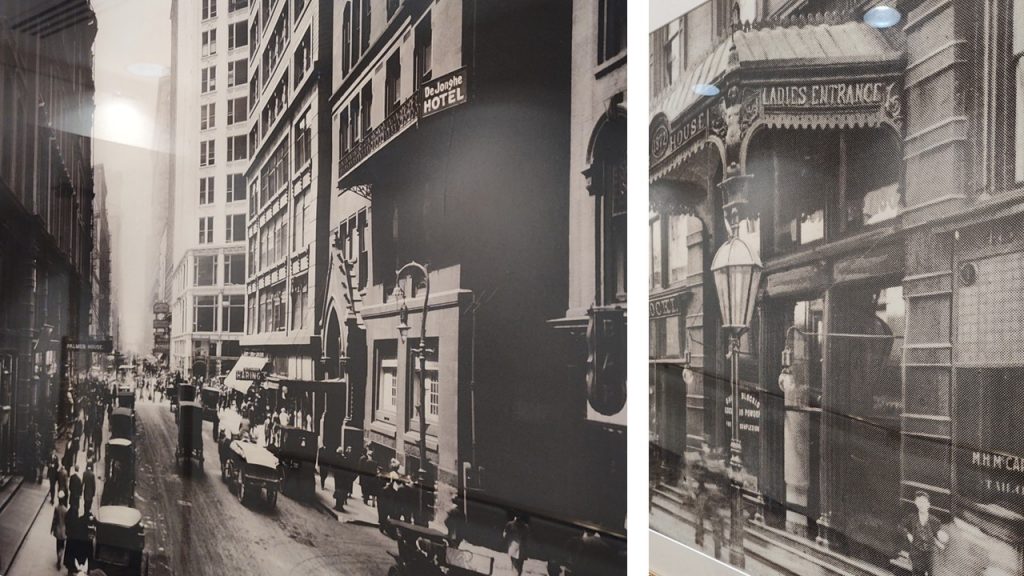
Potter and Bertha Palmer
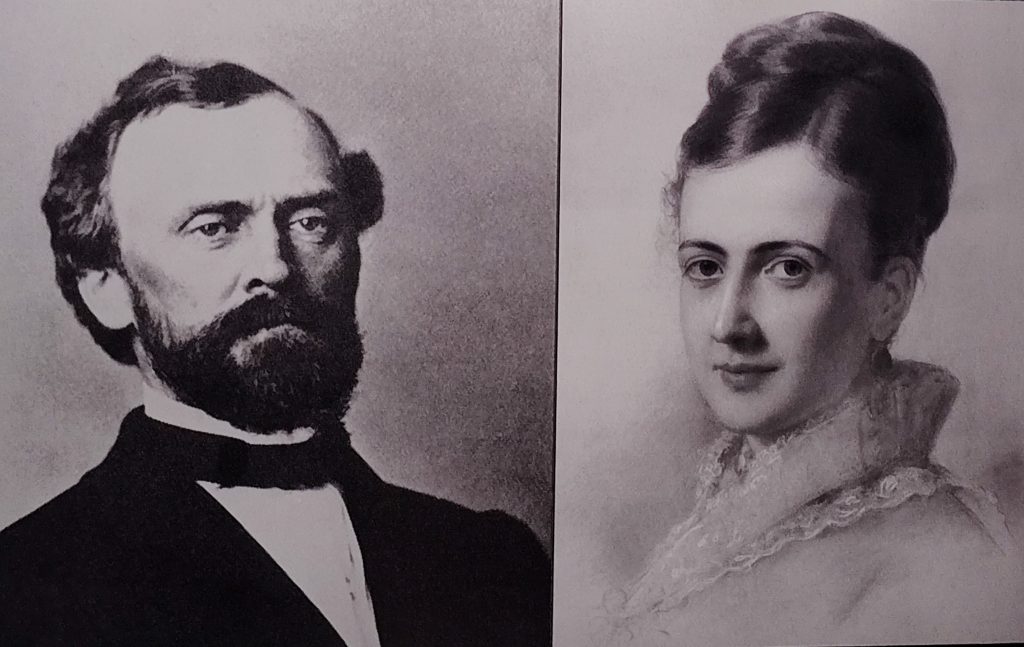
Newly married in 1870, millionaire Potter Palmer built the luxurious Palmer House Hotel as a gift for his wife, Bertha Honore Palmer, who was 23 years younger. On September 26, 1871, the hotel opened its doors to guests.
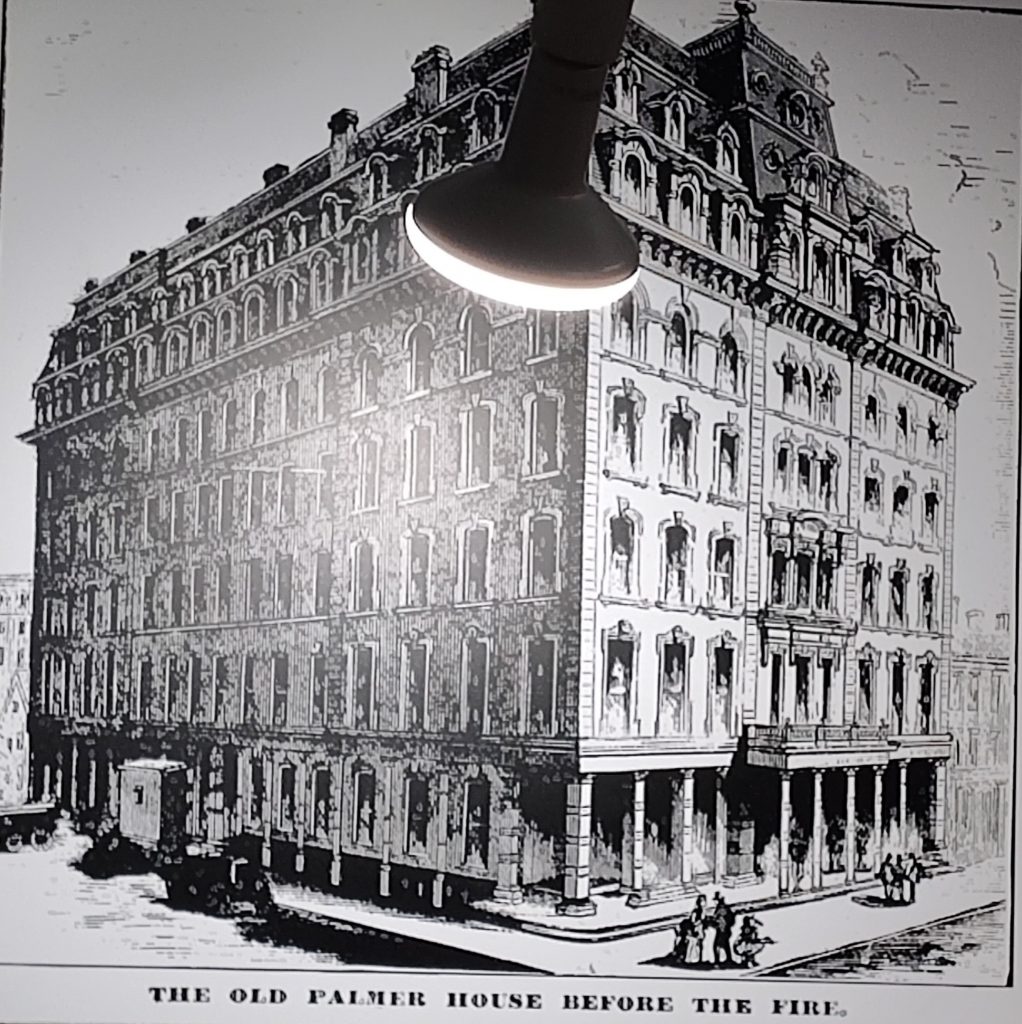
However, just twelve days later, the Great Chicago Fire erupted and burned for forty-eight hours. Three hundred people lost their lives, and 17,000 buildings, including The Palmer House Hotel, were destroyed. Potter Palmer quickly secured a loan of $1.7 million—the largest credit given by a bank at the time—and began plans to rebuild.
By November 1873, the new Palmer House Hotel opened. Designed by architect John M. Van Osdel, it was constructed using brick, iron, and terra cotta and was known as “The World’s Only Fire-Proof Hotel.” This seven-floor hotel was a marvel of luxury, featuring electric light bulbs throughout and telephones in every guest room. It also had a vertical steam lift, one of the first elevators, making it more efficient for both guests and luggage.
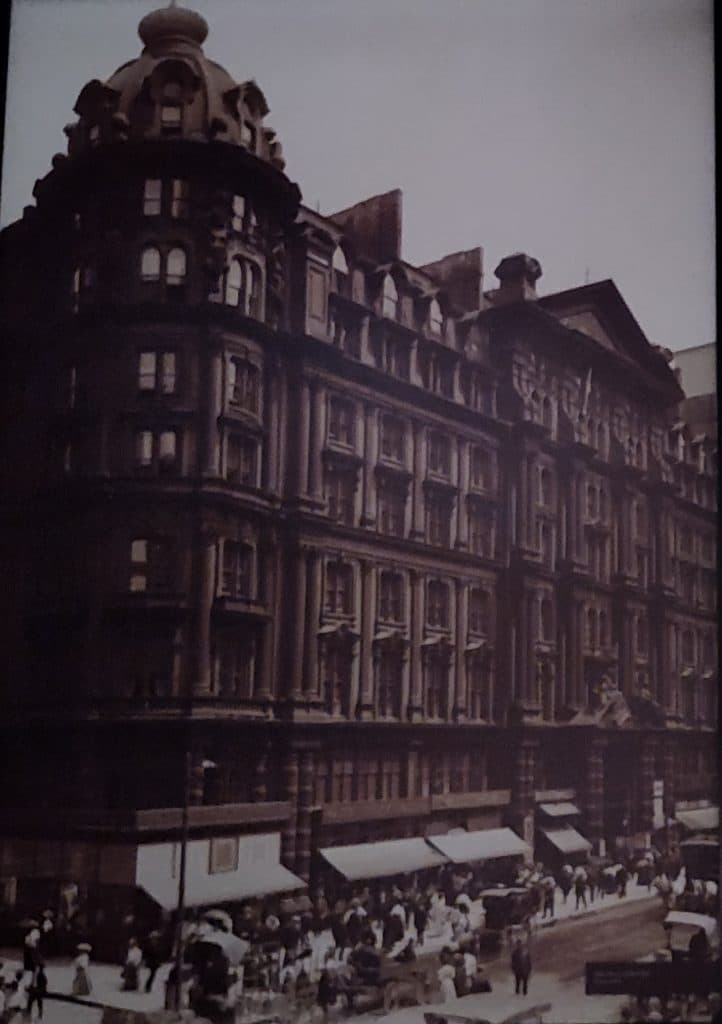
High society has long been drawn to The Palmer House Hotel, which has stood for 155 years.
A Royal Wedding and a Lasting Friendship
Less than a year after the hotel reopened, on October 20, 1874, Bertha’s sister, Ida, married Brigadier General Fredrick Dent Grant, the son of President Ulysses S. Grant. The wedding took place at her parents’ home, and the president and First Lady attended. This event marked the beginning of a lasting friendship between the Grants and the Palmers.
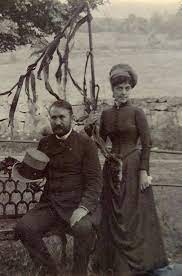
Who Was President Ulysses S. Grant?
Ulysses S. Grant was a talented horseman and artist who initially had no desire for a military career. He planned to serve his four-year stint at West Point and then pursue another path. However, he remained in the military to support his family of four children.
Grant’s relationship with his in-laws was complicated. During a time of economic hardship, they housed him and his family. He was assigned William Jones, a slave, whom he eventually freed, much to the dismay of his father-in-law, who saw this as an expensive mistake.
During the Civil War, Grant led troops in twelve battles from 1861 to 1865, while his wife, Julia, and their children awaited news of him. After the war, Grant ran for president under the slogan “Let Us Have Peace,” serving from 1869 to 1877. Though his presidency was marred by corruption scandals, he remained a national hero during his lifetime.
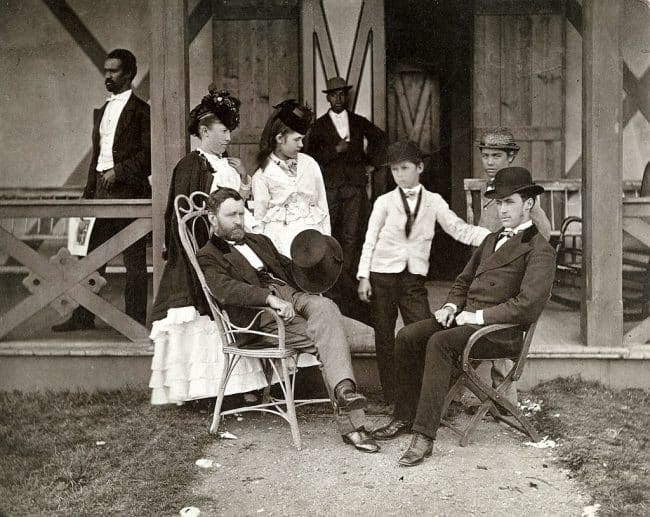
Following his presidency, Grant embarked on a world tour and made his final stop in Chicago in 1879 to visit his son, Fredrick, and daughter-in-law, Ida.
The Greatest Banquet in American History
Bertha Palmer, recognizing the significance of Grant’s visit, organized the largest gala of its time to honor Civil War heroes like William Sherman and Phillip Sheridan. She invited 500 dignitaries and used gold-etched china. Potter Palmer asked his friend, Mark Twain, to serve as master of ceremonies.
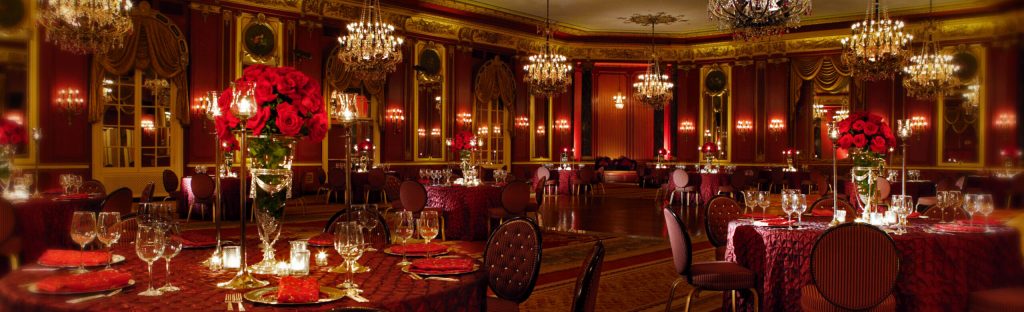
Eighteen pieces of gold-trimmed French Havilland china and Austrian crystal shimmered at each place setting. The menu featured Blue Point oysters, Sauterne, venison, chicken, buffalo steaks with truffle sauce, followed by Cognac, celery, coffee, and cigars.
Mark Twain, the renowned author and friend of the Palmers, served as the emcee. He delivered over 24 toasts, using a specially made oversized beer stein that was refilled multiple times.
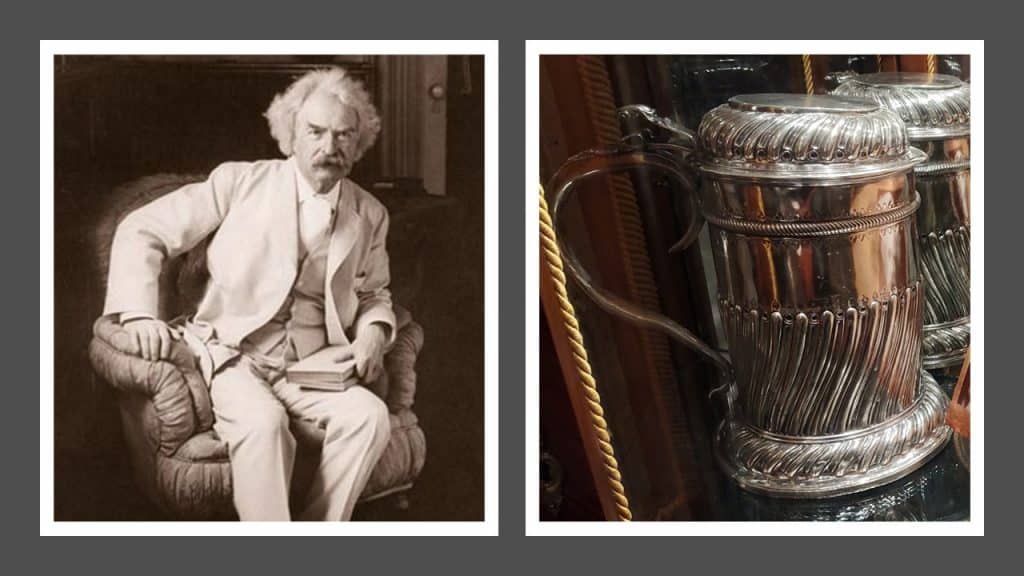
At the banquet, Twain’s massive stein was refilled more than once!
The Palmer House Hotel Today
The Palmer House Hotel was built as a gift of love and continues to embody elegance as a century-old Chicago landmark. Today, guests can sit in the highbacked lobby chairs, a prized commodity. Wait staff move efficiently through the space, serving guests with picturesque plates.
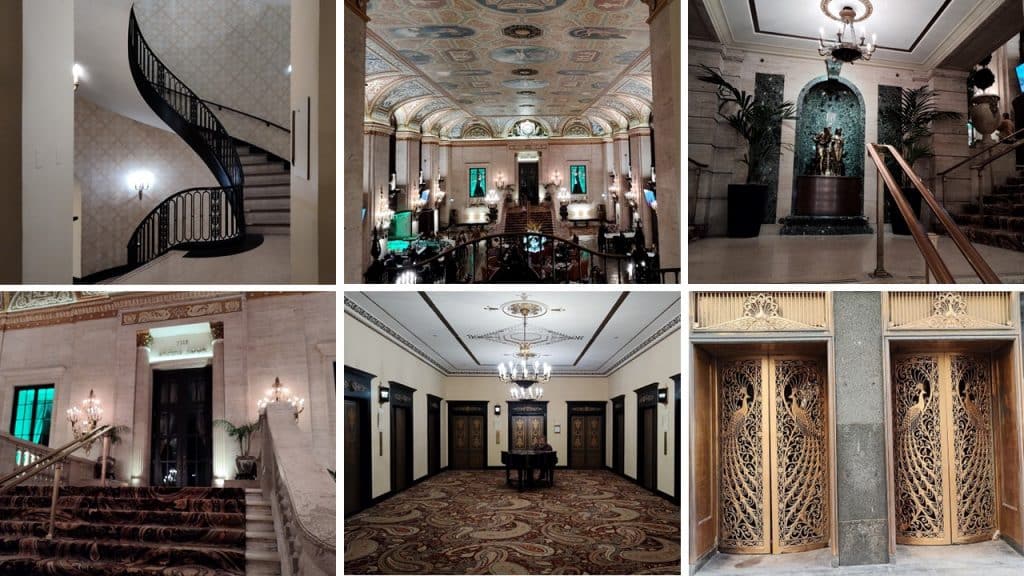
In the morning, staff polish railings and baseboards. With over 1,600 rooms, the cleaning regime is extensive. One maid shared, “I clean thirteen rooms a day.” Her pride was evident as she peered over the fluffy white towels stacked atop her cart like a Dr. Seuss vehicle.
The Empire Room and More
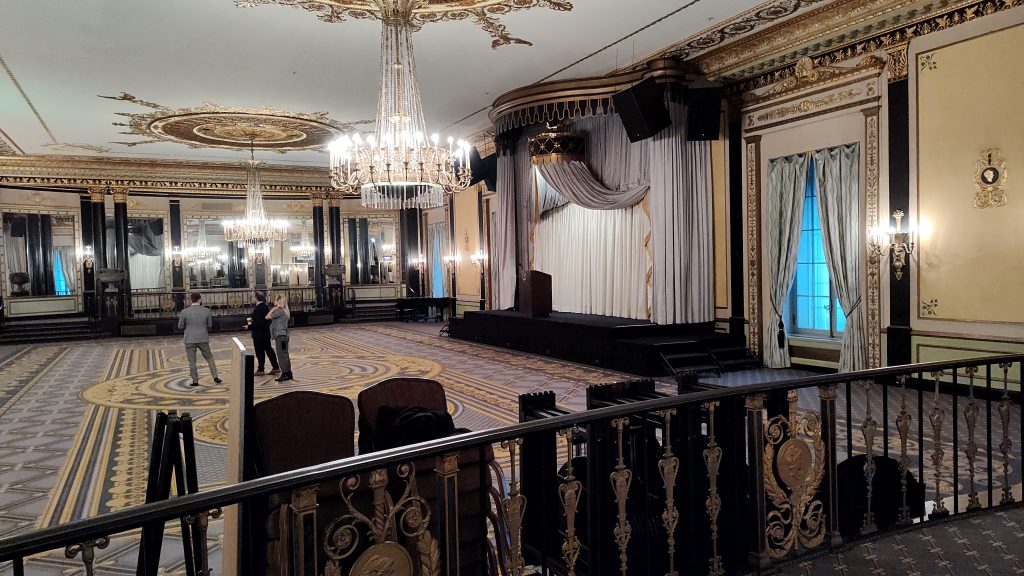
The Empire Room has hosted legendary performers from 1932 to 1975, including Louie Armstrong, Frank Sinatra, and Ella Fitzgerald. More recently, the hotel has been featured in television shows and movies such as Curly Sue and Miracle on 34th Street.
Since the Great Banquet in 1879, every U.S. president except George W. Bush has stayed at the Palmer House Hotel. Many have also held campaign events there.
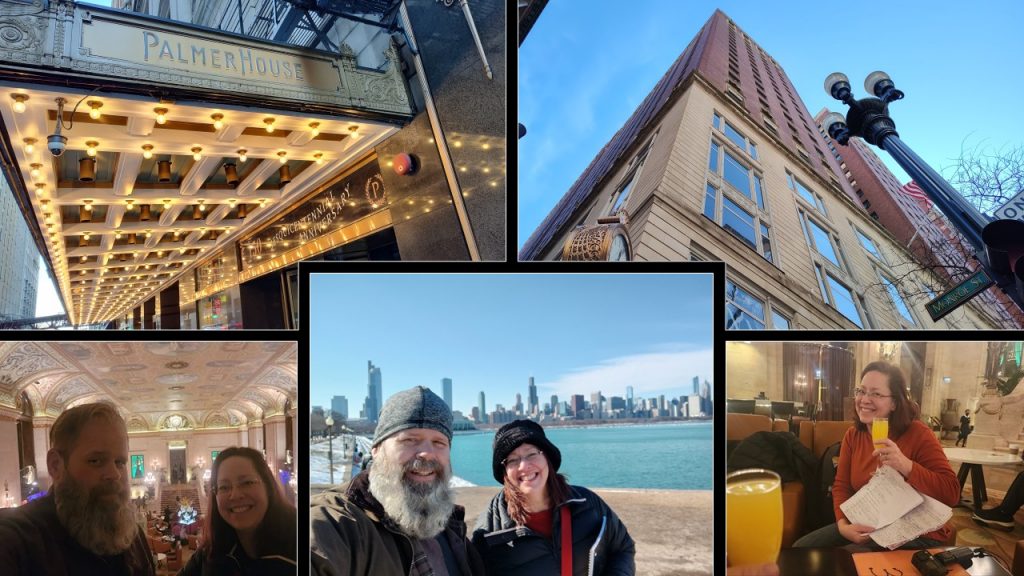
I appreciate Chuck for spoiling me with a trip to The Palmer House Hotel! What an experience! Being able to get a sneak peek into the Greatest Banquet in American History was a treat. I marveled at the care taken to preserve this rich history. Thank you for coming along!
Chuck and Martha Hayden, known as The Viking and Poppins, enjoy exploring off-the-beaten-path destinations. They share their journeys with others, offering independent views of places, people, and cultures around the world. Visit and follow them on their website and social media accounts.

The Weaponization of Food in Cultural Erasure
The campaign to assimilate the Uyghurs into Han Chinese culture began not with language or dress, but with food. When the Chinese Communist Party sought to forcibly integrate the Uyghur minority group, primarily located in Xinjiang province, into China's dominant Han identity, it started by targeting their traditional diet. The CCP seized Uyghur sheep pastures and converted them into industrial cattle ranches run by Han Chinese. This led to a sharp increase in the price of mutton, a staple in Uyghur cuisine, making dishes like leghmen, a beloved hand-pulled noodle dish braised with fat-tailed sheep meat, unaffordable for many families.
By 2020, the campaign had intensified. Southern Xinjiang, where 90% of the population is Muslim and rejects pork, was declared a new "pig-raising hub." CCP officials conducted a kind of litmus test for assimilation by offering Uyghur residents pork and alcohol. Those who refused were detained. Local bakeries, which served as both community gathering spaces and sources of freshly baked naan, were shut down. In Kashgar, the cultural heart of the Uyghurs, the only places to find leghmen and naan are tourist restaurants staffed by Han chefs.
Cuisine as a Repository of Identity
In his book, "The Last Sweet Bite: Stories and Recipes of Culinary Heritage Lost and Found," veteran human rights investigator Michael Shaikh argues that ethnic cleansing does not begin with mass killings but with the destruction of food culture. Cuisine is more than what society eats on any given day; it is a repository of history passed down through generations. When a community’s food culture is attacked, it can have devastating effects on its emotional, spiritual, and physical existence.
Shaikh, who has spent two decades documenting the human cost of war for organizations such as Human Rights Watch and the United Nations, revisits his past reporting to show how targeting food traditions is not just collateral damage but a form of cultural warfare he calls "cuisinecide."
A Global Perspective on Cultural Destruction
From Cold War-era Czechoslovakia, where communists suppressed culinary creativity to enforce a singular national identity, to the killing fields of Sri Lanka and the refugee camps in Bangladesh sheltering Rohingya refugees from Myanmar, Shaikh traces the global patterns of cultural erasure. He also explores the Uyghur exile communities in Turkey and meets survivors of the Andean drug wars, as well as Pueblo chefs reclaiming their cuisine after centuries of colonial suppression.
Through kitchen-table interviews with cooks from conflict zones, the book weaves together recipes, culinary history, and stories of genocide, occupation, civil war, and migration. Despite the accounts of loss and violence, Shaikh highlights how cooking can be an act of resistance and survival.
Cooking as Resistance
In Bangladesh, Shaikh met a Rohingya refugee named Maryam who taught him how to make ghoru ghuso, a fiery beef curry from her home state of Rakhine. “Everything we endure in the camp that is working against Rohingya culture—the fires, the gangs, the illness—makes a simple thing like cooking more important,” she said.
The book is often gut-wrenching, but its vivid descriptions of meals that sustain communities are enough to stir the appetite even as the stories unsettle. Shaikh shares one of his meals with an Afghan American who is now his husband, and they are both thanked in the acknowledgements.
The Role of Food in Cultural Survival
For many communities, cooking is an act of rebellion against erasure. Shaikh includes recipes in his book not just as a historical record but as a way to preserve the knowledge of those who fear their food traditions will disappear. “People were in tears when they told me they were worried about these foods disappearing,” he said. “That’s why they gave me recipes, and I felt obligated to pass them on.”
Shaikh believes that protecting food cultures during conflicts is essential for rebuilding shattered communities. He emphasizes the importance of safeguarding the principal guardians of cuisine—women and girls—and ensuring their homes and kitchens remain safe. “When you look at Gaza, Mariupol, Khartoum, Aleppo, you are seeing militaries intentionally flattening neighborhoods. Those are kitchens that have been flattened,” he said. “That’s the crime of domicide, and it has a direct impact on the production and maintenance of culture.”
The Power of Food in Human Connection
As a human rights investigator, Shaikh often felt that his reports, while essential for policy changes, failed to connect with audiences in a meaningful way. Cooking, he believes, can bridge that gap. “When you cook someone’s food, you understand them better. It gives you a real, tangible connection to the people that you meet, and hopefully their lives.”
Post a Comment for "
A Glimpse into the Greatest Banquet in American History
During a recent trip to Chicago, we discovered one of the most remarkable events in American history: the greatest banquet ever held in the United States. This elite gathering took place thirteen years after the Civil War, in 1879. It was hosted at The Palmer House Hotel, a landmark that has welcomed travelers and hosted events since 1871. Among the attendees were President Ulysses S. Grant and the famous author Mark Twain. It’s fascinating to see how issues from over a century ago still resonate with our modern world.
Potter and Bertha Palmer
Newly married in 1870, millionaire Potter Palmer built the luxurious Palmer House Hotel as a gift for his wife, Bertha Honore Palmer, who was 23 years younger. On September 26, 1871, the hotel opened its doors to guests.
However, just twelve days later, the Great Chicago Fire erupted and burned for forty-eight hours. Three hundred people lost their lives, and 17,000 buildings, including The Palmer House Hotel, were destroyed. Potter Palmer quickly secured a loan of $1.7 million—the largest credit given by a bank at the time—and began plans to rebuild.
By November 1873, the new Palmer House Hotel opened. Designed by architect John M. Van Osdel, it was constructed using brick, iron, and terra cotta and was known as “The World’s Only Fire-Proof Hotel.” This seven-floor hotel was a marvel of luxury, featuring electric light bulbs throughout and telephones in every guest room. It also had a vertical steam lift, one of the first elevators, making it more efficient for both guests and luggage.
High society has long been drawn to The Palmer House Hotel, which has stood for 155 years.
A Royal Wedding and a Lasting Friendship
Less than a year after the hotel reopened, on October 20, 1874, Bertha’s sister, Ida, married Brigadier General Fredrick Dent Grant, the son of President Ulysses S. Grant. The wedding took place at her parents’ home, and the president and First Lady attended. This event marked the beginning of a lasting friendship between the Grants and the Palmers.
Who Was President Ulysses S. Grant?
Ulysses S. Grant was a talented horseman and artist who initially had no desire for a military career. He planned to serve his four-year stint at West Point and then pursue another path. However, he remained in the military to support his family of four children.
Grant’s relationship with his in-laws was complicated. During a time of economic hardship, they housed him and his family. He was assigned William Jones, a slave, whom he eventually freed, much to the dismay of his father-in-law, who saw this as an expensive mistake.
During the Civil War, Grant led troops in twelve battles from 1861 to 1865, while his wife, Julia, and their children awaited news of him. After the war, Grant ran for president under the slogan “Let Us Have Peace,” serving from 1869 to 1877. Though his presidency was marred by corruption scandals, he remained a national hero during his lifetime.
Following his presidency, Grant embarked on a world tour and made his final stop in Chicago in 1879 to visit his son, Fredrick, and daughter-in-law, Ida.
The Greatest Banquet in American History
Bertha Palmer, recognizing the significance of Grant’s visit, organized the largest gala of its time to honor Civil War heroes like William Sherman and Phillip Sheridan. She invited 500 dignitaries and used gold-etched china. Potter Palmer asked his friend, Mark Twain, to serve as master of ceremonies.
Eighteen pieces of gold-trimmed French Havilland china and Austrian crystal shimmered at each place setting. The menu featured Blue Point oysters, Sauterne, venison, chicken, buffalo steaks with truffle sauce, followed by Cognac, celery, coffee, and cigars.
Mark Twain, the renowned author and friend of the Palmers, served as the emcee. He delivered over 24 toasts, using a specially made oversized beer stein that was refilled multiple times.
At the banquet, Twain’s massive stein was refilled more than once!
The Palmer House Hotel Today
The Palmer House Hotel was built as a gift of love and continues to embody elegance as a century-old Chicago landmark. Today, guests can sit in the highbacked lobby chairs, a prized commodity. Wait staff move efficiently through the space, serving guests with picturesque plates.
In the morning, staff polish railings and baseboards. With over 1,600 rooms, the cleaning regime is extensive. One maid shared, “I clean thirteen rooms a day.” Her pride was evident as she peered over the fluffy white towels stacked atop her cart like a Dr. Seuss vehicle.
The Empire Room and More
The Empire Room has hosted legendary performers from 1932 to 1975, including Louie Armstrong, Frank Sinatra, and Ella Fitzgerald. More recently, the hotel has been featured in television shows and movies such as Curly Sue and Miracle on 34th Street.
Since the Great Banquet in 1879, every U.S. president except George W. Bush has stayed at the Palmer House Hotel. Many have also held campaign events there.
I appreciate Chuck for spoiling me with a trip to The Palmer House Hotel! What an experience! Being able to get a sneak peek into the Greatest Banquet in American History was a treat. I marveled at the care taken to preserve this rich history. Thank you for coming along!
Chuck and Martha Hayden, known as The Viking and Poppins, enjoy exploring off-the-beaten-path destinations. They share their journeys with others, offering independent views of places, people, and cultures around the world. Visit and follow them on their website and social media accounts.
"Post a Comment