
Airport Chapels Remain Relevant to Workers and Travelers Amid Changing Faith in Public Life
A Sanctuary Amid the Chaos
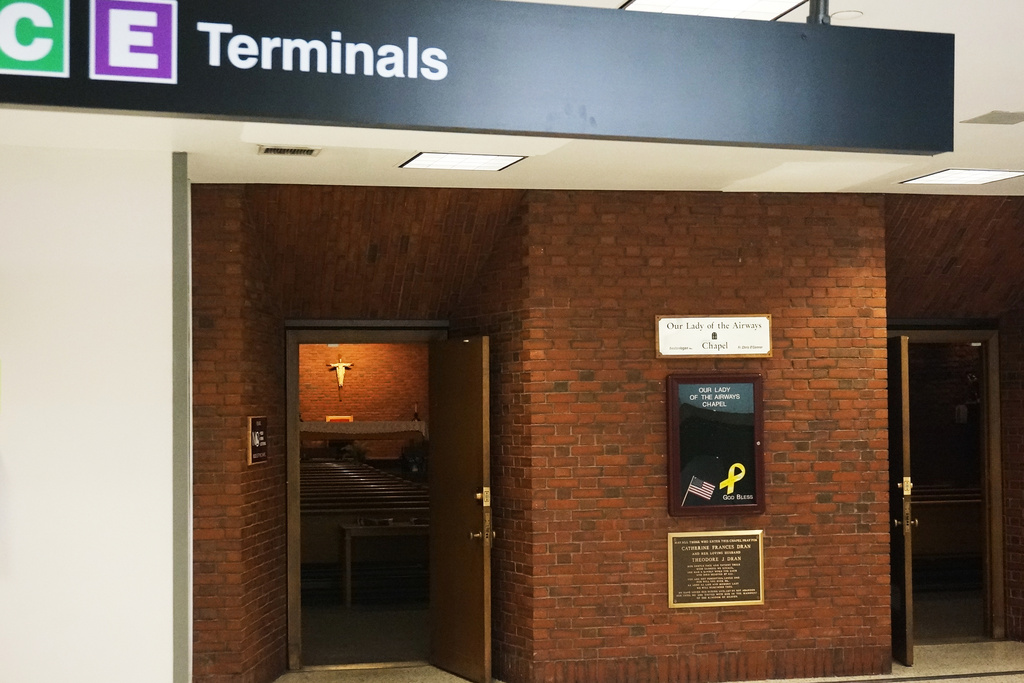
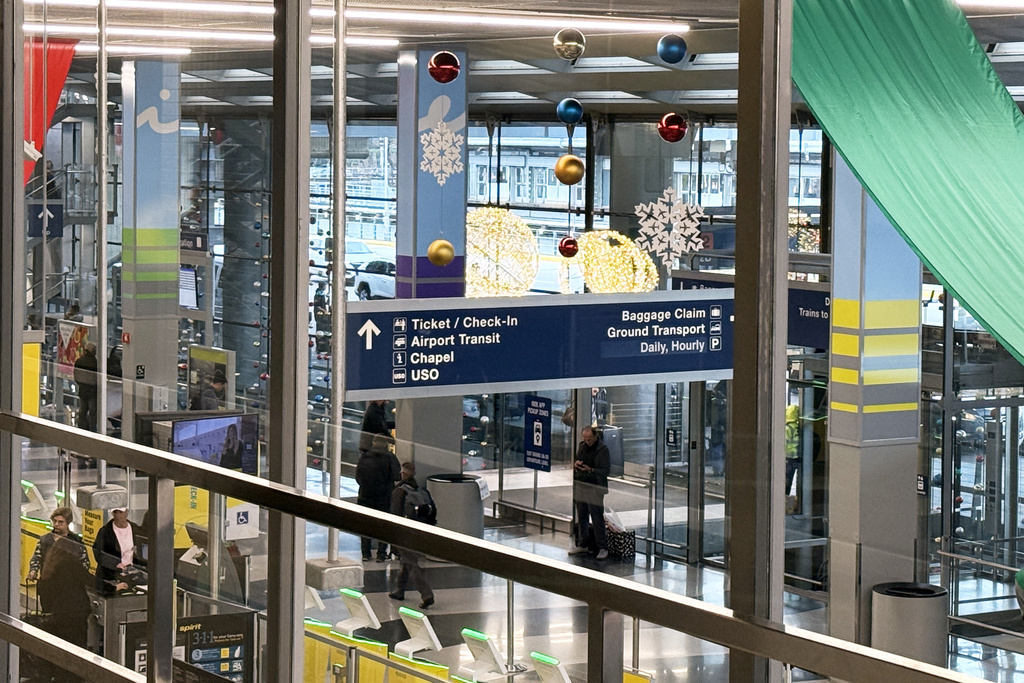
BOSTON — As holiday travel begins to pick up, the atmosphere at airports can become overwhelming. Yet, for many travelers and airport workers, a quiet moment of reflection is just a short walk away in the form of an airport chapel. These sacred spaces have been offering solace and spiritual guidance for decades, providing a much-needed respite from the hustle and bustle of air travel.
At Boston’s Logan International Airport, Our Lady of the Airways stands as a testament to this tradition. Built in the 1950s, it was one of the first airport chapels in the United States, designed specifically for airport employees who often worked long shifts that included Sundays and holy days when attending Mass was required. The chapel has since evolved but continues to serve as a place of worship for both Catholics and other faiths.
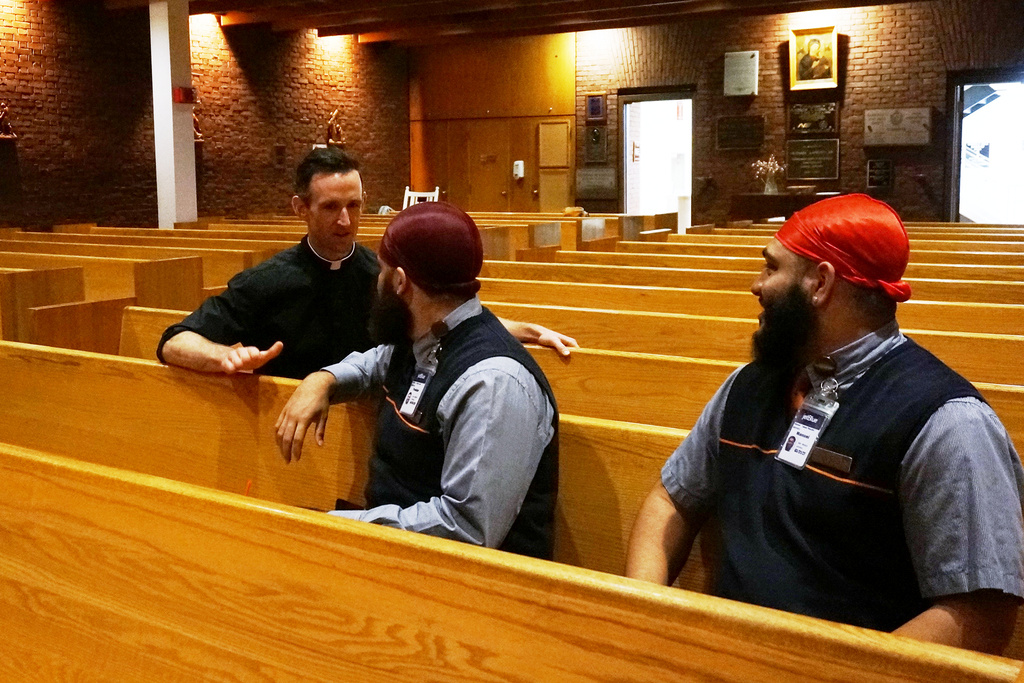
“I love seeing travel bags and workers’ outfits. It gives hope that you’re ministering to a need,” said Rev. Brian Daley, one of the priests at the chapel. “It’s awesome that I have a chapel within walking distance of where I work,” added Brian Babcock, a Southwest Airlines baggage handler who visits the chapel daily.
The Origins of Airport Chapels
The mid-20th-century push to build airport chapels was driven by the Catholic Church’s desire to reach out to the faithful in their workplaces. This initiative was inspired by Pope Leo XIII’s document Rerum Novarum, which emphasized the rights of workers and social justice. In response, church leaders like Boston’s Cardinal Richard Cushing began establishing chapels in various locations, including train stations, fishing docks, and airports.
“Boston’s Catholicism was overwhelmingly a working-class phenomenon,” said James O’Toole, professor emeritus of history at Boston College. “He really had a program for establishing chapels for working people.”
At Logan Airport, the original chapel quickly became too small for the growing number of attendees. In 1965, a larger space was built to accommodate the demand. The current chapel features the original metal statue of the Virgin Mary, her feet resting on a globe as three airplanes fly around it.
From Chapels to Interfaith Spaces
While the early chapels were primarily Catholic, Protestant and Jewish faith leaders also established places of worship at U.S. airports in the 1970s and 1980s. These spaces offered quiet areas for individual prayer rather than organized services. Over the past 30 years, most U.S. airport chapels have transitioned into interfaith spaces, often featuring removable religious symbols or no symbols at all, as seen in newer "meditation spaces."
Wendy Cadge, president and professor of sociology at Bryn Mawr College, noted that “I’m not aware of any that have been built recently that are anything other than kind of warm waiting rooms.” These spaces vary widely depending on local history, demographics, and negotiations between faith leaders and airport authorities.
Interfaith Worship Among Taxiing Planes
At Chicago’s O’Hare Airport, the Interfaith Airport Chapels have become a vital resource for airport workers and travelers alike. The chapel, which started as a United Airlines training room, now serves as an interfaith space with glass walls that offer a view of taxiing planes. A compass rose on the ceiling points toward Mecca, and a small light stands by the tall tabernacle where the consecrated host is kept for daily Catholic Mass.
“Everybody is grateful to have a quiet place to pray,” said Rev. Michael Zaniolo, administrator of the Interfaith Airport Chapels of Chicago. He hopes the chapel will not turn into a generic meditation space, preserving its Catholic roots while serving people of different faiths.
A Place for All
In Boston, two Catholic JetBlue gate workers expressed hope that Our Lady of the Airways will continue to serve as a sanctuary for nervous flyers and employees of different faiths. “We come every day to pray before our shift starts, to get some guidance,” said Manuel Tejeda Pimentel. “It’s a little escape.”

Post a Comment for "Airport Chapels Remain Relevant to Workers and Travelers Amid Changing Faith in Public Life"
Post a Comment