
America's Bold Dreams
The Legacy of American Audacity and Aspiration
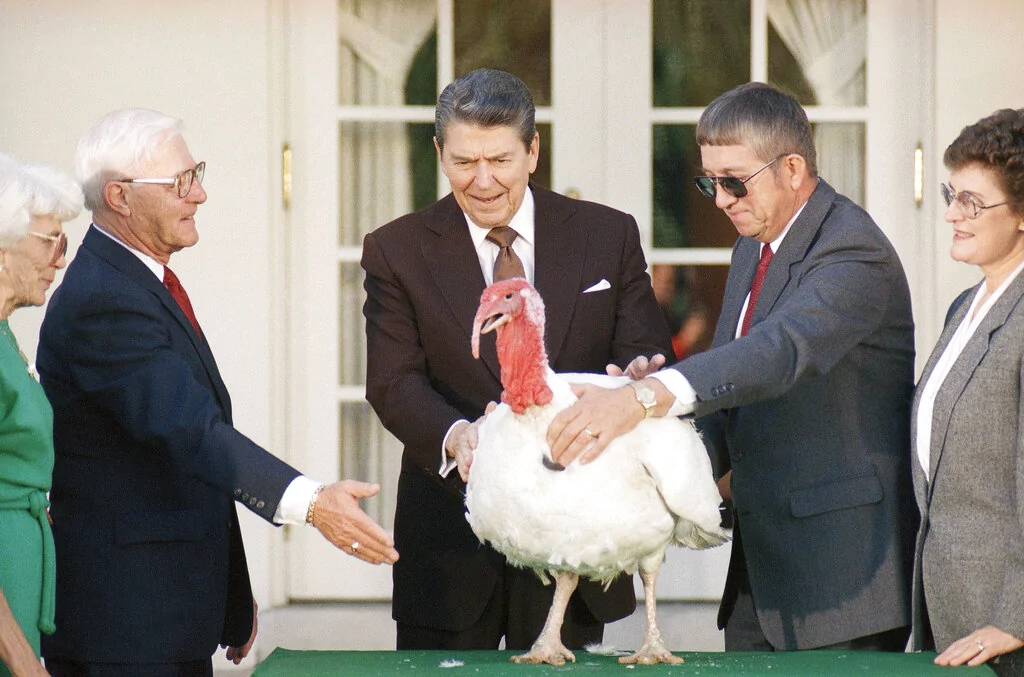
President Ronald Reagan once said, “I believe we, the Americans of today, are ready to act worthy of ourselves.” This statement, made during his first inaugural address in January 1981, reflects a deep belief in the potential of the American people. Reagan saw himself as a reminder of truth, goodness, and beauty, and he inspired others to be their best selves in every aspect of life. His leadership led to an economic boom from 1983 to 1989 and helped defeat Soviet communism without a single shot being fired—except in Romania. The 1980s were a remarkable decade, with 1989 standing out as a year of miracles.
As we celebrate Thanksgiving, it's important to reflect on the many blessings America has experienced throughout its history. While there have been sins committed, they have often come with great achievements for the world. Americans are known for their audacity and independence, striving not just for material success but also for moral and ethical greatness.
The Pilgrims and the Foundations of Freedom
Imagine being a member of the Mayflower in 1620, arriving on North American soil far from their intended destination. Facing vast forests and the approaching winter, these early settlers created the Plymouth Combination, now known as the Mayflower Compact. This document was one of the first examples of self-governance, rooted in English common law, Puritan values, and Protestant faith.
Over a century later, colonists met again in the First and Second Continental Congresses, forming the Continental Army under George Washington’s leadership. A year later, they declared independence with the Declaration of Independence, a document that boldly stated, “We hold these truths to be self-evident, that all men are created equal.” This declaration was a powerful assertion of universal truths, meaning all people, regardless of race or gender, were included.
The Declaration and the Constitution
The Declaration of Independence was influenced by earlier covenants like the Abrahamic and Mosaic ones, as well as the Magna Carta and the Mayflower Compact. It became a covenant itself, invoking God and pledging lives, fortunes, and sacred honor. Just 11 years later, in 1787, delegates wrote the U.S. Constitution, the oldest written constitution in the world.
The aspirations and audacity of the Declaration and Constitution were tested during the Civil War. Right prevailed with the 13th Amendment abolishing slavery, fulfilling the Founding Fathers' greatest hopes. Even in victory, there was a sense of mercy, as seen in President Lincoln’s River Queen Doctrine, which aimed for reconciliation rather than punishment.
Reagan’s Vision of the 'Shining City'
Reagan often spoke of the "shining city upon a hill," a phrase from John Winthrop, describing an ideal America built on freedom and unity. He envisioned a city where people of all kinds lived in harmony, with open doors for those seeking a better life. This vision continues to inspire Americans today.
This Thanksgiving, let us give thanks for our audacity and never forget our aspirations. May we be worthy of ourselves and continue to strive for greatness.
Bradley J. Birzer is a professor of history at Hillsdale College.

Post a Comment for "America's Bold Dreams"
Post a Comment