
Boeing Bomber Inspired Millennium Falcon Cockpit
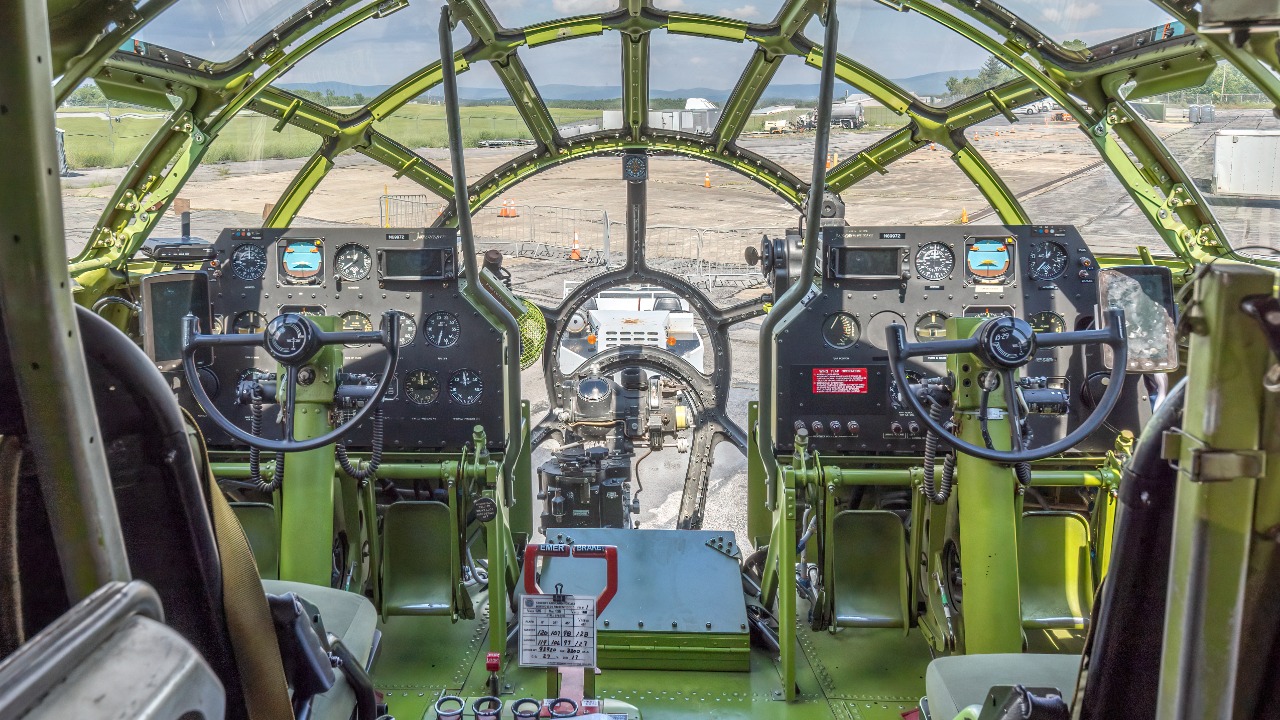
The Unlikely Bridge Between a War Bomber and a Space Freighter
The cockpit of the Millennium Falcon, one of the most iconic spaceships in cinematic history, may seem like pure science fiction. However, its design is deeply rooted in the real-world engineering of the Boeing B-29 Superfortress, a heavy bomber used during World War II. This connection between a wartime aircraft and a fictional starship might seem surprising at first, but when examined closely, it becomes clear that the Falcon’s layout and aesthetic were directly influenced by the B-29.
The B-29 was not just any aircraft—it was a technological marvel of its time, designed for long-range bombing missions. Its cockpit, with its rounded nose, clustered instrumentation, and side-by-side seating, bears a striking resemblance to the Millennium Falcon’s interior. This similarity is not accidental; it is a deliberate design choice that ties the space freighter to a specific historical aircraft.
How the B-29’s Plexiglas Nose Became a Sci-Fi Window
One of the most notable features of the B-29 was its distinctive Plexiglas nose, which provided pilots with an expansive view of the outside world. This transparent shell was both functional and psychological, offering a sense of presence and visibility. In the case of the Millennium Falcon, this same concept is translated into a sci-fi context, with a curved frame and segmented panes that place the crew at the center of a wide, cinematic vista.
This design choice is more than just visual—it helps ground the Falcon in a sense of realism. By echoing the B-29’s bulbous, glass-heavy front end, Star Wars designers gave audiences a familiar visual grammar, even if they couldn’t immediately place why the Falcon’s cockpit felt so grounded in reality.
Inside the Superfortress: A Cockpit Built for Long Missions
To understand why the Falcon’s interior feels so convincing, it's helpful to look at how the B-29 was engineered for its own missions. The Superfortress was designed for long-range bombing runs, meaning its cockpit had to function as both a command center and a livable workspace for extended periods. This requirement led to a roomy, pressurized cabin with clearly zoned stations, a central aisle, and banks of analog instruments that wrapped around the crew in a semi-circular arc—features that map neatly onto the Falcon’s cinematic layout.
Historical notes on the aircraft highlight that the B-29 featured a pressurized cabin and that the last B-29 was retired from active service in September 1960. These details underscore how advanced the bomber was for its time and how its interior set a template for later aviation and, eventually, science fiction design.
From War Film Dogfights to Space Battles
The connection between the B-29 and the Falcon goes beyond just the cockpit. The franchise’s space battles borrow heavily from mid-century air combat cinematography, with camera angles, formation flying, and even radio chatter rhythms that echo wartime footage. Placing the Falcon’s crew inside a cockpit that feels like a bomber’s flight deck helps those sequences land with a sense of physicality, as if the audience were watching archival combat film that just happens to involve X-wings and TIE fighters.
Special effects teams staged space dogfights using the same kind of framing used in historical air battles, creating a continuity that runs from the bomber’s nose to the way actors had to imagine incoming fighters outside the cockpit windows.
Designing the Falcon: When Concept Art Meets Boeing Hardware
Concept artists working on Star Wars faced a tricky brief—they needed a ship that looked like a beat-up freighter but still felt capable of outrunning Imperial fighters. The solution was to combine a saucer-like hull with a cockpit that looked like it had been bolted on from a different vehicle. This is essentially what they did by channeling the B-29’s nose section. The result is a ship that feels cobbled together yet oddly plausible, as if someone had literally grafted a bomber cockpit onto a cargo hauler.
By borrowing the real-world geometry of the B-29, the designers gave the Falcon a sense of inherited engineering, as if it belonged to a lineage of aircraft rather than springing fully formed from a sketchbook.
George Lucas’s Brief: A Cockpit That Feels Like a War Movie Set
Behind the scenes, the creative direction for the Falcon’s interior was not just about aesthetics—it was about performance. The cockpit had to give actors enough physical business, levers to pull, switches to flip, sightlines to react to, so that their scenes would feel kinetic even when the ship itself was a static set. Drawing on the B-29’s dense, utilitarian layout provided a ready-made template for that kind of tactile environment, one that would let performers inhabit the space like real pilots rather than stage players.
Accounts of the design process describe how the final cockpit ended up almost identical to a B-29’s forward section, tied to a specific request from George Lucas himself, who wanted a layout that felt like a World War II bomber flight deck.
Why the Falcon’s Cockpit Feels “Used” Instead of Futuristic
One of the enduring appeals of the Millennium Falcon is that it looks lived in—a far cry from the sterile, gleaming interiors that dominated earlier science fiction. The cockpit, in particular, feels like a working machine, with scuffed panels, crowded gauges, and a sense that every surface has a purpose. That sensibility tracks directly back to the B-29, which was built for function over form and whose cockpit was a dense forest of analog readouts, toggle switches, and mechanical linkages.
By importing that utilitarian design language into a space fantasy, the filmmakers created a cockpit that feels like it has logged countless hours, which in turn makes the ship’s reputation as a “hunk of junk” both believable and oddly endearing.
The B-29’s Long Shadow: From Hiroshima to Hyperspace
The B-29 Superfortress carries a heavy historical weight, as the aircraft type that delivered atomic bombs and helped end World War II in the Pacific. That legacy might seem far removed from a fictional smuggler’s ship, yet the visual echo between the bomber’s cockpit and the Falcon’s interior means that some of that gravity inevitably seeps into the Star Wars imagery.
When audiences watch the Falcon thread its way through asteroid fields or charge into battle, they are, in a sense, watching a stylized descendant of the same machine that once flew over real cities in wartime.
Why This Design Lineage Still Matters to How We Watch Star Wars
Decades after the original film, the Falcon’s cockpit remains one of the most instantly recognizable sets in cinema, and its staying power owes a lot to the decision to ground it in a real aircraft. By borrowing the B-29’s Plexiglas nose, pressurized cabin layout, and instrument-heavy design, the filmmakers created a space that feels both fantastical and familiar, a place where audiences instinctively understand what it means to sit in the pilot’s seat.
This familiarity helps every new generation of viewers plug into the action, even if they have never seen a World War II bomber up close.
More from The News Pulse
Did archeologists find 10-foot giants in Nevada cave?
Astronomers track object entering solar system at impossible speed
Toyotas water powered engine could signal the fall of EV’s
Giant underground structures uncovered on mars by NASA

Post a Comment for "Boeing Bomber Inspired Millennium Falcon Cockpit"
Post a Comment