
How the F-150 Could Bridge U.S.-Japan Ties
For nearly a decade, Ford Motor Co. has not sold its vehicles in Japan, and there is a clear reason for this absence — the automaker has struggled to achieve profitability in a market that favors small, domestic cars over large American-made vehicles. Since World War II, American car companies have faced challenges in establishing a significant presence in Japan, which has not imposed tariffs on imported vehicles since the late 1970s. In fact, General Motors' vehicle sales in Japan accounted for less than 1% of the nation's total car sales last year.
It is therefore no surprise that the recent news of Japan's government possibly purchasing a fleet of Ford F-150 pickups has sparked global interest. This move comes as part of Japan's pledge earlier this year to open its markets to more American cars, a gesture aimed at President Donald Trump, who has long advocated for such an agenda.
In his second term, Trump has implemented steep tariffs on imported cars and car parts. These tariffs are taxes imposed on importers when goods cross borders. Additionally, he has pressured countries to remove trade barriers, including taxes on American beef and soybeans, as well as car safety and local content requirements in Japan and Indonesia.
The potential purchase of the iconic F-150 by Japan highlights what is at stake: Ford's bestselling vehicle could serve as a diplomatic bridge between the United States and Japan. While it may not significantly alter the trade imbalance, it could symbolize a step toward economic and political harmony.
"The move will have more symbolic impact than financial impact," said Erik Gordon, a professor at the University of Michigan's Ross School of Business. "It makes for a good press moment for smiling politicians, but F-150 sales won't move the balance of trade or Ford's earnings."
"Thank you, Mr. President"
The news gained international attention when a reporter informed Trump that Japan's new Prime Minister Sanae Takaichi was considering the purchase of a fleet of F-150 trucks. Trump, known for his admiration of the F-150, responded positively, saying, "That's good. They're great trucks. She has good taste. That's a hot truck."
Ford CEO Jim Farley took to social media, posting a video of Trump's comments with the message, "Thank you, Mr. President. We agree." He added, "We're proud to make all of our F-Series pickup trucks here in America and thankful to our customers for making the F-Series lineup America's best-selling truck for 48 years and America’s best-selling vehicle of any kind in the U.S. since 1981."
For evidence that the offer could be serious, consider the courtyard of the Akasaka Palace in Tokyo, where Trump and Takaichi met on October 28. Takaichi placed an enormous Ford F-150 alongside U.S.-made Japanese vehicles in the courtyard, a gesture that highlighted her interest in strengthening ties with the U.S.
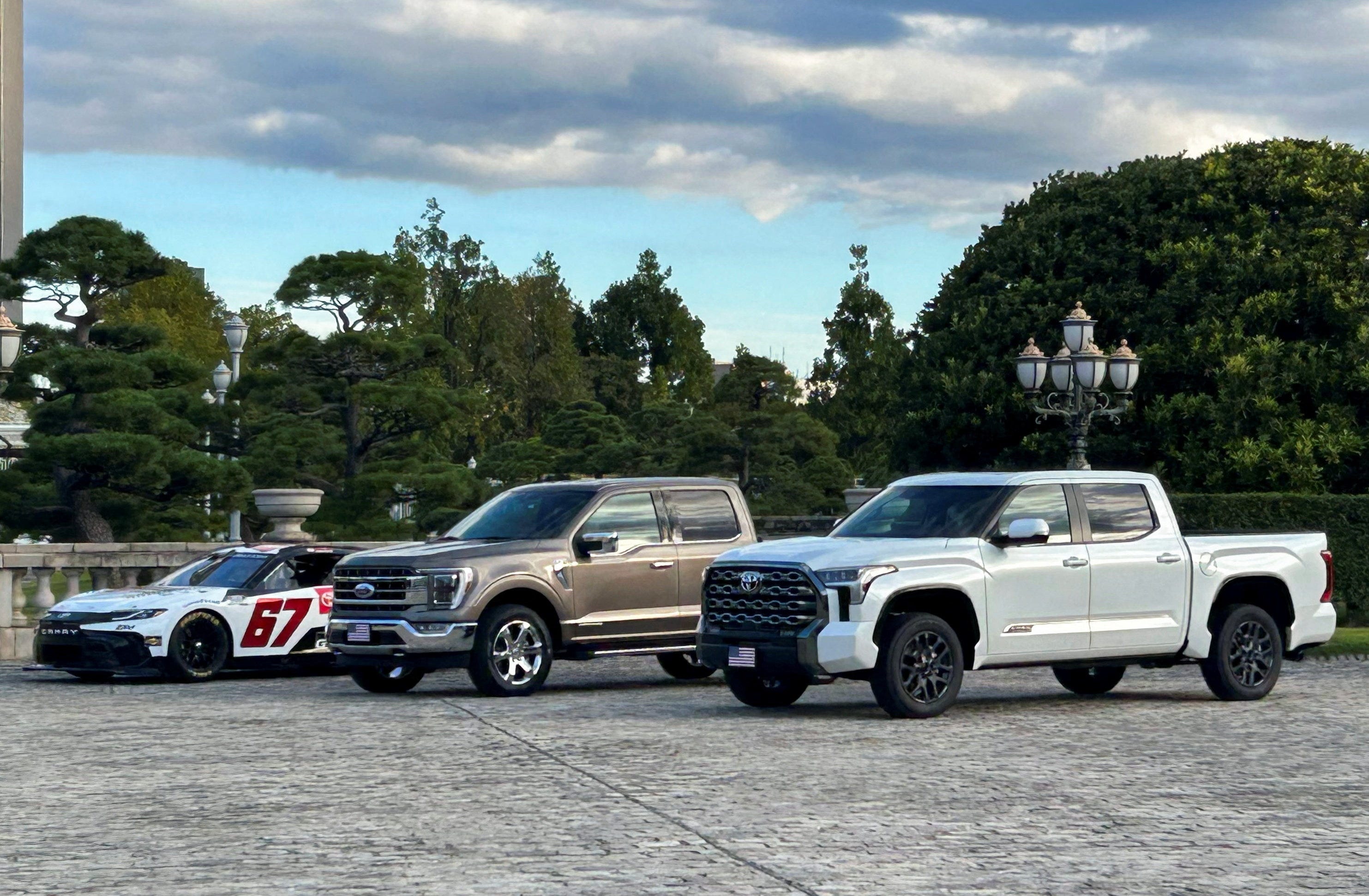
When asked about whether Ford had received an order from Japan for the pickups, Ford spokesman Dave Tovar stated, "We appreciate President Trump’s advocating for American-made products. We would be excited to introduce America’s bestselling truck to work and government customers in Japan."
Chevrolet and Japanese gangsters
Takaichi, Japan's first female prime minister, appears to understand the importance of maintaining a good relationship with Trump. Japan's previous administration had agreed to invest $550 billion in the United States, prompting Trump to reduce a threatened 25% tariff on Japanese goods to 15%. However, Japan wants its investments to favor Japanese vendors and contractors.
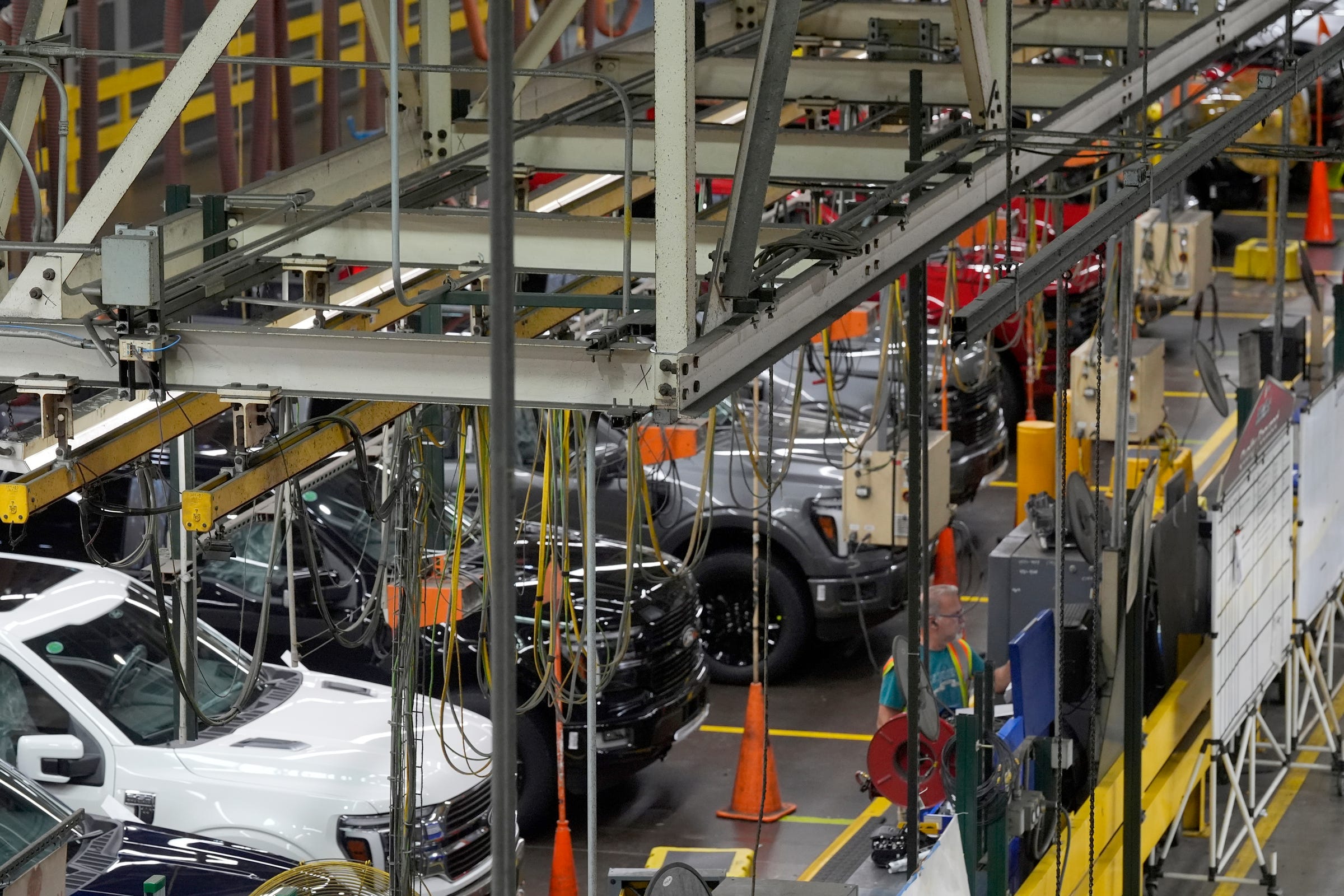
Despite these efforts, Japanese officials are reportedly considering buying more American soybeans, liquefied natural gas, and autos. According to AP reports, the Japanese government is considering importing Ford trucks for use by its transport ministry to inspect roads and infrastructure. However, concerns exist about the F-150's size causing congestion on narrow Japanese streets.
Japan is an island nation smaller than California, with limited parking and cities featuring narrow, twisting streets. Vehicles in Japan have steering on the right side, unlike in the U.S. Most Japanese car buyers prefer compact cars or, for those who can afford more expensive foreign cars, medium-size European vehicles. Jeep, made by Stellantis, is the top-selling American brand in Japan.
The idea of Ford's giant pickups navigating Tokyo's crowded streets is seen as impractical by many industry experts, which is why they view the purchase as a symbolic gesture rather than a practical one.
Trump has long complained that American vehicles were being excluded from Japan, home to Toyota, Honda, Nissan, Isuzu, Mitsubishi, and Subaru. In a September interview on CNBC, Commerce Secretary Howard Lutnick suggested that Japanese gangsters favored Chevys, adding to the challenges for American automakers.
Resetting the trade imbalance
Marick Masters, a Wayne State University business professor, told the Detroit Free Press that the Japanese government's willingness to buy a few Ford F-series trucks "symbolizes the country's commitment to moving U.S.-Japanese trade relations toward Trump's goal of a Golden Age for U.S. manufacturing."
However, he noted that "substantively, it will not address the massive trade imbalance between the U.S. and Japan in the auto industry." Masters cited data showing that Japan imported less than $853 million in U.S.-manufactured vehicles while exporting nearly $50 billion to the U.S. He also mentioned that the U.S.-Japanese trade accord calls for a 15% tariff on Japanese imports, higher than pre-Trump levels but lower than the 25% tariff on the rest of the auto industry.
"Just keep Trump happy"
Morningstar autos analyst David Whiston believes that even if Japan were to start importing Ford pickups, "there’s less than 1% probability that Japanese consumers in high volume will buy them." He explained that American pickups are too big and flashy for Japanese tastes and that fuel economy would be an issue.
Whiston suggested that the realistic opportunity would be convincing governments and fleets to use the trucks for construction jobs. However, he noted that Toyota might respond similarly, given its midsize Hilux pickup.
To Whiston's point, Japanese media have reported that Toyota Motor Corp. Chairman Akio Toyoda could announce during a dinner with Trump and business leaders that Toyota plans to import its American-made cars back to Japan.
This leaves Whiston to conclude, "I’d expect the Japanese to support buying U.S. vehicles no more than they need to keep Trump happy."
More: 3 auto supplier plants in Michigan to close, costing nearly 450 jobs More: Ford to add F-Series production in Michigan and Kentucky, to create 1,000 new jobs Jamie L. LaReau is the senior autos writer for Gannett who covers Ford Motor Co. for the Detroit Free Press. Contact Jamie at jlareau@freepress.com. Follow her on Twitter @jlareauan. To sign up for our autos newsletter. Become a subscriber.

Post a Comment for "How the F-150 Could Bridge U.S.-Japan Ties"
Post a Comment