
Misdiagnosing Sudan: A Deadly Mistake
Sudan's Crisis: A Complex Reality Beyond Simplistic Narratives
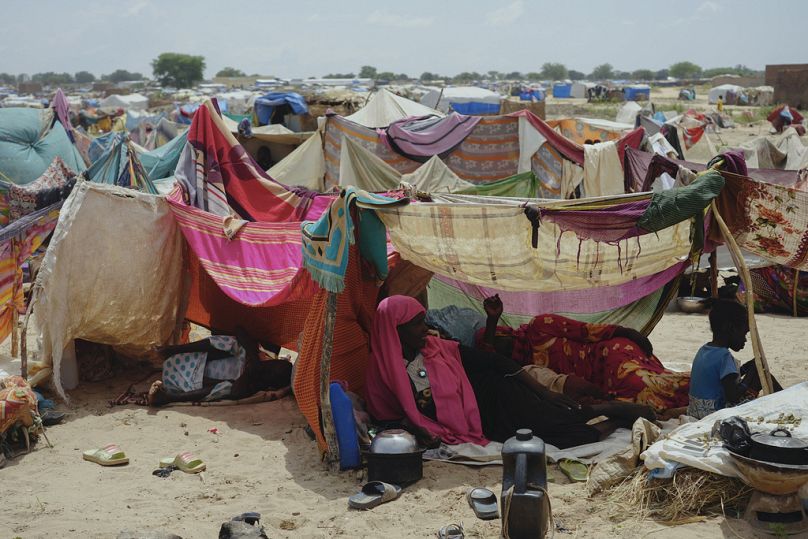
Sudan is in a state of profound crisis. Once vibrant cities have become ghost towns, with eleven million people displaced and twenty-five million relying on humanitarian aid to survive. The use of chemical agents against civilians has been confirmed by various investigators, marking the country as the largest humanitarian crisis in the world according to the United Nations. Yet, despite the gravity of the situation, much of the world continues to focus on the wrong issues.
At the center of this misinterpretation is a dangerous illusion: that Sudan’s conflict is merely a power struggle between two generals, exacerbated by foreign interference. This narrative has gained traction, particularly the claim that the United Arab Emirates (UAE) is arming one side and fueling the conflict. While this story is easy to digest, it is also misleading, detached from Sudan’s history, and ultimately harmful.
The Roots of Sudan’s Instability
To understand the current crisis, one must look back at Sudan’s past. The country did not arrive at this point due to external meddling but because its institutions were weakened from within. Starting in the 1970s, the Muslim Brotherhood and allied extremist networks worked to capture the Sudanese state. They embedded loyalists across ministries, universities, intelligence agencies, financial systems, and most critically, the armed forces.
By the time Omar al-Bashir took power in 1989, the state had already been transformed into an ideological machine under the so-called "Civilisational Project." Institutions were purged, reshaped, and weaponized for political Islam. One of the most devastating legacies of this era was the rise of the Janjaweed militias, later rebranded as the Rapid Support Forces, which were used not to protect the nation but to protect Bashir.
The 2019 revolution briefly interrupted this destructive trajectory. Sudanese civilians forced the arrest of leading Muslim Brotherhood figures, but dismantling a network embedded over four decades was beyond the capacity of any two-year transition. When Abdel Fattah al-Burhan dissolved the transitional government in 2021, he reopened the door to those same networks and released the same people who destroyed Sudan.
The Rise of Extremist Influence
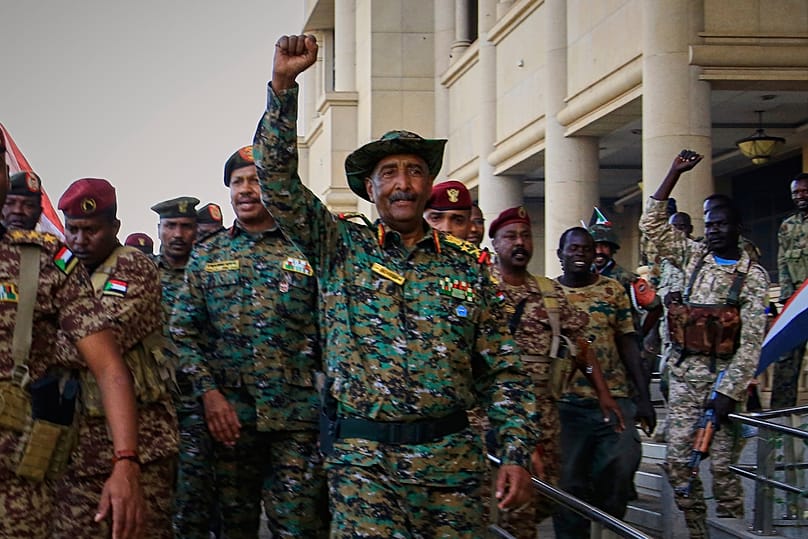
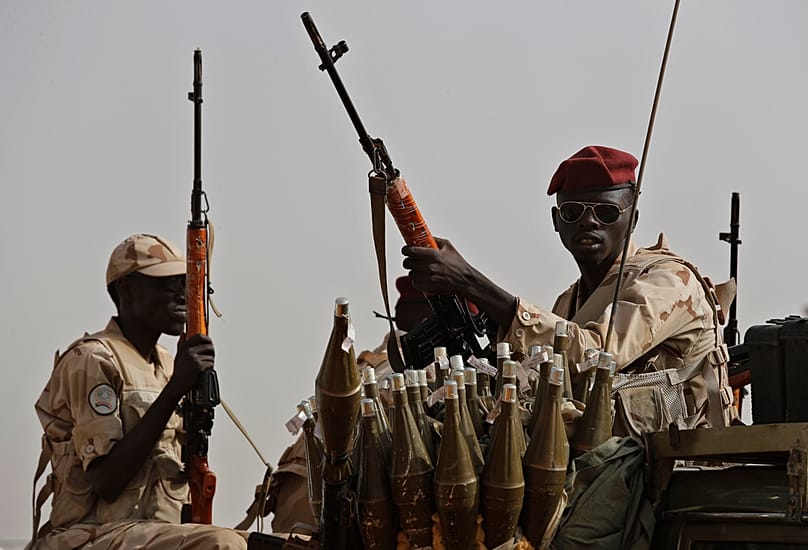
The 2023 clash between the Sudanese Armed Forces and the Rapid Support Forces, driven by political differences, marked a turning point. Now, Sudan is increasingly becoming an attraction hub for extremist organizations. Remnants of the former regime, jihadist groups, al-Qaeda affiliates, the Islamic State (IS), and regional armed actors are re-embedding themselves across Sudan’s political and security landscape.
As state authority collapses, these groups are filling the vacuum. The implications stretch far beyond Sudan’s borders. Port Sudan sits on one of the world’s most strategic waterways, and a prolonged power vacuum there risks creating a second Hodeidah—a launch point for illicit arms flows, regional proxy warfare, and maritime insecurity that would reverberate across Africa, the Gulf, and Europe.
For the United Kingdom and Europe, the consequences are grave: surging prices, maritime insecurity, and escalating migrant flows into the UK and Europe.
A Convenient Geopolitical Weapon
Yet instead of encouraging a ceasefire and pushing for the opening of humanitarian corridors, too much international energy is spent debating an allegation the UN has repeatedly dismissed: that the UAE is arming the conflict. The persistence of this claim is not based on evidence but on political usefulness. For extremist networks tied to the former regime, vilifying the UAE deflects attention from their own role in destroying Sudan’s institutions.
For regional powers unsettled by the UAE’s rising influence and its leadership in peace initiatives, interfaith diplomacy, and especially the Abraham Accords, it offers a convenient geopolitical weapon. For audiences unfamiliar with Sudan’s complex history, it provides a simple narrative at a time when complexity feels overwhelming.
More troubling still is that elements of international media and public debate have unintentionally amplified disinformation pushed by networks linked to al-Qaeda, IS, and the Muslim Brotherhood. In Sudan, information has become a battlefield of its own: AI-generated images, manipulated photographs, fabricated documents.
The Truth About Emirati-Sudanese Relations
If the international community is to play a meaningful role in stabilizing Sudan, it must begin by seeing the crisis clearly, engaging in the right discourse, coordinating diplomatic efforts, and speaking in one language. It is extraordinary and profoundly dangerous that some international institutions now echo narratives seeded by the very extremist movements Sudanese civilians rose up against in 2019, the Muslim Brotherhood.
The factual record is clear. For more than 50 years, Emirati-Sudanese relations have been defined by people-to-people ties, development, humanitarian support, and economic partnership. Emirati charitable organizations invested in clinics, schools, and infrastructure in communities neglected by their own government. Between 2014 and 2025, the UAE provided more than $3.5 billion in humanitarian and development aid to Sudan.
Since the war began, the UAE has delivered more than $700 million in relief, established field hospitals in neighboring countries, evacuated civilians, and supported UN agencies operating in famine conditions.
The weapons now circulated online as “proof” of Emirati interference have been repeatedly explained. Military cooperation between the UAE and Sudan was formal, transparent, and long predated the current conflict. Some originated from Sudan’s participation in the Arab Coalition in Yemen under an internationally recognized mandate, supported by Western powers at the time. Others were transferred at Sudan’s explicit request during Burhan’s 2020 visit to Abu Dhabi, when he was the internationally recognized head of the transitional government. The RSF later seized these weapons from Sudanese stockpiles after the war began.
These are the facts. They have been confirmed multiple times by experts, including the UN expert panel.
A Call for Clarity and Action
Sudan is dying while the world debates rumors. The narrative that dominates Western and international debate today is, in fact, the most harmful framing the international community could adopt toward Sudan. The disinformation succeeded precisely because Sudan’s modern political history is so poorly understood abroad and because inconsistent Western engagement created a vacuum in which simplistic narratives thrived.
It is unfortunate that attempts to clarify facts are suppressed, with the UAE unfairly framed as simply "cleaning up its image." Sudan needs humanitarian corridors opened without obstruction. It needs a sustained ceasefire and a civilian-led political process that excludes the extremist networks and armed actors that destroyed the Sudanese state.
It needs an investigation to bring those perpetrators who took innocent lives and destroyed entire families to justice. It needs coordinated engagement, not political distractions, and not the misdirection of blame onto those who are mobilizing aid rather than weapons.
Sudan is dying while the world debates rumors started by or spread by networks linked to al-Qaeda, IS, and Muslim Brotherhood affiliates and their supporters. The longer the international community misreads this crisis, the heavier the price Sudanese civilians will pay.
If the international community is to play a meaningful role in stabilizing Sudan, it must begin by seeing the crisis clearly, engaging in the right discourse, coordinating diplomatic efforts, and speaking in one language.
The Sudanese people, trapped between famine, gunfire, and human rights violations, cannot afford another year of the world getting their story wrong.

Post a Comment for "Misdiagnosing Sudan: A Deadly Mistake"
Post a Comment