
Redistricting Fears Fade as Texas Setbacks Loom
The Legal Challenge to Texas’s Congressional Map
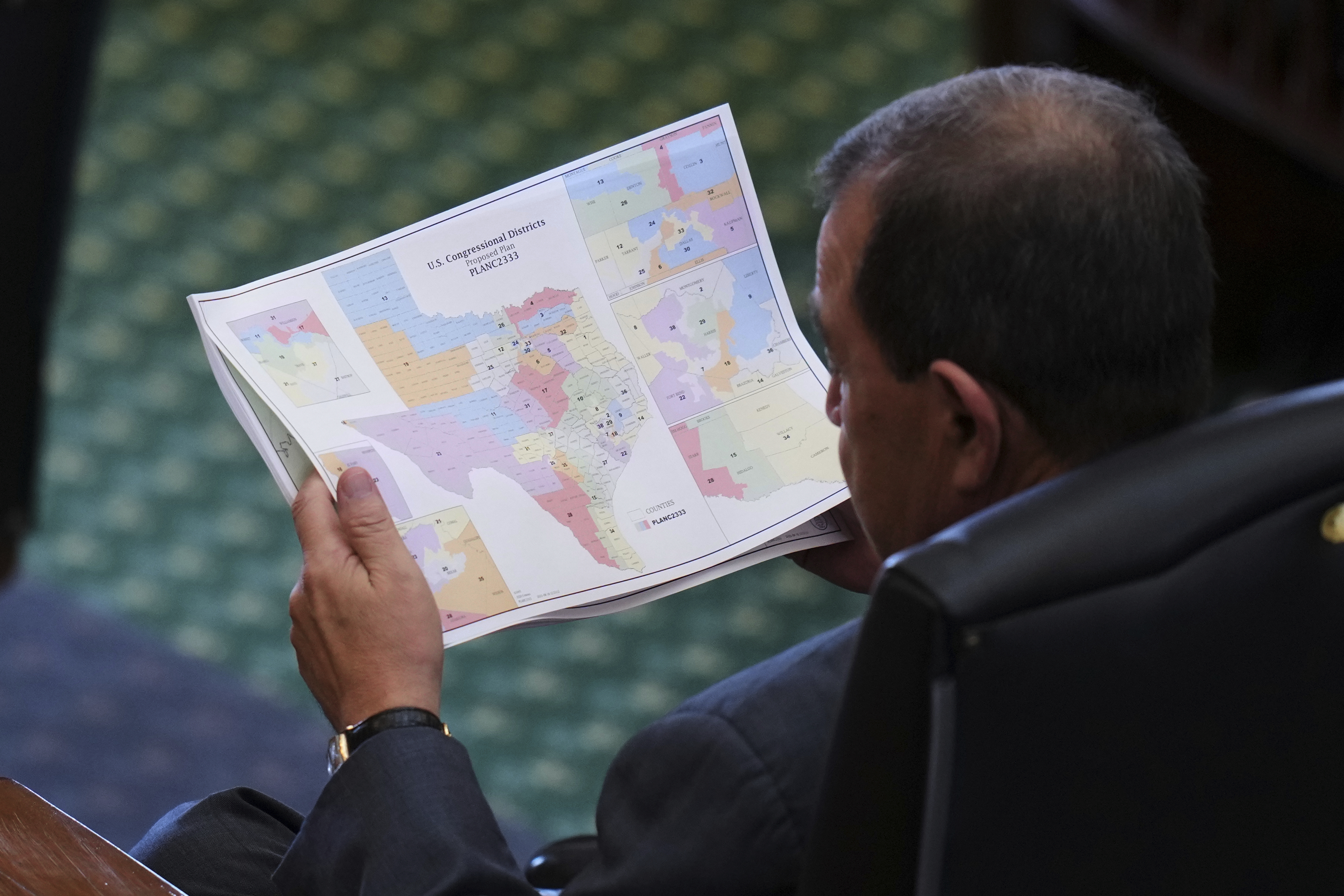
A federal court recently blocked Texas from using its new congressional map, which sparked a nationwide redistricting battle when it was introduced by state Republicans earlier this year. In a 2-1 decision, the U.S. district court ruled that the proposed district lines were unconstitutional because they illegally diluted the voting power of Black and Hispanic Texans.
Judge Jeffrey V. Brown emphasized that while politics played a role in drawing the 2025 map, the case involved more than just political considerations. He stated, “Substantial evidence shows that Texas racially gerrymandered the 2025 Map.”
This ruling is another setback for Republicans in their broader effort to redraw district lines in red states to maintain their majority in the House of Representatives after next year’s midterms. Democrats have also made significant progress in countering the GOP’s redistricting efforts.
Just weeks ago, Republicans held a 9-0 advantage over Democrats in likely congressional seats gained through redistricting. However, since then, Democrats have gained up to five seats in California, while the GOP’s five seats from Texas have been removed from their tally for now.
The redistricting battle is far from over, with both parties striving to convince more states to redraw their maps and working to block or reverse each other’s gains. The final outcome remains uncertain, but the deadline for filing candidates seeking to run for Congress is approaching in several key states, which could ultimately determine whether Democrats or Republicans control the House during the final two years of Donald Trump’s presidency.
Big States, Big Stakes
Texas, being the starting point of this redistricting battle, represents a major prize. Losing the Lone Star State’s five seats would be a significant blow to Republicans’ chances of retaining the House. However, the ruling is not the final word. Texas Governor Greg Abbott immediately appealed the district court's decision to the Supreme Court.
While it is unlikely that the Supreme Court will issue a final ruling before Texas’s filing deadline on December 8, the justices could put the lower court’s order on hold while the case is under consideration. This would effectively lock in the new, GOP-friendly map for next year’s midterms.
Democrats achieved a major redistricting victory earlier this month when voters in California approved a ballot measure allowing the state to implement a new map that could give Democrats five additional House seats. This map is currently being challenged by Republicans, who are arguing similar grounds that led to the rejection of Texas’s map.
New Maps Already in Place
California and Texas, as the nation’s two most populous states, are the primary targets in the redistricting fight. However, shifts in smaller states could also significantly impact the overall balance.
So far, only four other states have formally implemented new maps, all of which are red states. While these outcomes have not been entirely favorable for the GOP, there have been some wins.
Ohio, for example, was obligated to redistrict due to its unique laws. A bipartisan commission approved a new map that gives Republicans a strong chance of gaining two more seats in next year’s midterms. If the commission had failed to agree on a map, the Republican-dominated legislature might have created a map that gave the GOP three extra seats instead of just two.
In North Carolina, Republicans swiftly imposed their own new map, taking only two days to approve the district lines. However, federal judges are considering a lawsuit to block the new map from being used.
Republicans have also completed redistricting in Missouri, creating one more safe GOP district. The legality of Missouri’s new map is being challenged in court, and an organization called People Not Politicians is gathering signatures to force a statewide vote on the map.
Democrats Gain Ground in Unexpected Places
Democrats have also seen unexpected gains in the deep red state of Utah. A state judge ruled that a GOP-approved map violated anti-gerrymandering laws and ordered the use of an alternate map. Under the previous district lines, all four of Utah’s congressional districts leaned strongly Republican. The new map gives Democrats a solid chance of winning one of those seats.
More States Join the Fray
Democrats received a welcome surprise when lawmakers in Virginia announced plans to redraw their state’s district lines, which could potentially give the party two or three extra seats in Congress. After a strong performance in the state, Democrats are in a good position to turn this plan into reality early next year.
Florida Republicans are also moving forward with their redistricting plan. A special committee set up to consider how the state’s district lines might be redrawn in their favor is scheduled to meet in early December. Although no proposed map has been released, experts suggest that the GOP could secure two or three more seats depending on how the new districts are drawn.
However, Florida’s state laws could complicate these efforts. An amendment added to the Florida Constitution in 2010 prohibits lawmakers from drawing districts for partisan gain or in a way that deliberately diminishes the voting power of minorities.
Reluctance and Roadblocks
There are 38 states where one of the two parties has full control of the legislature and the governor’s mansion, theoretically offering many opportunities for partisan redistricting. However, there has been surprising resistance in both blue and red states, with some lawmakers refusing to comply with pressure from national leaders.
In Indiana, Republicans formally rejected a proposal to hold a special legislative session on redistricting, defying calls from Gov. Mike Braun and the White House. Similarly, GOP lawmakers in Kansas and Nebraska have pushed back on calls to redistrict, putting Republicans' hopes of gaining seats in those states in serious doubt.
On the Democratic side, in Maryland, Gov. Wes Moore has struggled to convince the state Senate to proceed with redistricting. Illinois, once seen as a prime opportunity for Democrats, now depends on what happens in Indiana, which could mean neither state ends up with new maps.
In New York, the issue is not a lack of enthusiasm but a lack of opportunity. Gov. Kathy Hochul has been adamant about installing more favorable district lines, but the state’s laws make it nearly impossible to do so before the midterms.
A Potential Game Changer
Every congressional map across the country is drawn to comply with federal law banning racial gerrymandering. Last month, the Supreme Court heard arguments in a case seeking to overturn that ban. If the justices decide to overturn the law, it could allow states to redraw their maps under completely different rules.
This change could have significant implications for control of Congress. One analysis suggests that ending the ban on racial gerrymandering could net Republicans 19 more seats in the House. However, the timing is crucial, as the court’s ruling is not expected until 2026, which may be too late for states to make changes in time for the midterms.

Post a Comment for "Redistricting Fears Fade as Texas Setbacks Loom"
Post a Comment