
Texas' gerrymandered maps blocked: What's next?
Overview of the Legal Battle Over Texas' Congressional Map
The News Pulse is a nonprofit news organization dedicated to reporting on voting access and election administration throughout the United States. Readers can sign up for The News PulseTexas’ free newsletter to stay informed.
This article was originally published by The Texas Tribune, a nonprofit, nonpartisan media organization that provides Texans with information about public policy, politics, government, and statewide issues.
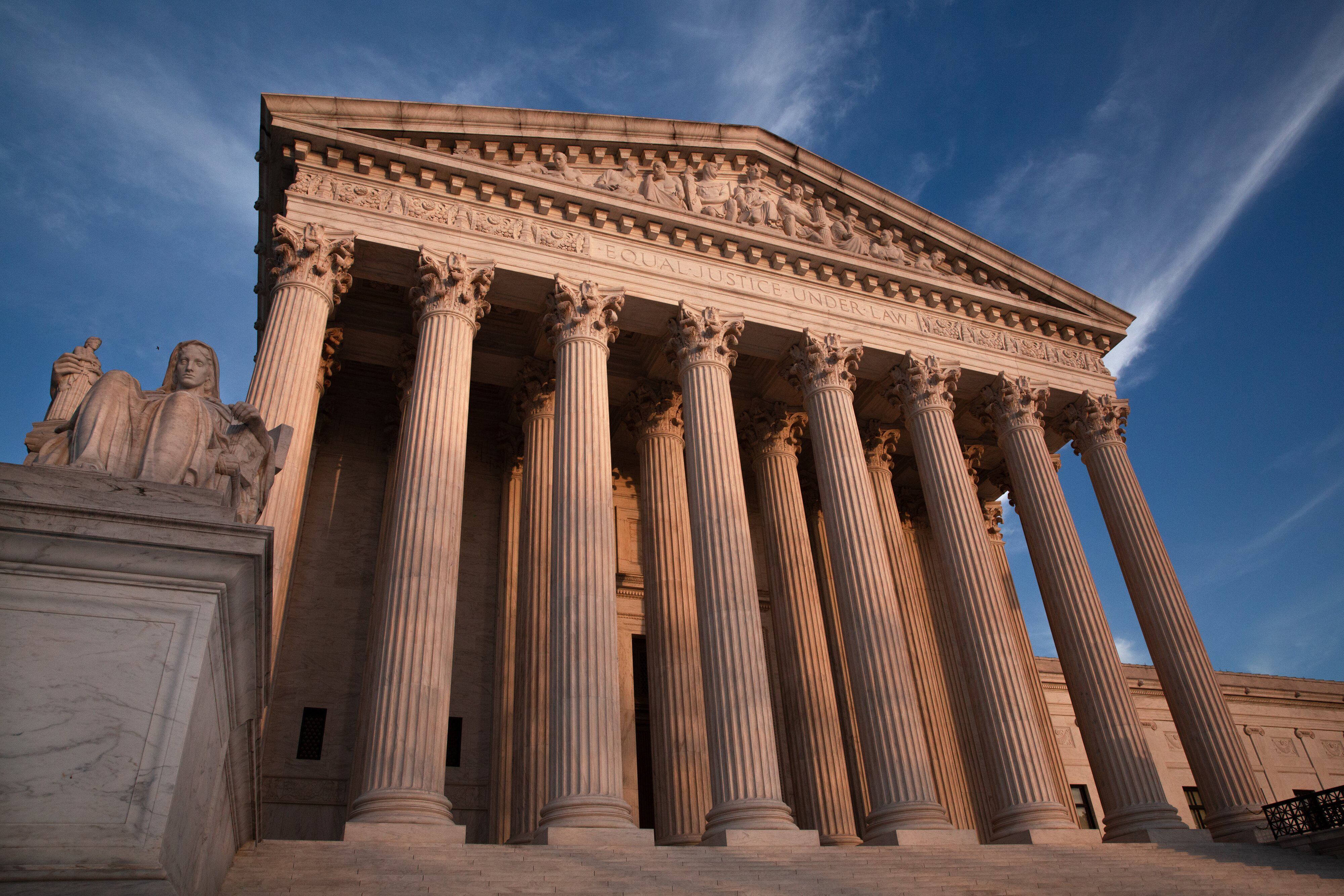
A recent ruling by a panel of three federal judges has set the stage for a major legal showdown over Texas’ congressional map. The judges ruled that Texas cannot use its newly drawn map for the 2026 elections, which has now shifted attention to the U.S. Supreme Court. The court will determine whether to uphold this decision or allow the state to proceed with the new map.
The judges have ordered Texas to revert to the 2021 map, which still favors Republicans but is less aggressive in its gerrymandering than the 2025 version. This decision has sparked immediate action from the state as it prepares to appeal the ruling.
Next Steps in the Legal Process
The legal process will likely unfold in two key steps. First, Texas is expected to request the U.S. Supreme Court to temporarily pause the ruling, allowing the state to use the more recent map while the case continues. This temporary stay would enable Texas to proceed with its 2026 elections under the 2025 map until the court makes a final decision.
Second, the state will ask the high court to rule on the merits of the case — specifically, whether the redrawing of the map disenfranchised voters of color. With the Dec. 8 filing deadline fast approaching, any short-term pause could significantly impact which map is used for the 2026 elections.
The request will first be sent to Justice Samuel Alito, a conservative member of the court who handles emergency petitions from Texas. However, a majority of the court would need to agree to grant the stay. Whatever happens, the process must move quickly, as the 30-day candidate filing period began on November 8, leaving candidates less than three weeks to decide which seats they are running for.
Understanding the Redistricting Process
Most federal lawsuits go through a single district judge and then an appellate court before reaching the Supreme Court. However, redistricting cases are different. They begin before a three-judge panel consisting of two district judges and one circuit judge, and the case is directly appealed to the Supreme Court. The court must respond to the appeal, even if it only affirms or rejects the ruling outright.
In 2022, after a three-judge panel found that Alabama’s map violated the Voting Rights Act, the Supreme Court temporarily allowed the maps to remain in effect while it considered an appeal. A year later, the court ruled that the initial findings were correct, and Alabama had to redraw its maps again.
In another case, Louisiana’s map was found to violate the Voting Rights Act, and the Supreme Court did not pause the ruling. The map remained in place, prompting Louisiana to redraw its lines to add additional majority-Black districts. This led to a new lawsuit, where the Supreme Court temporarily blocked a lower-court ruling. The case has since evolved into a venue where conservative justices seem poised to undermine key provisions of the Voting Rights Act.
The Role of Emergency Orders
Justin Levitt, a law professor at Loyola Law School, noted that the Supreme Court has become increasingly reliant on emergency orders in recent years. He expressed concerns about the lack of clarity regarding when the court decides to grant or deny these requests.
“What the Supreme Court decides to do with all this is a profoundly open question,” he said. “I wish that it would clarify a lot about its jurisprudence of when it steps in and presses pause.”
The Merits of the Case
After the short-term issue of granting a stay, the long-term question of whether Texas engaged in racial gerrymandering in drawing the 2025 map will come into focus. Every time Texas has redrawn its maps since the creation of the Voting Rights Act in the 1960s, at least one of its proposals has been rejected for being racially discriminatory.
In 2012, a Texas district court rejected the proposed maps and submitted its own; the Supreme Court struck that ruling, and the court drew a new map that was more similar to Texas’ original proposal. While this was going on, Texas election officials moved the March primary to April and reopened candidate filing for an additional day.
The Supreme Court ultimately sided with Texas — six years later — and upheld the bulk of the maps.
Current Legal Challenges
The Legislature’s next attempt at redistricting in 2021 is still under legal review before the same three-judge panel that just ruled on the 2025 maps. The month-long trial over those maps was held in El Paso just weeks before the Legislature decided to redraw the maps.
Tuesday’s ruling from the three-judge panel is preliminary; it says only that the plaintiffs are likely to prevail after a full trial, and that they will face irreparable harm if this relief isn’t granted.
While the state argued repeatedly at the nine-day hearing that the redraw was done only to add additional Republican seats, the judges pointed to numerous instances where lawmakers relied on racial data to justify their actions.
“It wasn’t enough for the map to merely improve Republican performance; it also needed to convert as many coalition districts to single-race-majority districts as possible,” Judge Jeffrey Brown, a Trump appointee, wrote in his ruling. “The bill’s main proponents purposefully manipulated the districts’ racial numbers to make the map more palatable. That’s racial gerrymandering.”
In the 160-page ruling, the judges lay out extensive evidence that Gov. Greg Abbott and state lawmakers relied on racial motivations in redrawing coalition districts to appease the Department of Justice. They also unpack the evidence to the contrary, noting that the 2025 map scores better than the 2021 maps on certain redistricting metrics, like compactness, and pointing out that the plaintiffs have failed to provide the court with a map that produces the same political outcome without the same racial influences.
Neither of these issues are fatal to the plaintiffs’ claims, the judges conclude, and without an injunction, voters “will be forced to be represented in Congress based on likely unconstitutional racial classifications for at least two years.”

Post a Comment for "Texas' gerrymandered maps blocked: What's next?"
Post a Comment