
This EV-maker fixed my biggest complaint. Its new SUV is a triumph.
A New Addition to the Polestar Lineup
AUSTIN, Texas – Polestar, a struggling electric vehicle (EV) brand that has faced challenges with tariffs, trade policies, and some features that I found annoying, is set to introduce an appealing and sporty new model. The 2026 Polestar 4 compact SUV aims to compete with vehicles like the Audi Q4 e-tron, Cadillac Optiq, Ford Mustang Mach E GT, Genesis GV70 electrified, Mercedes GLC with EQ technology, and Volvo EX30.
Polestar does not report U.S. sales on a monthly or quarterly basis, and it’s safe to assume this isn’t due to modesty about tremendous success. The brand’s entire U.S. lineup has consisted of just one vehicle — the larger and more expensive Polestar 3 — for the last few months.
The South Korean-built 4 — Polestar would like me to spell out the full name on every mention, but I have a life — should arrive in dealerships this December. It’s the first new model in a series intended to give the Swedish brand a showroom full of appealing vehicles by 2028.
The sporty SUV looks great, is fun to drive, and offers plenty of welcome features.
I spent a hot fall day driving a top-of-the-line 544-horsepower all-wheel-drive Polestar 4 from the Hotel Van Zandt near the river in downtown Austin through city streets, highways, and rolling, twisting roads in the surrounding Hill Country.
Key Features of the Polestar 4
- Rear- or all-wheel drive electric range
- 10%-80% charge in 30 minutes at 200 kW
- 14.7-inch head-up display with Plus Pack
- RWD: 310-mile range; AWD 280 miles
- RWD: 272 hp, 253 pound-feet of torque
- AWD: 544 hp, 506 pound-feet of torque
- 20-, 21- or 22-inch wheels
- Video rearview mirror
- No rear window
- Tinted glass roof
- Apple CarPlay
- Wireless device charging
- Google voice recognition, navigation, and search
More Models, More Confusion
Prices for the 4 start at $56,400 — $11,500 below the 3. The 3 is bigger and has more power, but the curvaceous 4 is faster to 60 mph — 3.7 seconds versus 4.5 seconds for the most powerful model.
You may ask: “Why is the 4 smaller and less expensive than the 3?” (I know I did.)
It's because Polestar numbers its models in the order they go on sale, not ascending order of price, room, and features.
If you think it’s confusing now, it’ll only get more so.
Polestar’s growth plan is:
- 4 – Compact performance EV SUV going on sale later this year.
- 5 – Sport sedan arriving in 2026. Expected to be Polestar’s most expensive vehicle.
- 7 – Built in Slovakia, expected in 2028 and described as “a premium fully electric compact SUV,” it will share systems with the next generation of the Volvo XC60. I think it’ll cost less than the 4, but honestly, who knows?
- A new version of the currently discontinued 2 — a sporty coupe that was the smallest Polestar — is possible. Timing TBD.
2026 Polestar 4 Trim Levels and Prices
- Base long-range single motor RWD with Pilot Pack: $56,400
- Long-range single motor RWD with Pilot and Plus Pack: $61,900
- Long-range dual motor AWD with Pilot Pack: $62,900
- Long-range dual motor AWD with Pilot and Plus Pack: $68,400
- Long-range dual motor AWD with Pilot, Plus and Performance Pack: $72,900
All prices exclude $1,400 destination charge.
Keep the Simple Things Simple
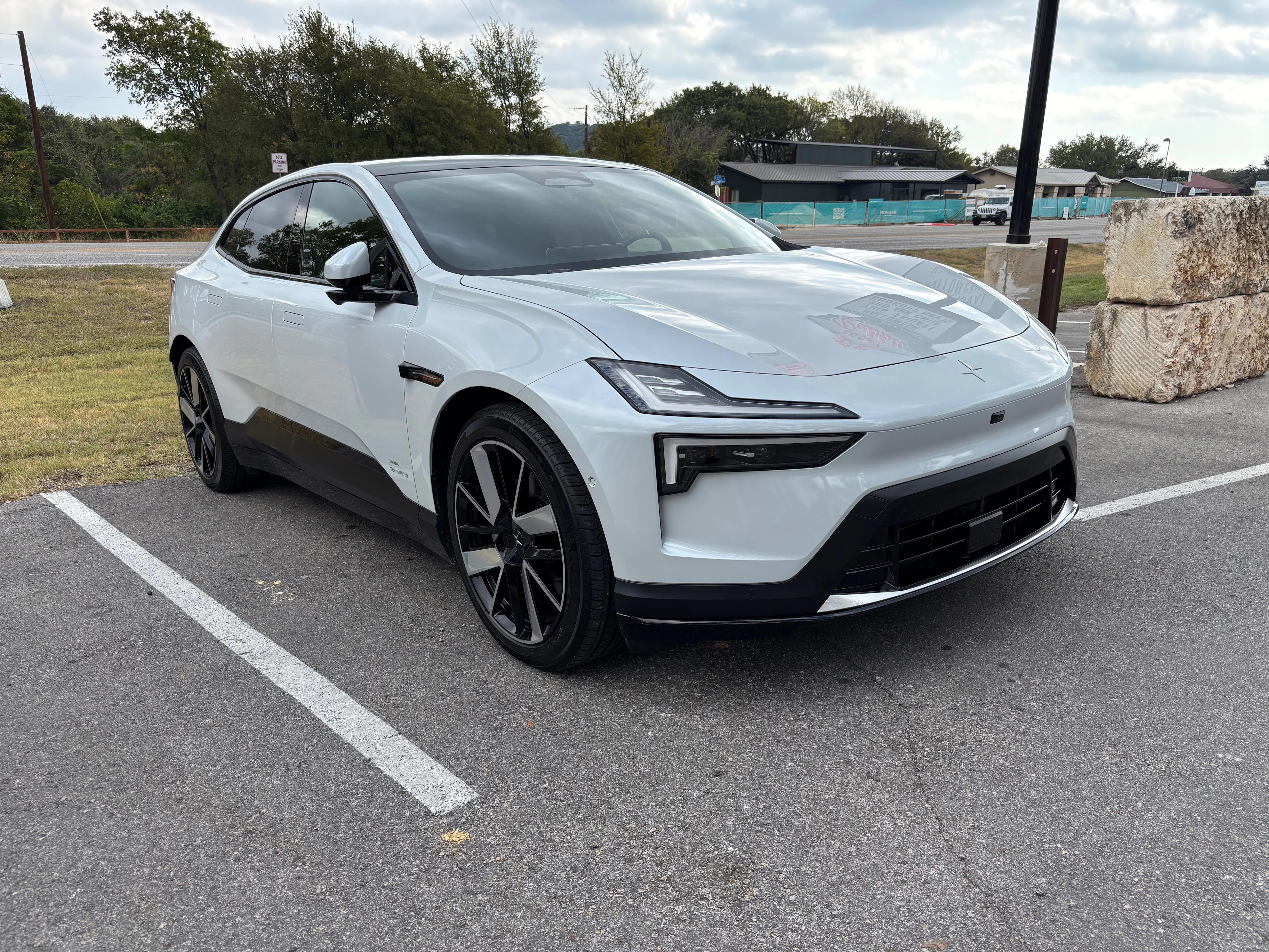
Polestars have always been fun to drive, but getting started was a pain in the neck. Thankfully, the 4 changes that. Proximity sensors replace a cumbersome process that required a smart card in just the right spots to lock, unlock, and start the vehicle. The SUV locks and unlocks when you approach or depart, and starts when the key fob crosses the threshold into the vehicle.
Easy peasy, and what a tech-forward brand like Polestar should have done from the first. Full disclosure: Polestar reps say owners could always use a smartphone app for those operations, but they didn’t make the app available for test.
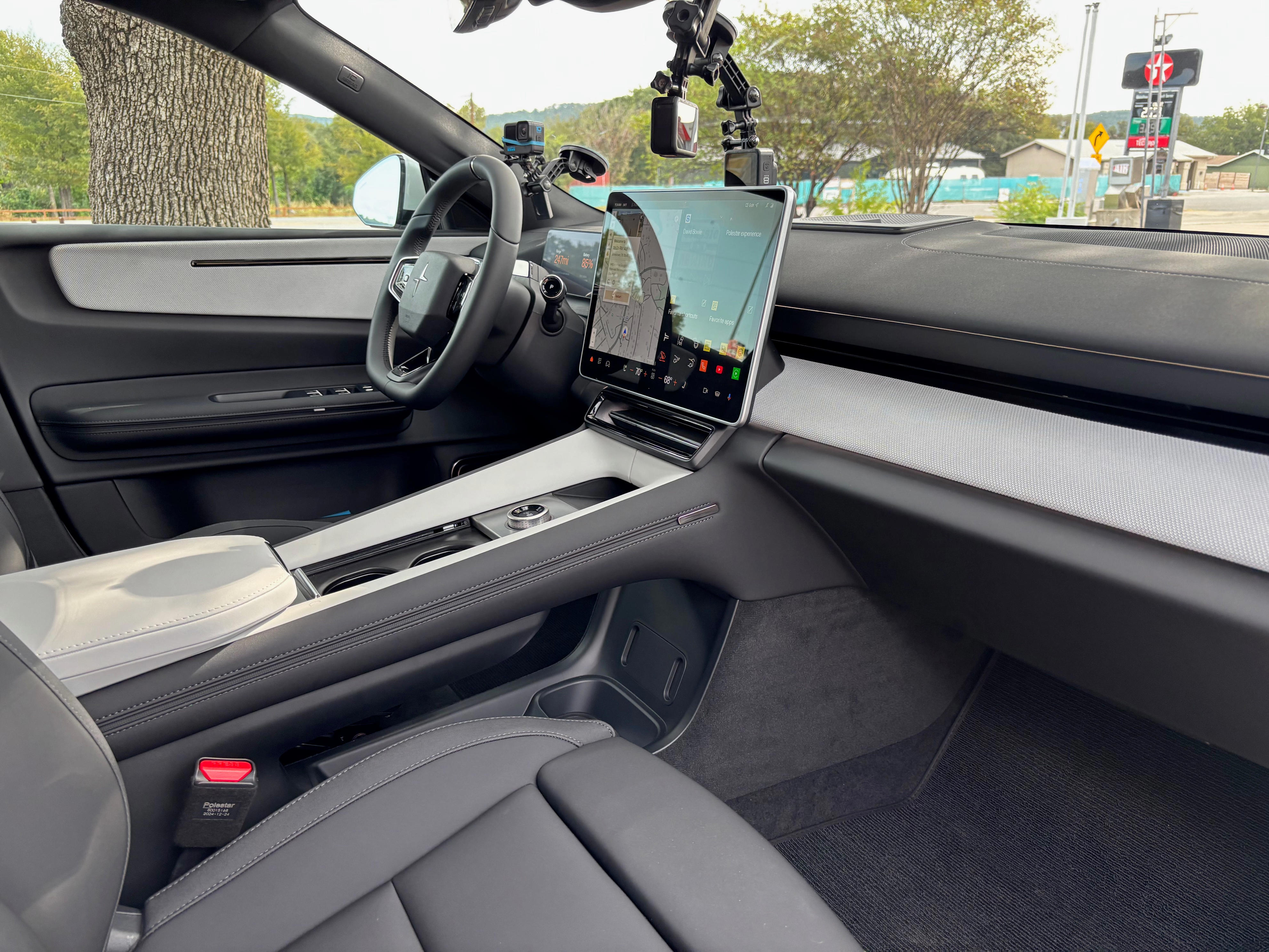
While entering and starting the car strike a blow for simple controls, Polestar remains dedicated to touch-screen adjustments for everything from steering wheel to climate control and drive modes. I hate this less than many people, in part because the vehicle remembers your settings for seat, vent, mirror, etc. position.
The first adjustments may be a bit harder than with conventional controls, but you never have to mess with them again, unless you like to redirect the vents, etc. while driving. If that’s the case, Polestar’s probably not for you.
Google voice recognition, navigation, search, and to adjust features like audio and climate are standard and effective.
No Rear Window? No Problem
Polestar calls the 4 an “SUV coupe.” That sounds odd to American ears, which are used to thinking of coupes as two-door vehicles, but it’s consistent with the term’s history, in which the French term means “cut.” In car design, that meant a short roof that curved downward, for a sleek stylish look that did not preclude four doors.
The 4 has a low nose and raised rear end for a forward leaning stance. The cut roofline helps distinguish it from the larger Polestar 3, which has a long, level roof for a traditional SUV profile.
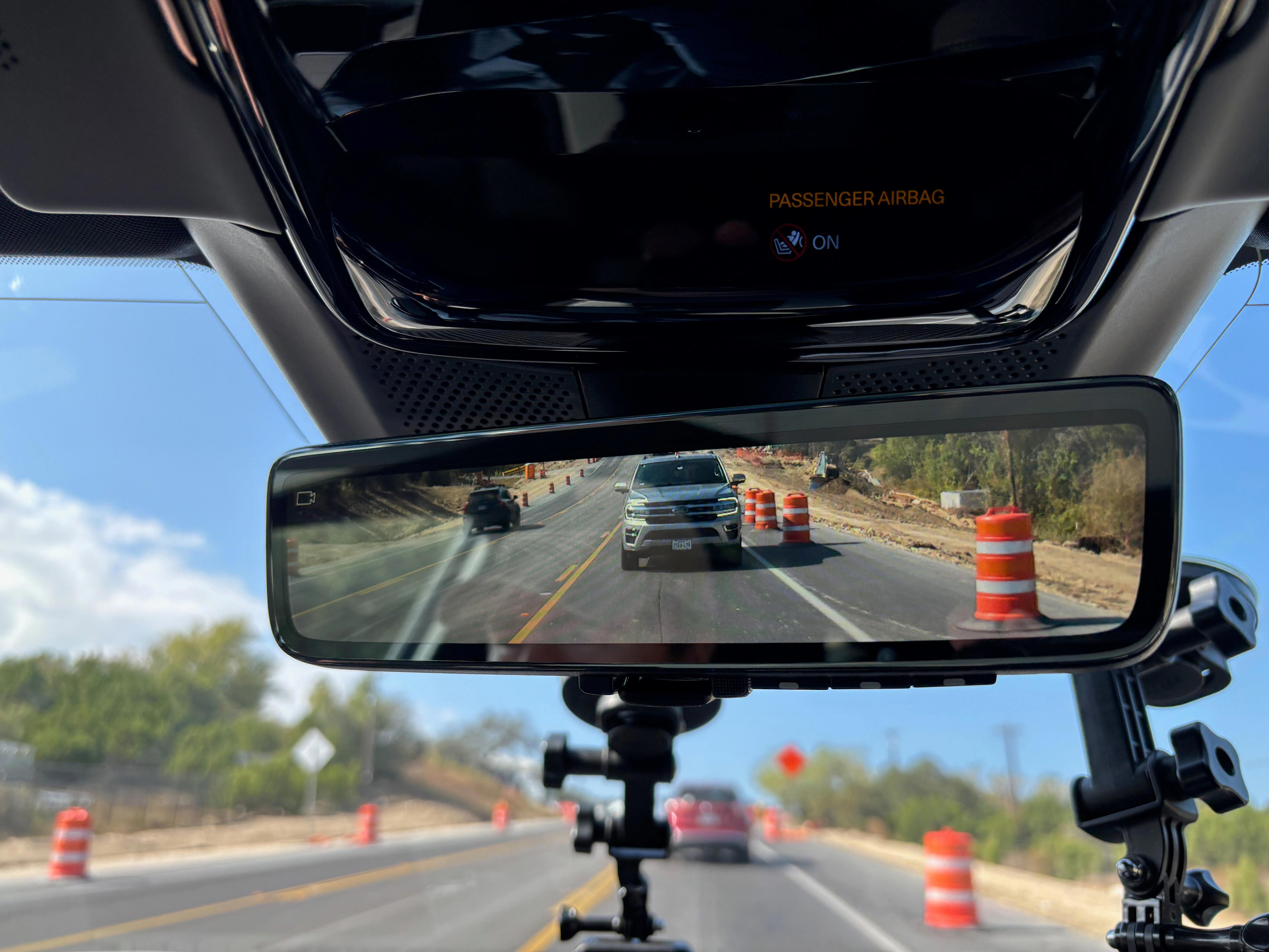
To preserve rear headroom despite the falling roof, Polestar dispensed with the rear window.
Rear visibility is courtesy of a roof-mounted camera and high-def "mirror" from Holland, Michigan, supplier Gentex. The latest generation of Gentex’s video mirrors, it provided clear, unobstructed views on the sunny day of my drive. I look forward to testing it at night, when starring of headlights can be an issue.
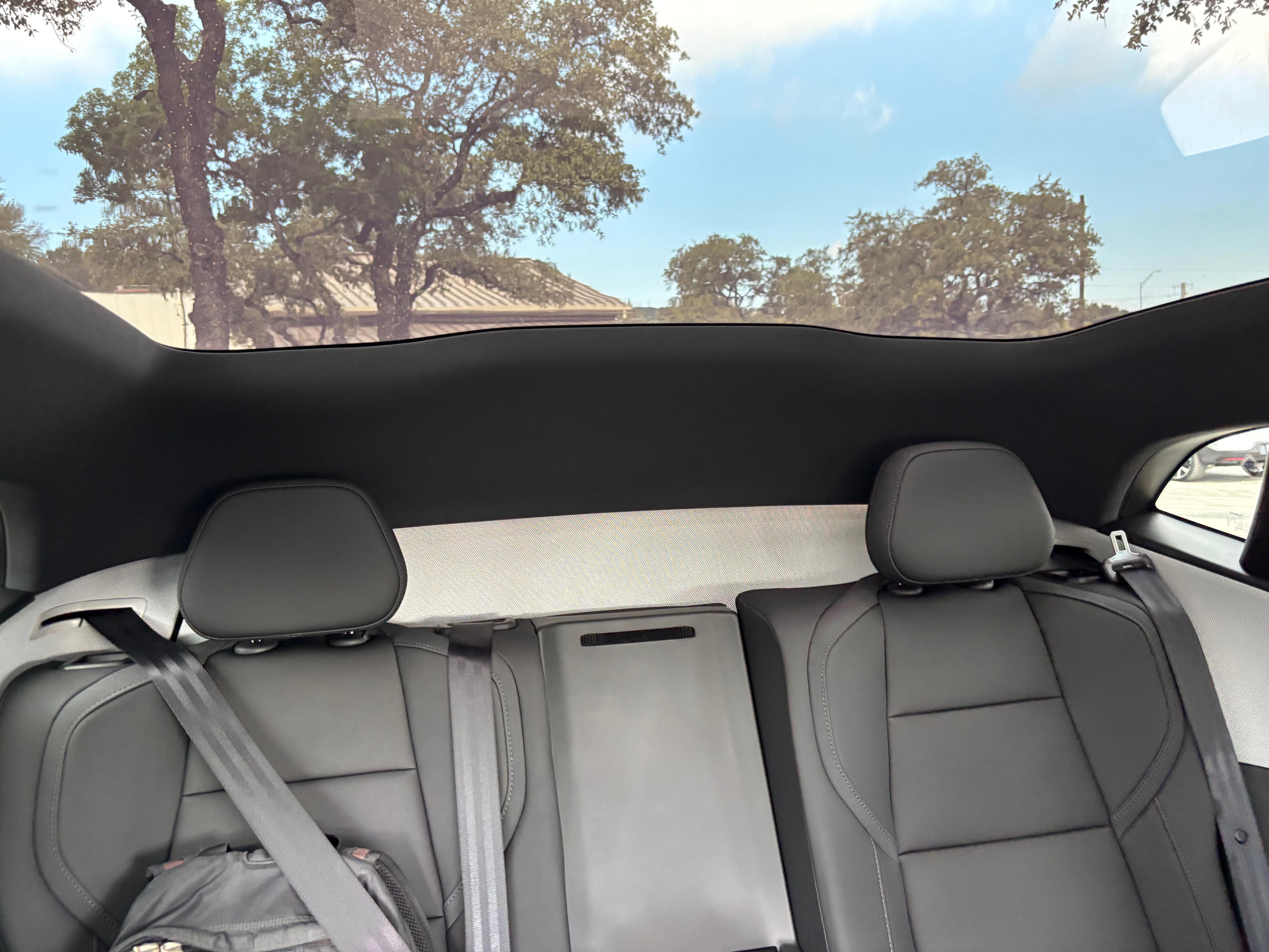
The roof is an uninterrupted sheet of glass that ends over the rear seat, creating an open, airy interior. An optional electrochromatic film allows you to lighten or darken the tint. I found the feature effective on a brilliantly sunny fall day in the Texas Hill Country. I’d recommend the option, as I find some glass roofs inconvenient on hot, bright days.
Driving Impressions
The loaded all-wheel-drive Polestar 4 I tested stickered at $72,900. It had a 200kW motor on each axle creating 544 hp and 506 pound-feet of torque.
Choosing the performance setting from the touch screen delivered instant acceleration that pressed occupants into the back of its leather seats.
The interior is roomy and comfortable. The combination of a flat floor and no rear window creates one of the most accommodating rear seats I’ve experienced in a vehicle with a coupe profile.
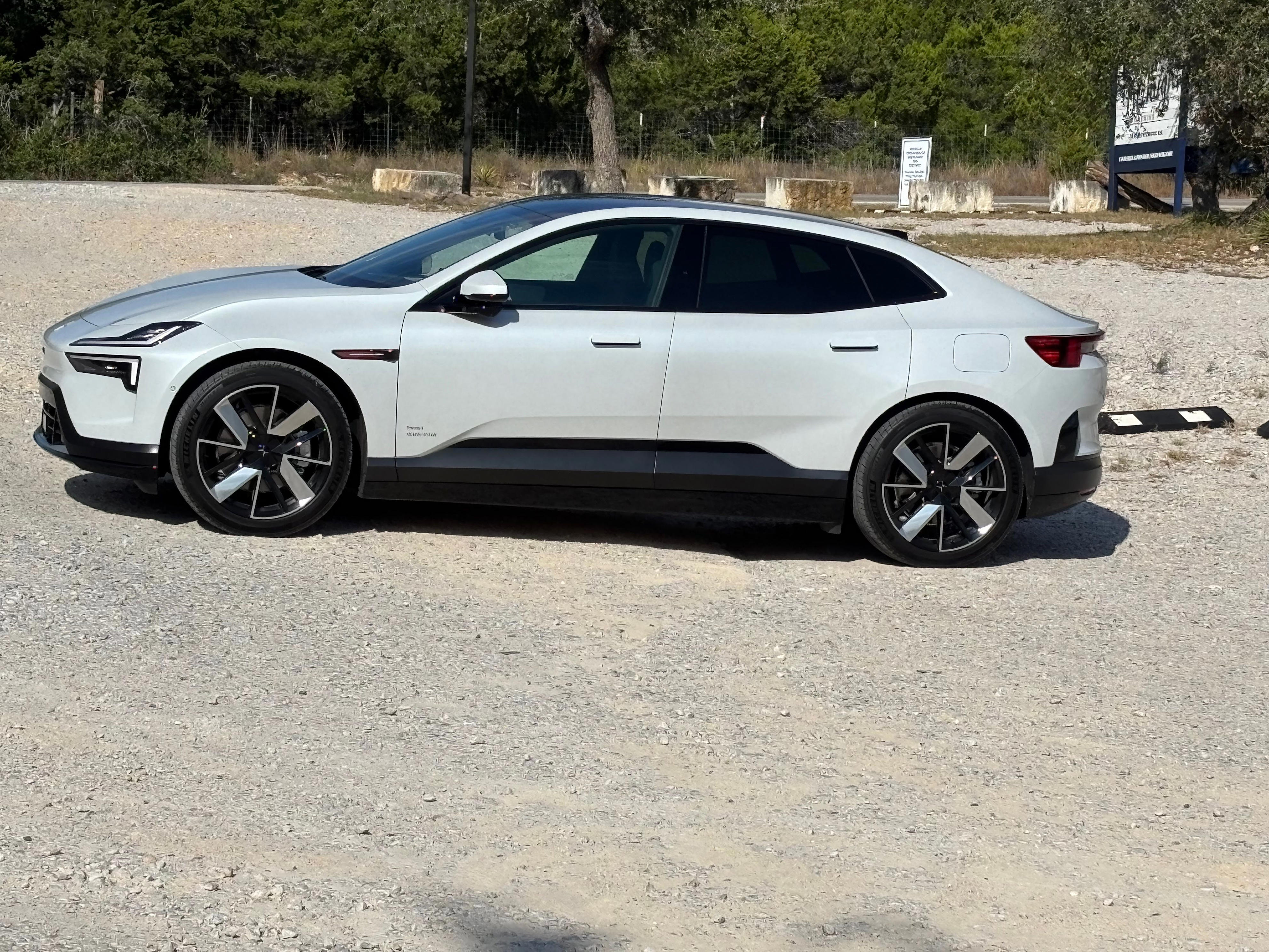
In addition to choosing acceleration or range maximization, there are several settings for steering feel and response and suspension behavior. I spent most of the day with the steering in the sportiest setting and suspension in the middle.
That produced direct, responsive steering around sweeping curves and over hills. The suspension kept the car stable and planted in sharp maneuvers, with little body roll, squat or dive.
At 5,192 pounds curb weight, the 4 is no lightweight, but no EV is. Batteries are heavy. Still, it checked in about 140 pounds lighter than the Cadillac Optiq.
Well-engineered EVs tend to have most of their weight close to the ground. That contributes to good road holding, while electric motors’ immediate torque handles powerful acceleration.
The 4 has a 100 kW battery that can charge at up to 200 kW DC. With that current, charging from 10%-80% takes just 30 minutes, an appealing length on road trips. With the 240v power most EV owners use on a daily basis at home or work, 0%-100% takes about 11 hours.
The Polestar 4 has a CCS port for DC fast charging. Owners can buy a NACS adapter.
Why Buy a 2026 Polestar 4?
The Polestar 4 is attractive, distinctive, advanced, and fun to drive.
There have already been complaints about its lack of a rear window, but I suspect most come from people who haven’t sat in one. See for yourself about it, the touch screen, and glass roof in a test drive.
It’s not the least expensive vehicle in its class, but it’s an appealing and unique new alternative for anyone considering a sporty electric SUV.
2026 Polestar 4 at a Glance
- Rear- or all-wheel drive electric luxury-sport SUV
- Seats five
- Base price: $56,400 (all prices exclude $1,400 destination charge)
- On sale December 2025
- Model tested: Long-range dual motor with Pilot Plus and Performance Packs
- Price as tested: $72,900
- Power: One electric motor on each axle
- Output: 544 hp, 506 pound-feet of torque
- 0-60 mph: 3.7 seconds
- Top speed: 124 mph
- Battery: 100 kWh lithium-ion
- EPA estimated range on a charge: 280 miles
- Maximum charging speed: 200 kW DC; 11 kW 240v AC
- Charging time: DC – 10%-80% in 30 minutes; 240v – 0$-100% in 11 hours
- Maximum charging rate: 200 kW
- Wheelbase: 118 inches
- Length: 190.5 inches
- Width: 81.4 inches (mirrors folded); 84.2 (mirrors out)
- Height: 60.4 inches
- Ground clearance: 6.5 inches
- Cargo volume: 18.6 cubic feet behind rear seat, 54.2 with seat folded; 0.5-cubic-foot front trunk
- Towing capacity: 3,500 pounds
- Curb weight: 5,192 pounds
- Assembled in Busan, South Korea

Post a Comment for "This EV-maker fixed my biggest complaint. Its new SUV is a triumph."
Post a Comment