
Trump Warned by Europeans His Ukraine Plan Needs Fixing
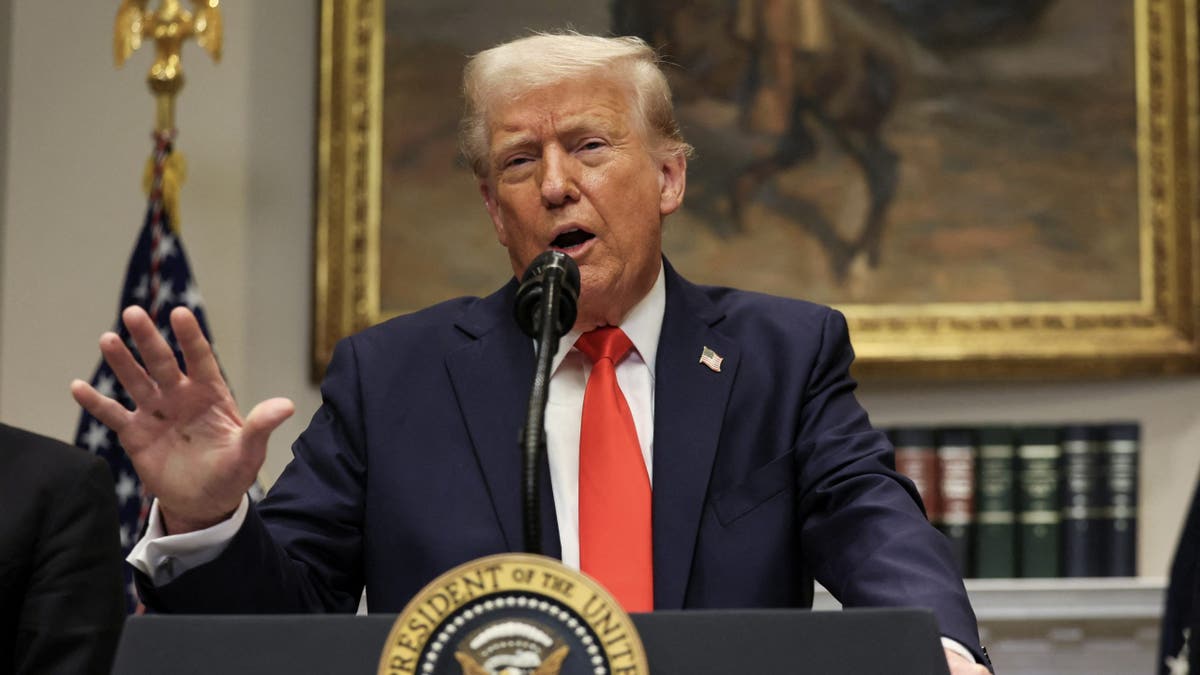
European Leaders Push Back Against U.S. Peace Plan for Ukraine
European leaders and other allies have expressed concerns that the United States' peace plan for Ukraine requires "additional work," as they attempt to slow down a Trump administration determined to offer concessions to Russia and impose terms by Thanksgiving. This statement was issued during a Group of 20 summit in South Africa, where President Donald Trump chose not to attend, but many leaders were present when details of the 28-point peace plan were leaked.
The U.S. has set a Thursday ultimatum, but Trump suggested in an NBC interview that this wasn’t his "final offer," hinting at potential flexibility on timing. In Johannesburg, panicked leaders sought to buy President Volodymyr Zelenskiy time and scrambled to get on a call, exchange notes, and come up with a counter-proposal that wouldn’t alienate an impatient U.S.
Their challenge is to find the right wording in response to a plan that offers hard-to-swallow land concessions to Russia, caps the size of the Ukrainian army, prevents it from joining NATO, and places the cost of reconstruction on the European Union. Essentially, it appears to be everything Russia would want in a grueling war of attrition entering its fourth winter. A senior European military official said there’s a real chance the group fails to convince Trump to change his stance.
“The draft is a basis which will require additional work,” according to a statement that started off with some muted praise for the plan as a basis for with some important elements. “We will continue to coordinate closely with Ukraine and the US over the coming days.”
European leaders, joined by Group of Seven members Canada and Japan, pushed back against the notion that Ukraine’s borders could be shrunk or that the armed forces could be limited to 600,000 personnel.
Key Concerns and Counter-Proposals
The next stop is a meeting of top national security officials in Geneva on Sunday, in a zig-zag of last-minute diplomacy. Trump has given Ukraine until Thursday to accept his plan, and U.S. officials have threatened to halt weapons supplies and intelligence if it refuses.
The speed with which the White House is trying to push the proposal through has shocked Ukraine and its allies, coming at a time when Trump is waging multiple political fights at home. European leaders are deploying the same playbook from earlier this year when Zelenskiy was ambushed in the Oval Office and berated for being ungrateful for U.S. efforts.
Like back then, the task of trying to correct course now mainly falls upon the leaders of the UK, Germany, and France. The trio have been privately working on a more detailed response to the U.S. blueprint that will be discussed in the coming days. The statement issued on Saturday is a mere stopgap.
Under the terms proposed by the U.S., Ukraine would have to withdraw troops from parts of the eastern Donbas region that Russia has failed to fully occupy. The area would become a neutral demilitarized buffer zone internationally recognized as Russian. Moscow would also obtain de facto recognition over Crimea, Luhansk, and Donetsk. Most of the remainder of the frontline, including in Kherson and Zaporizhzhia, would be effectively frozen.
Zelenskiy struck a grave tone in a video address to the nation. “Now it’s one of the most difficult moments in our history,” he said late Friday. “Ukraine may face a hard choice — either the loss of our dignity or the loss of our key partner.”
The Role of Key Figures and Diplomatic Efforts
At home, he’s battling an ever-expanding corruption scandal that threatens to engulf his powerful chief of staff, Andriy Yermak, who will nevertheless join national security advisors from the U.S., Ukraine, Germany, France, and the UK in Switzerland. The U.S. will likely be represented by Marco Rubio, special envoy Steve Witkoff, and Army Secretary Dan Driscoll, who has now taken a central role as an enforcer for Trump when it comes to Ukraine.
The drafting of the U.S. plan was led by Witkoff and Russian envoy Kirill Dmitriev, without much American inter-agency involvement and key officials in the dark until late in the process, according to people familiar with the matter. Rubio, they said, was not involved.
Driscoll briefed European ambassadors earlier this week that a deal had to be done sooner rather than later. He told the envoys that Ukraine was in a bad position and now was the time for peace, adding that President Trump wanted a deal soon.
This is a potential make-or-break moment not only for Zelenskiy but also UK Prime Minister Keir Starmer, German Chancellor Friedrich Merz, and French President Emmanuel Macron. Delay tactics can only go so far, and they will soon get a sense of how serious Trump is about walking away and cutting all support for Ukraine.
Economic and Security Implications
Under the current Trump plan, Ukraine would receive a U.S. security guarantee — albeit one that Washington would be compensated for. The U.S. would also get 50% of profits from a venture using frozen Russian assets to rebuild and invest in Ukraine, and enter an economic partnership with Moscow once sanctions are lifted.
As things stand, these terms are also a concern but not the parts of the plan they hate the most. Where the Europeans will truly dig in is on the size of the Ukrainian army. There can be no limit at all on that, according to a person familiar with the counter-proposal.
Finland’s Alexander Stubb, seen as someone who also has Trump’s ear, said the Europeans weren’t even aware of the plan. He put forward their objections bluntly.
“This peace plan is incomplete and inconsistent,” the president told Finnish broadcaster YLE. “The proposal as it stands has many shortcomings — it certainly won’t go through in its current form.”

Post a Comment for "Trump Warned by Europeans His Ukraine Plan Needs Fixing"
Post a Comment