
Trump's DOT Eases Safety Rules to Protect the Public
The proposed rule by the U.S. Pipeline and Hazardous Materials Safety Administration (PHMSA) in July appeared to be a minor bureaucratic adjustment, but it had far-reaching implications. The agency, part of the Department of Transportation (DOT), aimed to modify its process for issuing regulatory waivers. However, industry observers recognized that this was more than just an administrative tweak—it was a significant effort to reduce the power of agency experts to enforce safety conditions that could prevent catastrophic pipeline failures.
The rule was signed by Ben Kochman, who was appointed as deputy administrator under the Trump administration. Notably, he had previously served as a director of the Interstate Natural Gas Association of America (INGAA), a powerful pipeline industry group that had criticized the policy the rule would change. This conflict of interest raised concerns among safety advocates.
“You hear of the phrase ‘the fox guarding the henhouse,’” said Bill Caram, executive director of the Pipeline Safety Trust. “What we’re worrying about in this situation is the fox designing the henhouse.”
This rule was part of a broader rollback of regulations at the DOT under the second Trump administration. The agency’s leadership claimed these changes would reduce red tape and encourage innovation. However, many of the targeted regulations were designed to prevent deaths and injuries in the nation’s transportation and infrastructure systems.
The DOT’s regulatory domain spans from air traffic control to highway and train safety, oil pipelines, and rules governing autonomous vehicles. In recent months, the agency has taken several steps that have drawn criticism:
- Scrapping possible limits on subway and bus driver hours to prevent fatigue-related accidents.
- Delaying a requirement for extra cockpit barriers on airplanes to prevent 9/11-style takeovers.
- Nixing a planned mandate for safer motorcycle helmets.
- Proposing exemptions for school bus child-restraint systems from new crash-protection requirements.
- Postponing a rule requiring freight trains transporting hazardous materials to carry emergency oxygen masks.
According to The News Pulse, the DOT has taken 30 regulatory actions that current and former officials and safety advocates say are contrary to the agency’s mission to protect the public. Some of these regulations were required by federal legislation, and five of them could prevent up to 1,000 deaths and 40,000 injuries annually, according to the agency’s own estimates.
“The regulations are written in blood,” said John Putnam, the agency’s general counsel during the Biden administration. “Most of them are driven by a tragedy that resulted in the loss of life.” Industry groups, however, argued that many of the rules were unjustified or burdensome and supported or later commended the DOT’s changes.
The DOT’s safety enforcement has also declined significantly. In the first eight months of Trump’s second term, the agency opened 50% fewer investigations into vehicle safety defects, concluded 83% fewer enforcement cases against trucking and bus companies, and started 58% fewer pipeline enforcement cases compared to the same period under the Biden administration, according to agency data. The agency has also proposed allowing subjects of DOT enforcement actions to bypass career staff and appeal directly to Trump appointees.
Overseeing these decisions are dozens of political appointees with industry ties. Many of the top posts at the DOT are occupied by lobbyists, consultants, former airline and railroad CEOs, alumni of autonomous vehicle technology startups, and ex-lawyers for pipeline and trucking companies. Some of these appointees previously worked against the DOT divisions they now control.
The News Pulse identified 32 political appointees at the DOT with industry ties, including 11 who recently held investments in transportation companies. These appointees disclosed between $12 million and $52 million in stock holdings and other financial interests in airlines, railroads, oil and gas corporations, and other businesses. Such investments may be even higher, but financial disclosures are not publicly available for all appointees. The agency has not fulfilled a request for disclosure filings from other appointees that are subject to release under federal law.
The News Pulse’s findings are based on a review of hundreds of rulemaking documents, internal agency emails, financial disclosures, legal filings, and other records. The outlet also interviewed safety advocates, researchers, and 19 current and former DOT officials, most of whom spoke on the condition of anonymity due to fear of retribution.
Some level of industry presence at the DOT is common, even desirable, according to those officials. The agency’s regulatory responsibilities are vast, often involving technical matters where input from engineers and operators is essential. Many of the DOT’s recent deregulatory moves are backed by lengthy justifications from the administration or industry groups, and safety advocates do not view all of them as equally consequential.
DOT spokesperson Nate Sizemore stated that “safety comes first” at the agency under its new leadership. “The insinuation that slashing duplicative and outdated regulations contradicts that mission isn’t just wrong — it ignores the fact that doing so enhances focus on enforcing the key rules that actually keep the American people secure.” Regarding the industry ties of agency leadership, he added: “The News Pulse’s gross smears are flat out lies, and these attacks on our exceptionally qualified staff are a shameful attempt to fearmonger.”
The breadth and speed of the rollbacks are unprecedented, according to Marc Scribner, a senior transportation policy analyst at Reason Foundation. “We haven’t seen deregulatory rulemaking volume at USDOT like this before,” Scribner said.
The number of DOT appointees from industries they now regulate is raising concerns among some agency veterans. “Historically Republicans have been more business focused, Democrats have been more public transportation and public interest and safety focused,” said one former senior DOT official. “What you’re seeing this time around is the industry focus on steroids.”
Safety advocates and former agency officials fear this will lead to preventable deaths and injuries. “The consequence of this, of pulling back on these safety regulations, is that more daughters, mothers, children, bread winners are going to lose their lives,” said Barbara McCann, a former senior DOT safety official who served in both Democratic and Republican administrations. “Government is here to safeguard people, protect people, and the new leadership at DOT is not performing that role.”
No division of the DOT better exemplifies the alignment of industry and regulator under the second Trump administration than its pipeline office. Kochman, the appointee who signed the July proposed rule, is one of four political appointees in the division who previously worked for the pipeline industry or in closely related fields. Another is Keith Coyle, the agency’s chief counsel, who, as a lawyer representing industry groups, successfully fought to undo a pipeline safety regulation as recently as 2023. The arrival of these appointees has coincided with an exodus of high-ranking civil servants from the agency.
The new appointees have wasted little time. PHMSA has published 23 notices of proposed rulemaking under the new administration—most of them deregulatory—which is more than the Biden administration published in four years. “I don’t think we’ve ever seen anything like this,” Caram said. All 23 proposals were signed by Kochman.
The regulatory revisions largely point in the same direction. “The general tone is, ‘We’ve done great on pipeline safety, so it’s time to start looking at how to decrease costs for the industry and improve efficiency,’” Caram said. “There’s really nothing in there about how we can make the rules more effective or more efficient to improve safety, which is the agency’s mission.”
In recent months, Kochman has sought to triple the monetary value of property damage caused by a hazardous liquid pipeline failure before its operators must report the accident to PHMSA. (The agency was forced to withdraw the regulation on procedural grounds.) He proposed allowing companies to transport larger quantities of lithium batteries, which are known to spontaneously explode, and appliances containing flammable gases. He questioned the agency’s existing drug and alcohol testing requirements for pipeline workers, requesting public feedback on whether those requirements “impose an undue burden on affected stakeholders.” He asked the same about packaging requirements for radioactive materials.
Four of PHMSA’s recent regulatory actions cite INGAA, the trade group for which Kochman used to work. That includes a plan to scale back a requirement that pipeline operators report emergency shutdown events, such as when pipeline systems malfunction and release flammable gases into the air. That proposal quoted regulatory language suggested by INGAA and other trade associations. PHMSA “agrees with the proposed revisions,” the notice reads.
While PHMSA’s rulemaking office has been busy, its enforcement wing has slowed dramatically. From 2002 to the end of the Biden administration, PHMSA typically proposed around $475,000 in penalties for safety violations every 30 days, according to an analysis by the Pipeline Safety Trust. In the first eight months of the new administration, that figure fell to around $8,000 in proposed penalties every 30 days, a 98% drop. (Enforcement picked up in October, Caram said.)
Kochman has become a divisive figure at the agency, according to two former PHMSA employees who left this year and another federal employee familiar with the matter. An ex-congressional staffer in his late 30s with no engineering or legal credentials listed on his LinkedIn profile, Kochman has shouted at colleagues in meetings and demeaned the agency’s prior work, the current and former employees said. He has dismissed carefully considered agency positions as “obviously wrong” and cut out career officials in determining PHMSA policy. His positions typically aligned with those of INGAA and the pipeline industry more broadly, the current and former employees said.
Kochman and Coyle, both of whom also served in PHMSA under prior administrations, did not respond to requests for comment.
Sizemore, the DOT spokesperson, called Kochman and Coyle “dedicated public servants” whose “collective knowledge of pipeline and hazardous materials safety matters have proved invaluable to this Administration’s efforts to modernize the agency.” He said PHMSA has taken steps to advance safety, including updating its inspection and enforcement process, dispatching more personnel in response to safety incidents and protecting “safety critical positions” from layoffs.
An INGAA spokesperson said in a statement that the group’s “members have a goal of operating natural gas pipeline infrastructure with zero incidents, and we will continue to engage with PHMSA to advance rulemakings that prioritize the safety of our members and the communities that they serve.”
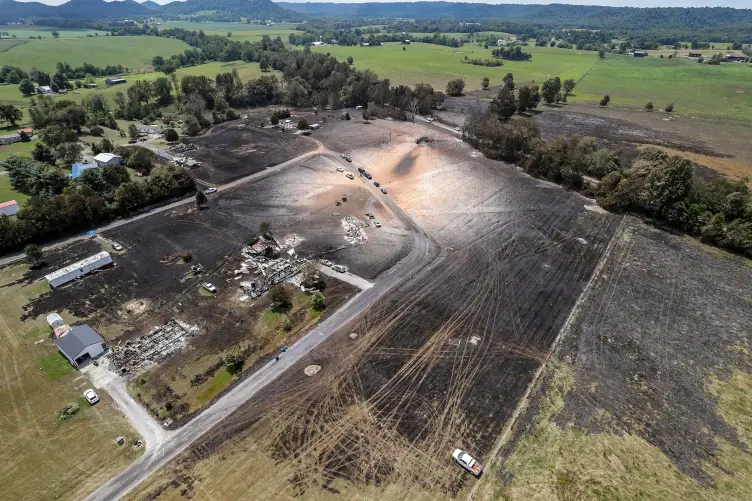
Some of PHMSA’s most consequential moves under the new administration occurred with no public notice. In the waning days of the Biden presidency, the agency announced new steps on two major rulemaking initiatives. One would strengthen regulations for carbon dioxide pipelines—an initiative spurred by a pipeline rupture in Mississippi in 2020 that sent 45 people to the hospital. The other would crack down on leaks and was expected to eliminate as much as 500,000 metric tons of methane emissions. But because the Biden administration waited until its final days to propose the rules, they were not officially published before Trump took office. That enabled the new administration to kill the rules silently, without ever having to formally withdraw them.
“For appointed leadership to pull them back without replacing them with anything, and with no intention to replace them with anything, is damaging to pipeline safety,” one of the former PHMSA employees said. “And it’s contrary to what Congress told PHMSA to do.”
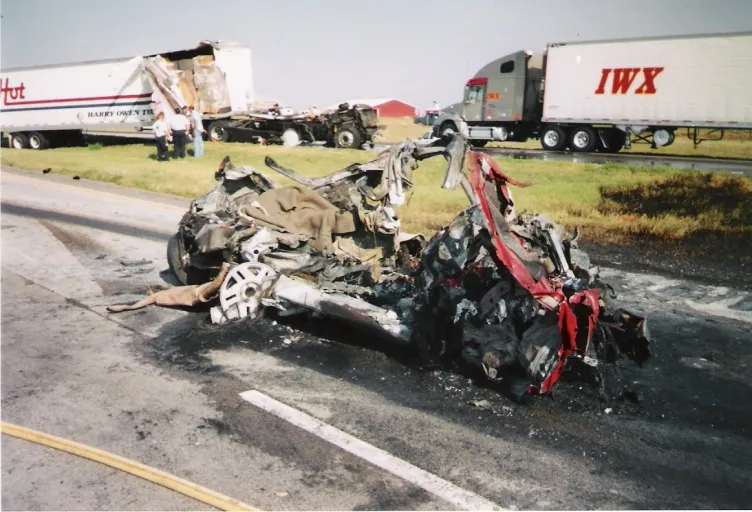
Transportation Secretary Sean Duffy frequently says safety is his “top priority.” But that rings hollow to Gary Wilburn. It calls to mind a sunny morning 23 years ago when Wilburn, then a volunteer firefighter, came upon the charred remains of a driver.
Wilburn had responded to a crash on an interstate in western Oklahoma. The deceased man, a subsequent investigation would show, was stopped in traffic on his way home from college when a semitruck traveling an estimated 75 miles per hour smashed into his Chevrolet Camaro from behind, crushing it and causing it to burst into flames. Wilburn was on the scene for 45 minutes before finding the Camaro’s license plate and realizing the victim was Orbie Wilburn, his 19-year-old son. His body had been burned beyond recognition.

Post a Comment for "Trump's DOT Eases Safety Rules to Protect the Public"
Post a Comment